
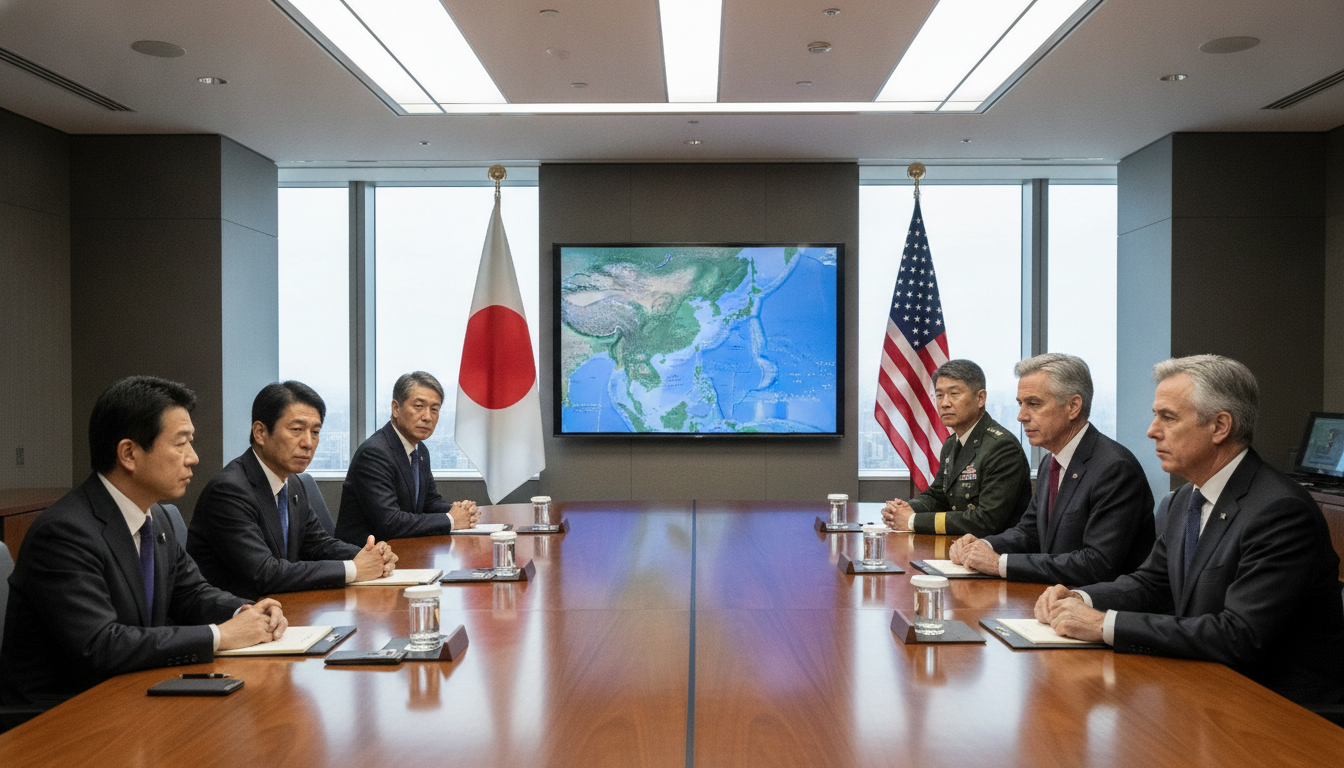
Japan defense white paper to name China main security concern, cite radar lock and North Korea developments
Japan defense white paper to name China main concern, cite radar lock on an ASDF jet and outline North Korean threats while pledging closer U.S. ties.
Japan’s upcoming defense white paper is expected to designate China as the country’s most serious security concern and will highlight an incident last year when Chinese jets locked radar on an Air Self-Defense Force aircraft, Nikkei reported. The Japan defense white paper will also detail developments in North Korea’s military posture and signal Tokyo’s intent to deepen deterrence cooperation with the United States and like-minded partners. Officials say the document aims to explain shifts in regional threat perceptions and outline policy responses without escalating rhetoric.
White paper to identify China as primary security concern
According to reporting by Nikkei, the defense ministry plans to describe China as Japan’s most serious security challenge in its annual assessment. The language marks a continuation of Tokyo’s increasingly concerned posture toward Beijing’s expanding military activity near Japanese airspace and waters. Analysts say the phrasing will formalize observations already reflected in recent bilateral encounters and public statements by senior officials.
Chinese radar lock incident to be cited in report
The draft white paper is expected to reference a radar lock episode in which Chinese aircraft targeted an Air Self-Defense Force plane last year, the report said. That incident will be used to illustrate concrete instances of risky behavior that Tokyo argues undermine regional stability and safe operations. The ministry appears set to document such episodes to justify stepped-up monitoring and rules of engagement for Self-Defense Force units.
North Korean military developments to be detailed
In addition to concerns about China, the white paper will outline North Korean developments that affect Japan’s security environment, according to sources cited by Nikkei. Officials are said to be focusing on Pyongyang’s missile testing, evolving delivery systems, and advances that complicate missile defense calculations. The ministry is expected to argue that these combined challenges require an integrated approach to deterrence and civil defence preparedness.
Commitment to deeper U.S. and allied cooperation
The document reportedly commits Tokyo to stronger cooperation with the United States and “like-minded” partners to enhance deterrence capabilities. That commitment is likely to encompass intensified intelligence sharing, joint exercises, and capability development aimed at improving interoperability. Ministry officials have framed such measures as necessary to deter aggression and preserve peace in the region while avoiding unilateral escalation.
Policy and budget implications for Tokyo
Observers say the wording of the white paper could shape domestic debate over force posture, procurement, and budget priorities in the coming fiscal cycles. By naming China explicitly and underscoring North Korean threats, the ministry may strengthen the case for investment in missile defence, surveillance assets, and joint operational capabilities. Lawmakers and defence analysts will watch closely for signals about force modernization and possible shifts in deployment doctrine.
The anticipated white paper is expected to serve both as an analytical record of recent security incidents and as a policy guide for Tokyo’s next steps in defence and diplomacy. By documenting episodes such as the radar lock and laying out concerns about North Korea, the ministry aims to justify deeper cooperation with allies and clearer communication of Japan’s deterrence needs. Observers caution that the language and recommended measures will influence regional reactions and domestic discussions about the balance between deterrence and diplomacy.

