
India Families Delay Weddings as Gold Prices Surge
Rising gold prices are forcing Indian families to change wedding plans, opt for lighter jewellery and seek alternative financing as consumers adapt to a prolonged rally in the metal.
New Delhi — The rising gold prices that have gripped markets this year are reshaping traditional wedding customs across India, prompting some families to postpone ceremonies and others to buy less metal. The shift is evident in households planning nuptials and in jewelry showrooms where shoppers now ask for lighter designs and lower carat options. What had once been a straightforward cultural purchase is becoming a financial calculation as households weigh the symbolic value of gold against practical budgets.
Families Postpone or Scale Back Celebrations
When members of one extended family in New Delhi planned two weddings within months, they found themselves forced to postpone one ceremony because the cost of gold had climbed steeply. Families reported cutting gold allocations for brides and exchanging plans for large gold purchases in favor of smaller, staged gifts spread over time. The changes reflect a growing trend of wedding planners and household budgeters factoring metal prices into ceremony dates and gift lists.
Households with multi-event seasons are the most affected, as simultaneous purchases amplify the impact of price moves. For many couples, saving on jewelry allows them to allocate funds to venue costs, catering, or borrower repayments that might otherwise be strained by large one-time gold expenditures. These pragmatic choices are redefining how gold is used in modern Indian weddings without erasing its cultural prominence.
Lighter and Lower-Weight Jewellery Gain Popularity
Jewellers across urban centres report rising demand for lighter necklaces, thinner bangles and smaller pendent sets as consumers trade weight for design. Customers are asking for pieces that preserve traditional aesthetics while reducing gram weights, and designers are responding with filigree work, hollow chains and alternative settings that mimic heft without the metal cost. Retailers say many buyers choose to buy fewer items overall, concentrating purchases on a single statement piece rather than multiple heavy ornaments.
The trend also includes a move toward customized pieces that emphasize longevity and wearability rather than sheer quantity of metal. Younger buyers in particular prefer contemporary styles and branded collections that carry perceived investment value even when the gold content is lower. This shift helps jewellers maintain sales volumes while offering consumers a perceived balance between tradition and affordability.
Substitutes, Hallmarking and Financing Options Expand
As gold prices climb, some shoppers are turning to alternative metals such as silver, platinum or certified gold-plated alloys for certain gifts, especially for relative and ceremonial exchanges. Retailers and trade groups note an uptick in sales of mixed-metal sets that pair less expensive metals with accent gold detailing to retain cultural symbolism at a lower cost. At the same time, formal financing, installment plans and buyback schemes promoted by large jewelry chains are becoming more common to spread the cost of purchases over time.
Banks and non-bank financial firms have also seen demand for small unsecured loans tied to wedding expenses, where gold is no longer the default household reserve tapped during ceremonies. Consumer advocates caution buyers to compare interest rates and warranty terms carefully, but many couples accept modest financing to keep wedding schedules intact and reduce the need for postponement driven solely by metal prices.
Retailers Revise Inventory and Promotions
Jewellery retailers are adjusting inventory strategies to reflect changing buyer preferences, increasing stock of lightweight collections and promoting certified hallmarking to reassure cost-conscious consumers. Many shops have launched design campaigns that highlight craftsmanship and customization rather than gram-based weight, and some have expanded online catalogs to reach price-sensitive shoppers beyond showroom footfall. Seasonal promotions are now framed around design value and certification rather than discounts on metal weight.
Smaller independent jewellers face particular pressure to balance margins with customer demand for lower-weight pieces, prompting cooperation with designers and suppliers who can offer modern alternatives at scale. Meanwhile, larger chains leverage financing partnerships and loyalty programs to retain regular customers and smooth sales through volatile price periods.
Gold’s Cultural Role Persists Despite Price Pressure
Gold remains central to Indian weddings and festivals as a symbol of wealth, status and financial security, and that cultural significance constrains how far consumers will deviate from tradition. Even as households opt for lighter pieces or staged purchases, many still prioritize a core set of ceremonial ornaments deemed essential for rites and family expectations. That persistence helps explain why demand shifts toward type and timing of purchases rather than wholesale abandonment of gold as a wedding asset.
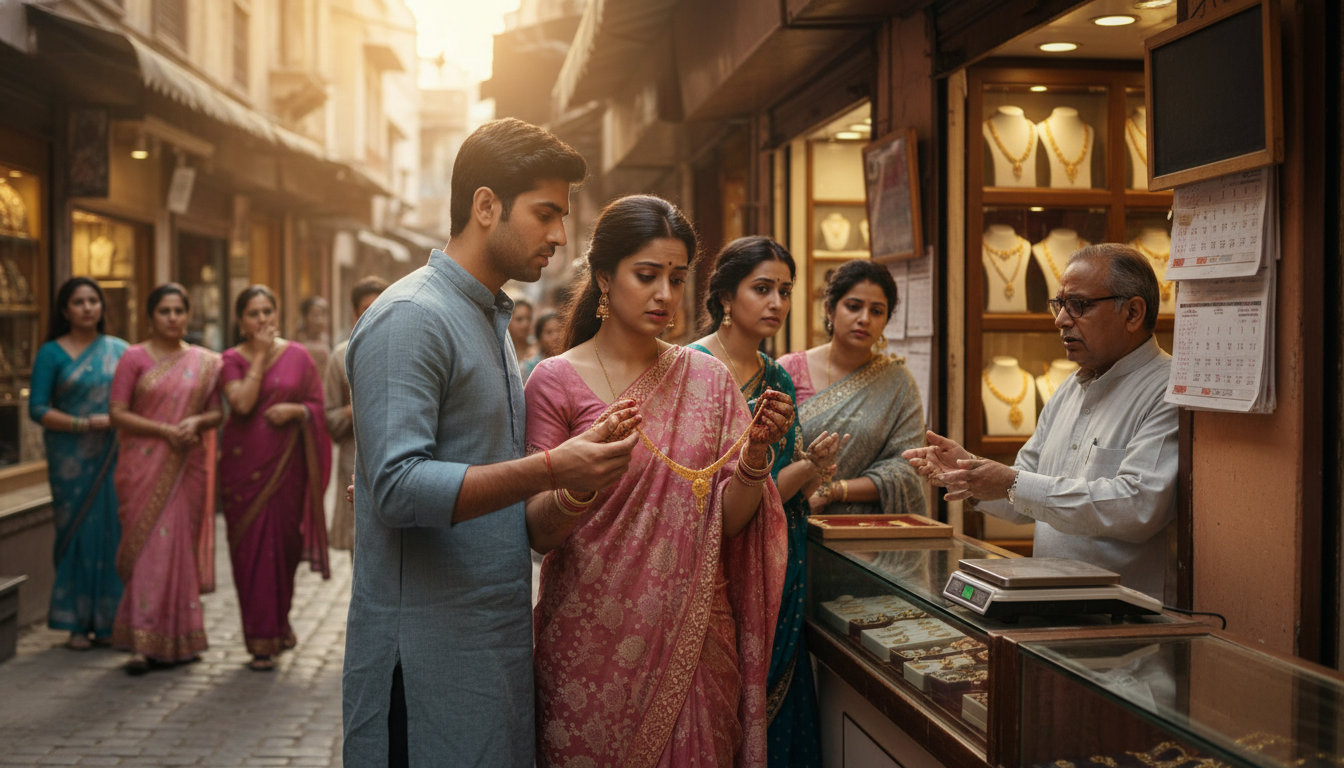
Photographs from showrooms in New Delhi this spring captured customers weighing choices at display cases and discussing sizes with sales staff, underlining the enduring emotional attachment to gold. Retailers and cultural commentators note that changes in purchasing patterns tend to be adaptive rather than permanent; families often intend to add to gold holdings over time once prices stabilize or savings permit.
Market Forces Behind the Recent Rally
Analysts and market participants point to a combination of investor demand, currency movements and safe-haven flows as underlying forces supporting higher gold prices globally and locally. Inflation concerns, geopolitical uncertainty and shifts in interest-rate expectations can all boost appeal for non-yielding assets such as gold, while domestic factors like currency swings affect the rupee price consumers ultimately pay. These dynamics create periods of elevated retail prices that intersect with peak wedding seasons and festival calendars, intensifying consumer decisions.
Economists say that while short-term volatility is common, the timing of weddings and cultural festivals means households are particularly exposed when spikes occur near major buying windows. The interaction of global market sentiment and local purchasing schedules has therefore become an important variable for both families planning ceremonies and businesses forecasting sales.
For now, Indian consumers and retailers are negotiating a new balance: preserving tradition while adapting to rising gold prices through lighter designs, alternative metals and staggered purchases. The choices made this wedding season may influence how gold is purchased and presented in future ceremonies, as economic realities reshape longstanding customs.

