
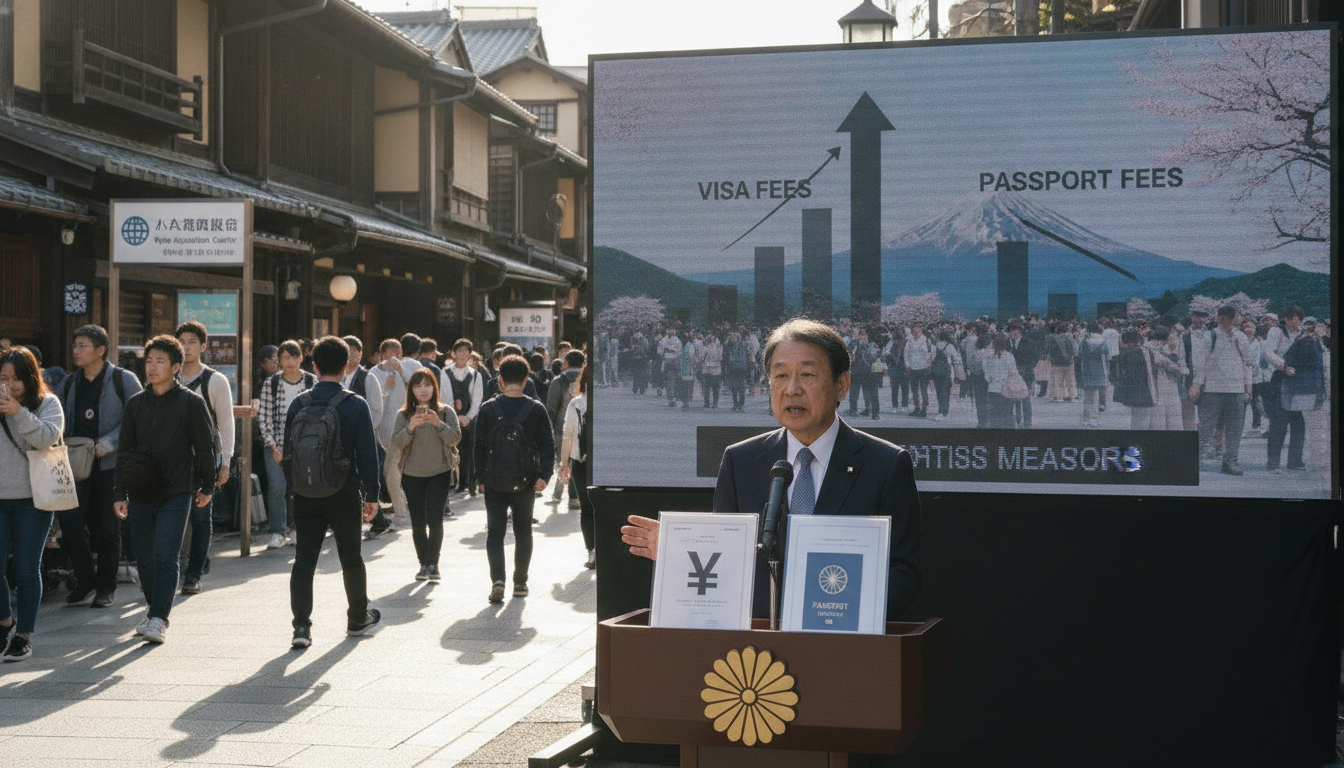
Japan Cuts Passport Fees as Visa Prices Rise to Tackle Overtourism
Tokyo lowers passport fees while raising entry visa charges to manage visitor flows, encourage outbound travel and ease pressure on popular destinations.
Japan announced a simultaneous cut to passport fees and an increase in visa charges for foreign visitors on Wednesday, aiming to steer tourist flows and encourage more Japanese citizens to travel abroad. The change in passport fees is intended to lower the cost barrier for outbound trips while higher visa charges for incoming travelers are designed to temper the sharp rise in overseas visitor numbers that has strained popular sites. Authorities described the package as a calibrated measure to rebalance tourism demand and protect local communities from overtourism.
Details of the fee adjustments
The government reduced passport application and renewal fees for Japanese citizens, shortening the financial hurdle for those planning trips overseas. The fee cut applies to standard adult passports and is intended to make short- and medium-haul travel more affordable for a broader range of households.
At the same time, visa processing or entry charges for certain categories of overseas travelers were raised immediately, according to officials. The two-pronged approach couples incentives for outbound travel with measures to slow inbound flows, a strategy shaped by the recent surge in arrivals and localized crowding at major destinations.
Government rationale and official objectives
Officials framed the policy as an effort to distribute tourism more sustainably and support regional communities that have been overwhelmed by visitor numbers. The government cited concerns about overtourism at famous sites and the social strain on neighborhoods that handle large concentrations of international tourists.
Ministers said the move also seeks to boost foreign exchange spending by Japanese residents abroad, helping service sectors and airlines that rely on outbound travel. By nudging demand outward while moderating inbound visitor growth, policymakers aim to balance economic recovery with community resilience.
Expected impact on travel patterns
Authorities and industry analysts expect a modest uptick in outbound travel among price-sensitive groups, including families and younger travelers. Lower passport fees remove one upfront cost associated with planning trips, which could encourage more Japanese citizens to book international travel in the coming months.
Conversely, higher visa charges are likely to slow growth among some segments of inbound tourism, particularly short-stay visitors sensitive to immediate costs. Observers caution that visa price increases alone may not deter travel by higher-spending tourists, but combined with targeted visa rules they can shape visitor profiles and timing.
Reactions from travel industry and local governments
Major travel associations welcomed the passport fee cut as a practical stimulus for outbound demand, while urging clear communication on application procedures. Industry groups said travel agencies and carriers could help convert that demand into bookings if promotional efforts and flight capacity align.
Local governments in heavily visited areas reacted with guarded support for measures that curb overtourism, while stressing the need for broader policies. Regional leaders asked for parallel investments in infrastructure, visitor management and off-peak promotion to ensure long-term sustainability rather than temporary relief.
Implementation timeline and procedures
The government said the passport fee reduction takes effect immediately for new applications and renewals, with administrative guidance issued to municipal offices handling passport services. Citizens are advised to check local municipal websites or contact city halls for details on how the adjusted fees are applied and any required documentation.
Visa fee increases are being implemented at points of application or entry as specified by ministry guidance, and officials emphasized that exemptions and special schemes for diplomats, business travelers or long-term residents remain in place. Travelers are encouraged to verify visa requirements before planning trips to avoid unexpected costs.
Economic and diplomatic considerations
Economists noted that encouraging outbound travel could help rebalance sectors hit by the pandemic-era slump in business travel and diversify sources of tourism-related income. Support for outbound spending can also relieve domestic pressure on crowded tourist hotspots while stimulating international airline routes and travel services.
Diplomats and trade officials signaled that the visa changes would be communicated through foreign missions to minimize confusion. Governments and business groups in partner countries will monitor impacts on travel flows and may seek clarifications where higher entry charges affect bilateral tourism exchange.
The policy package represents a tactical shift in Japan’s tourism management as the country wrestles with the dual objectives of sustaining economic benefits from travel while protecting communities and cultural sites from excessive visitor concentrations. The government plans to review the measures’ effects and assess whether further refinements are needed to ensure balanced, sustainable tourism outcomes.

