
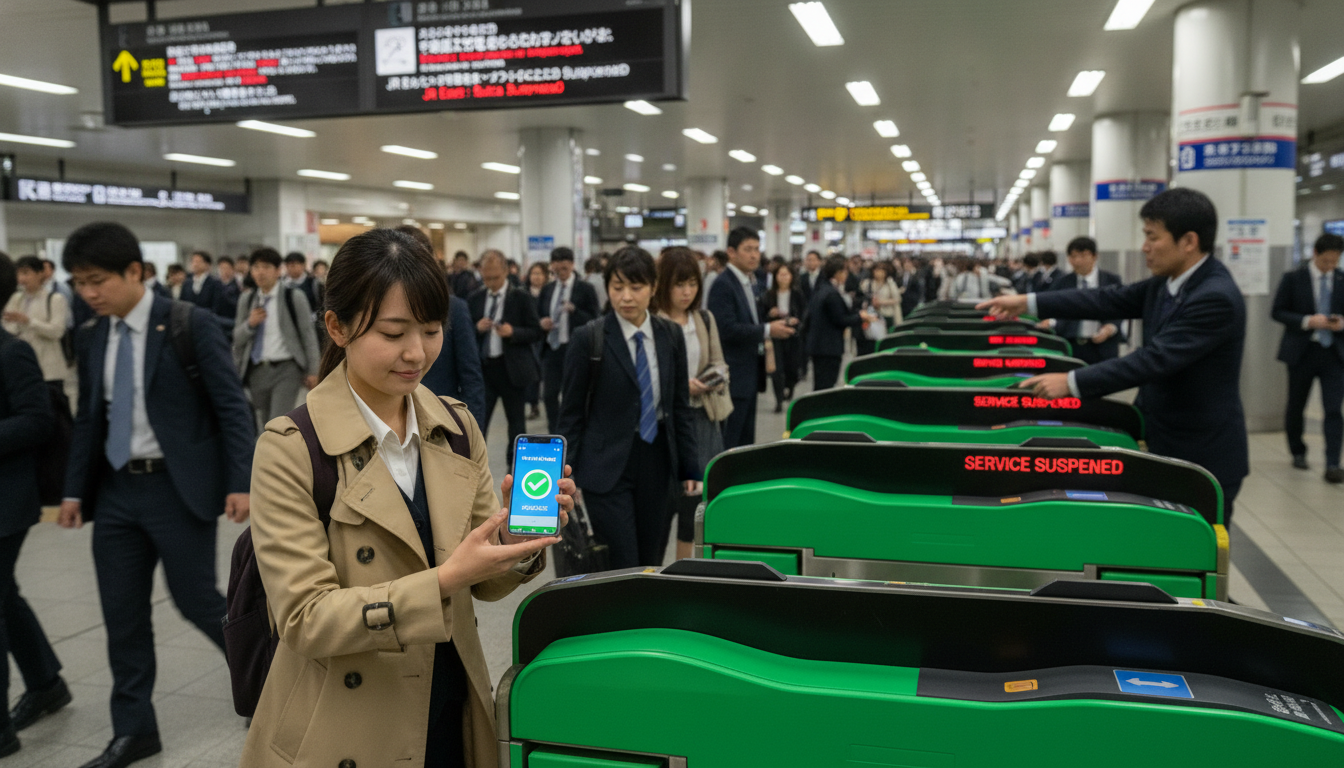
Mobile PASMO Charging Disrupted Nationwide on July 1; Service Largely Restored After 2.5 Hours
Mobile PASMO app charging failed across Japan on July 1, 2026; operators restored service after roughly 2.5 hours, while Mobile Suica reported separate suspensions.
On the morning of July 1, 2026, users across Japan encountered a service interruption that prevented app-based charging on Mobile PASMO, the digital transit fare app used for commuter payments and top-ups. The managing body announced that the primary charging function was unavailable for several hours but that core systems were brought back online after about two and a half hours. The disruption coincided with a separate service suspension for Mobile Suica, which also halted app charging and commuter-pass purchases as JR East worked to resolve the issue.
Outage reported for Mobile PASMO on July 1, 2026
The problem first emerged in the early hours of July 1, with users attempting to top up balances through the Mobile PASMO application reporting failures and error messages. The managing organization confirmed the outage and said an investigation was underway to identify the root cause of the charging disruption. Commuters relying on phone-based top-ups found themselves unable to add funds immediately, potentially affecting morning commutes in urban areas.
Operator announces partial recovery after roughly 2.5 hours
The Mobile PASMO operator issued an update indicating that primary charging services had been restored approximately two and a half hours after the interruption began. Restoration was described as partial at first, with core payment functions returning but some ancillary services still under monitoring. Officials emphasized that restoration efforts were ongoing to ensure stability and to prevent a recurrence of the same fault.
Residual problems affect a subset of users
Despite the broad recovery announcement, the operator acknowledged that a segment of users continued to experience difficulties with charging and other app features. These lingering issues appear to be intermittent and affect specific account types or configurations, rather than presenting as a complete network-wide failure. The operator advised affected customers to retry transactions, reboot devices, and consult official support channels if problems persisted.
JR East suspends Mobile Suica services during recovery
Separately, East Japan Railway Company (JR East) confirmed temporary suspensions of several Mobile Suica functions, including app charging and commuter-pass purchases, as its technical teams worked to implement fixes. JR East described the measures as precautionary steps to protect transaction integrity while engineers diagnosed the disruption. The company said it prioritized restoring full functionality and would provide updates through its customer information channels.
Commuter guidance and alternative payment options
Authorities and operators urged commuters to plan for contingencies when relying on mobile fare systems, recommending the use of physical IC cards, cash purchases at ticket machines, or credit card transactions where possible. For those already on trains or at stations, station staff were instructed to assist with fare adjustments and to accept alternative payment arrangements as needed. Both Mobile PASMO and JR East encouraged users to check their official websites or customer support lines for the latest status updates and guidance.
The broader context of this disruption highlights the increasing dependence on mobile transit payment systems across Japan, where commuters frequently use smartphone apps for daily travel and fare management. While mobile IC services offer convenience, outages can produce immediate operational friction during peak travel times and underscore the importance of robust redundancy and rapid incident response. Transit operators have historically maintained layered support systems, including staffed ticket counters and physical card options, to mitigate the impact when digital services fail.
Commuters and businesses that depend on uninterrupted mobile payment functionality are likely to monitor post-incident reports for explanations and any planned improvements to system resilience. The Mobile PASMO operator and JR East have both signaled ongoing reviews of the incident to identify technical or procedural changes that could reduce the likelihood of similar outages. Independent analysts note that coordinated public communication and clear fallback options are critical for maintaining trust when digital transit infrastructure experiences interruptions.
If problems persist, users are advised to contact official customer support for assistance and to retain transaction records in case of erroneous charges or failed top-ups. Operators have indicated they will investigate individual complaints and provide remedies where appropriate. For now, the majority of users can resume normal app-based charging, but a minority may need additional troubleshooting or direct support to restore full functionality.
Operators said they will release a fuller incident report once investigations conclude, including any findings about causes and steps taken to prevent recurrence. In the meantime, commuters are reminded to carry alternative payment methods and to monitor official operator channels for verified updates and specific instructions.

