
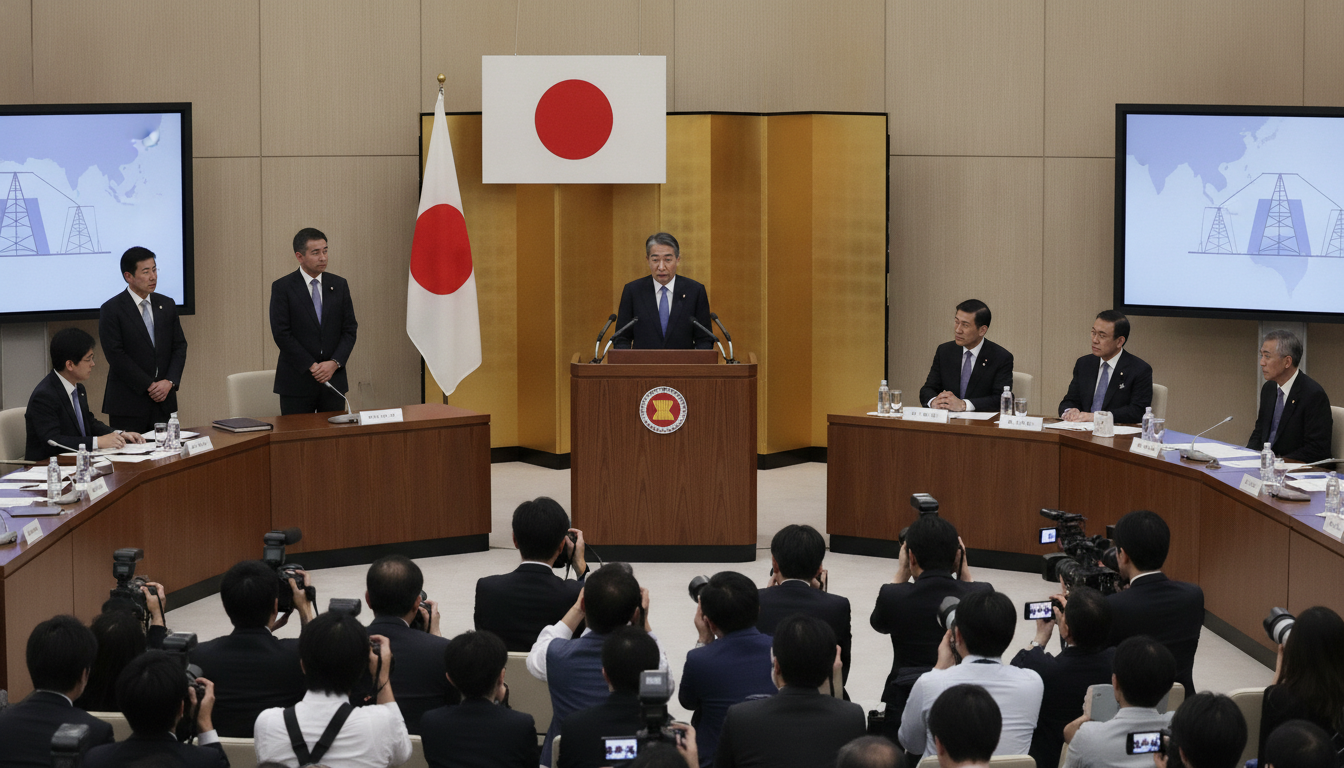
Japan probes oil stockpiling in Southeast Asia as Tokyo, JICA to begin regional review
Japan will assess public and private oil stockpiling systems across Southeast Asia this summer to bolster supply resilience amid regional energy disruptions.
Tokyo has instructed teams from the government and the Japan International Cooperation Agency to begin on-site and technical reviews of oil reserve frameworks in multiple Southeast Asian states as early as this summer. The review, focused on both government-held strategic reserves and commercial storage practices, aims to identify vulnerabilities that could affect Japan’s energy security and regional supply chains. Officials say the initiative responds to recent spikes in energy market volatility and emergent crises that have strained local fuel availability.
Mandate and timeline for the review
The government has set a rapid timetable for the inquiry, with preliminary missions slated to start in the coming months. Teams will collect data on storage capacity, drawdown procedures, legal frameworks, and private-sector cooperation arrangements. Officials expect initial findings to be compiled for policy consideration by late summer, followed by more detailed recommendations later in the year.
JICA’s technical role and expertise
The Japan International Cooperation Agency will provide technical assistance, logistics and coordination for the fieldwork. JICA specialists will assess storage infrastructure, inventory management systems, and emergency distribution mechanisms in collaboration with host-country authorities. The agency will also examine opportunities to strengthen training, monitoring and contingency planning at both national and regional levels.
Drivers: regional shocks and supply concerns
The initiative is driven by recent regional shocks that have highlighted gaps in fuel availability and crisis response. Several Southeast Asian governments have faced sudden shortages and price volatility, prompting emergency measures to stabilise domestic supplies. Tokyo officials view the regional review as a pragmatic step to reduce spillover risks for Japan, which relies on stable maritime routes and predictable market behaviour for its energy imports.
Focus on private-sector stockpiles and legal frameworks
A central element of the inquiry will be how private companies manage commercial inventories and their legal obligations during emergencies. Investigators will map contractual arrangements, storage locations, and incentives that influence whether companies release or withhold supplies under strain. The review will also consider whether existing laws and bilateral agreements adequately ensure access to private reserves when national or regional crises occur.
Potential policy outcomes and regional cooperation
Tokyo may use the findings to propose stronger information-sharing protocols, targeted technical assistance, or pilot programmes to expand emergency storage capacity. Any recommendations could include new measures to harmonise regional stockpile standards and streamline cross-border cooperation during supply disruptions. Officials emphasise that the work is intended to complement, not supplant, host countries’ sovereign energy policies.
The review team will engage with a mix of national energy ministries, state-owned enterprises, private refiners and industry associations to ensure a comprehensive picture. Discussions will prioritise transparency about holdings and drawdown triggers while respecting commercial confidentiality and national prerogatives. Japanese authorities say they will aim for practical, cooperative measures that improve mutual resilience without imposing onerous obligations.
The move reflects broader shifts in Tokyo’s approach to energy security, combining diplomatic engagement with technical cooperation. By addressing vulnerabilities in Southeast Asian oil stockpiling systems, Japan seeks to reduce the risk that regional shortages translate into supply shocks for its own economy. Officials describe the effort as part of a wider strategy to diversify risk and strengthen ties with key partners in the region.
Pending the review’s results, Tokyo could propose expanded JICA-funded projects to upgrade storage facilities and monitoring systems. Policymakers may also explore enhanced emergency fuel sale arrangements or regional auditing protocols to improve readiness. Any substantive proposals would be discussed with ASEAN partners and bilateral counterparts before implementation.
The coming months will show how host governments and private companies respond to Tokyo’s outreach and what concrete steps emerge from the technical assessments. Japanese officials stress the review is consultative and intended to build trust and practical capabilities across Southeast Asia. The final recommendations are expected to shape Japan’s bilateral assistance and domestic contingency planning going forward.

