
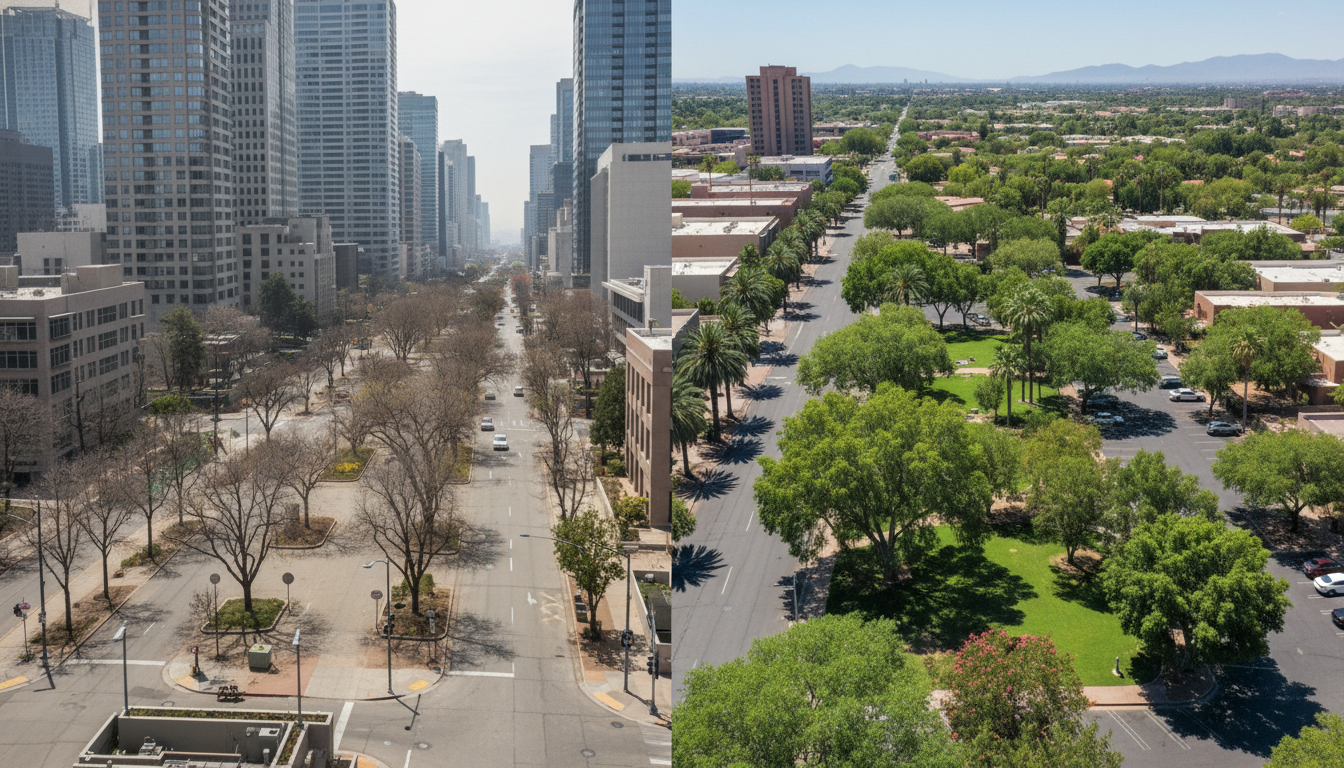
Tokyo tree canopy shrinking as multi-unit housing and low‑maintenance plantings replace gardens
Tokyo tree canopy is shrinking as multi-unit housing replaces private gardens and municipal planting choices favor low‑maintenance species, leaving the city with less urban shade than Phoenix, Arizona.
Tokyo’s tree canopy has fallen behind that of Phoenix in recent canopy analyses, a surprising outcome given Phoenix’s desert setting. The reduction in tree cover is linked to changing land use across Tokyo’s neighborhoods and shifts in municipal planting policies. Analysts say these trends are making green shade harder to find in major Japanese cities and raising concerns about heat, health and biodiversity. City officials and urban planners are now weighing measures to rebuild canopy cover while accommodating housing demand.
Tokyo trails Phoenix in canopy comparisons
Recent satellite and map-based canopy comparisons show Tokyo with lower overall tree cover than Phoenix, despite the latter’s arid climate. The contrast has drawn attention because it exposes how urban development patterns, not climate alone, determine the amount of street and residential shade. Observers point to the replacement of individual houses with yards by multi-unit apartment blocks as a principal driver of the loss. The shift compresses private green spaces into smaller, shared footprints that often lack mature trees.
Housing redevelopment removes private gardens
Across Tokyo’s metropolitan area, neighborhoods once characterized by single-family homes with gardens are being redeveloped into compact, multi-unit housing. Developers prioritize building footprint and parking over preserving mature trees, and smaller balconies or courtyards rarely replace the shade of large specimen trees. As a result, the informal canopy that grew up around older housing stock is disappearing block by block. Residents and local groups report that the cumulative effect of many incremental redevelopments is noticeable cooling loss and reduced street-level greenery.
Municipal planting choices favor low‑maintenance trees
Local governments have been shifting toward species and planting schemes that cut long‑term upkeep costs, choosing trees that are smaller, slower‑growing or easier to maintain. These low‑maintenance selections reduce leaf litter and pruning needs but also tend to deliver less overhead shade and lower habitat value for wildlife. In some districts, paved streetscapes and narrow sidewalks limit planting pits and root volumes, further restricting tree growth. Urban foresters warn that convenience-focused planting strategies can lead to a fragmented canopy that fails to deliver cooling and ecological benefits at scale.
Heat, health and ecosystem consequences
The retreat of tree canopy has immediate implications for urban heat island effects, with shaded streets and parks cooling city blocks by several degrees compared with unshaded pavement. Without mature shade trees, neighborhoods can experience higher daytime temperatures, amplified energy demand for cooling, and greater heat exposure for older adults and outdoor workers. Trees also contribute to air quality, stormwater absorption and residents’ mental health, benefits that erode as canopy cover recedes. Public health officials are increasingly concerned about rising heat vulnerability in densely built wards with limited green infrastructure.
Policy responses and planning options under consideration
City planners and municipal authorities are exploring a range of policy tools to arrest and reverse canopy loss, including incentives for developers to retain existing mature trees. Options on the table include mandatory tree protection during redevelopment, tax breaks or floor-area bonuses for projects that incorporate significant green space, and expanded budgets for street-tree planting with larger, engineered soil volumes. Rooftop greening, pocket parks on vacant parcels, and the restoration of green corridors along waterways are also being promoted to increase connected canopy over time. Pilot projects in some Tokyo wards have begun testing these measures, aiming to demonstrate cost-effective ways to boost shade.
Community-led initiatives filling gaps
In many neighborhoods, residents and civic groups are taking matters into their own hands by organizing tree-planting drives and community stewardship programs. These grassroots efforts often focus on planting native or diverse species, protecting young trees from vandalism and educating landlords about the long-term value of canopy. While community action cannot fully substitute for coordinated municipal planning, it has proven effective at restoring microclimate benefits along streets and near schools. Partnerships between local governments, utilities and volunteer groups are emerging as a practical approach to scale up planting while sharing maintenance responsibilities.
Urban tree canopy restoration faces practical trade-offs with housing demand and infrastructure costs, but experts emphasize that deliberate planning can reconcile the two. Retaining larger planting areas in new developments, designing shared open spaces to accommodate mature trees, and committing to multi‑decade maintenance plans can preserve shade even as the city densifies. For Tokyo, restoring a robust tree canopy will require policy alignment, developer cooperation and public support to reestablish the cooling, health and biodiversity benefits that mature urban forests provide.
As Tokyo balances growth with livability, decisions made now about housing design and planting strategy will determine how much shade and resilience the city offers residents in the decades ahead.

