
Iran’s New Proposal Conditions Talks on US Halt to Attacks and Lifting of Maritime Blockade
Iran’s new proposal asks the US to halt attacks and lift its maritime blockade before resuming negotiations; Pakistan may mediate renewed talks as tensions persist.
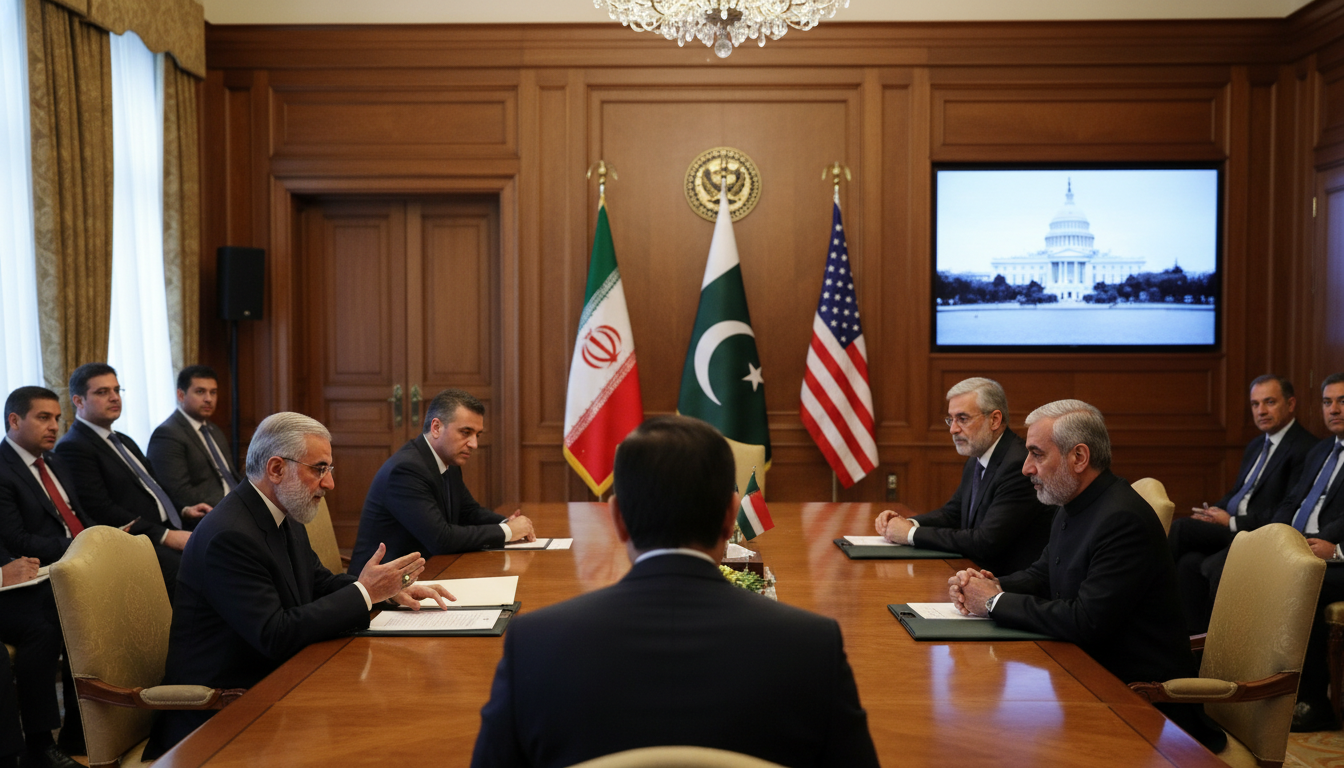
The Iranian government on April 30, 2026 presented what it described as a fresh proposal to Pakistan, seeking concrete U.S. guarantees to halt military actions and end a maritime blockade before formal talks can restart. The offer, reported by Iranian state media, frames the cessation of hostilities and a durable peace as Tehran’s priorities. U.S. President Donald Trump, speaking to reporters on May 1, 2026, said he was not satisfied with the terms and indicated he could not accept the demands as presented.
Details of Iran’s submission to Pakistan
Iran’s foreign ministry spokesperson publicly characterized the proposal as intended to secure “the end of war and lasting peace” in talks mediated by Pakistan on April 30. The submission follows weeks of strained communications and intermittent exchanges through Islamabad as an intermediary. Tehran’s shift in wording signals a tactical adjustment aimed at making a return to the negotiating table more feasible, according to officials familiar with the matter.
The proposal explicitly links any reopening of talks to U.S. behavior at sea and a halt to direct attacks attributed to American forces. That linkage reverses an earlier posture in which Tehran had set lifting the maritime blockade as a hard precondition, offering instead to discuss conditions for reopening the Strait of Hormuz if guarantees are provided.
Trump expresses rejection and political rhetoric
President Trump told reporters on May 1 that the Iranian demands included concessions he could not accept, saying he was “not satisfied” with the terms and indicating no immediate prospect of agreement. In public remarks the same day, he also criticized domestic voices who argue the United States has not prevailed in the conflict, describing such criticism in sharp terms.
The president’s response underscores the political constraints shaping U.S. bargaining positions and signals that Washington is unlikely to move quickly to meet Iran’s stated prerequisites. U.S. administration officials have continued to emphasize pressure and deterrence even as diplomatic channels remain intermittently open.
Maritime blockade and the Strait of Hormuz conditions
Under the new proposal, Iran makes clear it would consider discussing the reopening of the Strait of Hormuz if the U.S. formally halts operations described by Tehran as attacks and agrees to lift the blockade on Iranian ports. The Strait, a strategic chokepoint for global oil shipments, is a central element of the dispute and a frequent flashpoint for escalation.
Despite Tehran’s apparent willingness to negotiate terms for maritime access, the two sides remain far apart on who would oversee transit security and how to verify compliance. Equally contentious is the question of Iran’s nuclear activities, which Washington continues to cite as a major impediment to a comprehensive accord.
Pakistan’s mediating role and possible timeline
Pakistani officials have been identified as intermediaries since initial secret contacts began, and Islamabad accepted a role relaying proposals in late April. Reports indicate Iran signaled readiness to reconvene talks in Pakistan as early as the following week, contingent on U.S. moves, a timetable that would put potential sessions in the first days of May 2026.
Whether Pakistan can bridge the credibility gap between Tehran and Washington depends on its ability to secure concrete backing for any interim guarantees and to host neutral, verifiable procedures. Diplomats note that even if a meeting occurs, sessions may initially focus on confidence-building measures rather than immediate, binding agreements.
Key obstacles that remain for a settlement
Observers identify at least three major hurdles: verification of any U.S. commitment to halt military actions, the operational details and enforcement of a lifted maritime blockade, and the broader dispute over Iran’s nuclear program. Each of these issues carries high strategic stakes and domestic political consequences for the capitals involved.
Trust deficits run deep on both sides; Iran seeks assurances that would reduce the risk of renewed strikes, while U.S. policymakers demand verifiable limits on Tehran’s military and nuclear capabilities. Without a staged process of reciprocal steps, negotiators are likely to find progress slow and fragile.
The coming days will test whether Tehran’s revised wording and Pakistan’s mediation can create sufficient momentum to convert conditional offers into concrete, phased arrangements. International attention will focus on whether both sides can translate tactical proposals into enforceable measures that reduce immediate risks while leaving broader disputes to longer-term diplomacy.

