
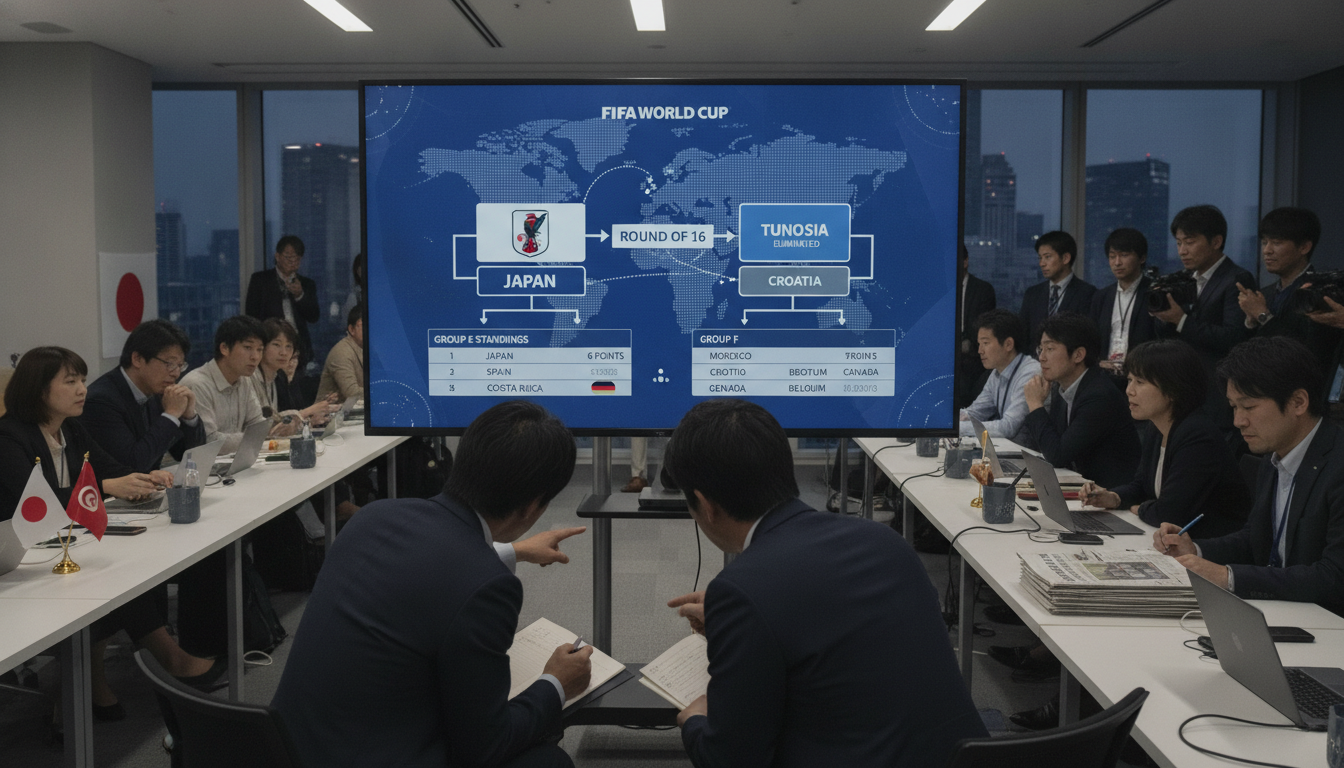
Japan World Cup: How Japan’s Group-Stage Finish Will Shape Its Knockout Path
Japan World Cup chances broken down: how finishing 1st, 2nd or as a best third in Group F affects opponents, travel from Nashville and match dates.
Japan’s victory over Tunisia on June 20 (June 21, 2026 JST) left the national team on four points and sitting second in Group F, setting up a decisive final group match against Sweden on June 25 (June 26, 2026 JST). The Japan World Cup group-stage result will determine not only the Round of 16 opponent but travel demands and rest days for the knockout phase. A draw or win against Sweden would secure advancement, while a loss could still see Japan through as a second- or third-placed qualifier depending on other results.
If Japan Finishes First in Group F
If Japan defeats Sweden and tops Group F on goal difference or wins with the Netherlands also prevailing, the team would face the runner-up of Group C in the Round of 16. That match is scheduled for June 29 in Monterrey, Mexico, and the likely opponent is a heavyweight—either Brazil or Morocco—based on current seeds. Finishing first would set a longer east-west travel itinerary through the U.S. and Mexico, with tournament planners estimating total travel to the final stages at roughly 9,600 kilometers if Japan were to progress to the championship match.
If Japan Finishes Second in Group F
A second-place finish would pair Japan with the winner of Group C in Houston on June 29, again pointing to a likely clash with Brazil or Morocco in the first knockout round. Advancing from that match would place Japan into a bracket where their next opponent could be the victor between the E2 and I2 winners, with teams such as Senegal or Norway among the plausible adversaries. The second-place route reduces overall travel compared with finishing first, with cumulative distance estimates near 7,300 kilometers through to the later knockout rounds.
If Japan Advances as a Best Third-Placed Team
Should Japan progress as one of the best third-placed teams, the most probable immediate assignment is a June 30 meeting in the New York/New Jersey area against the Group I winner—most likely France, a pre-tournament favorite. That route is projected to involve the shortest cumulative travel, roughly 6,500 kilometers, and can offer an extra recovery day before the Round of 16 compared with the other scenarios. However, advancing as a third-placed side leaves Japan uncertain of its opponent until the final group matches conclude, complicating opponent-specific scouting and tactical preparation.
Rest Days, Travel and the Nashville Base Camp
Japan’s tournament base is in Nashville, Tennessee, and the distances between the camp and knockout venues vary significantly by bracket placement. Finishing first tends to require longer trips and more time-zone adjustments, increasing the physical toll on players despite an arguably clearer bracket path. Finishing second or third reduces overall travel distance but can shorten or complicate preparation windows due to tighter scheduling or late confirmation of opponents. Coaches and medical staff will need to balance recovery protocols with tactical work as locations shift from Mexico to different U.S. venues.
Practical Implications for Match Preparation
Regardless of placement, Japan faces the reality that the first knockout opponent will likely be a tournament favorite, creating a “do-or-die” tactical challenge in the Round of 16. Topping Group F may yield a marginally more favorable sequence of opponents after the opening knockout round, but it also imposes heavier travel and earlier match-ups against high-ranked teams. Conversely, the third-place path can offer extra rest time before the first knockout match but complicates advance scouting and opponent-specific planning until the final day of group play.
Japan’s match against Sweden on June 25 (June 26, 2026 JST) therefore carries outsized importance beyond immediate qualification. The result will shape stadiums, opponents and logistical burdens for the rest of the tournament, influencing both player recovery and strategic preparation for a team that has already demonstrated strong form in the group stage.

