
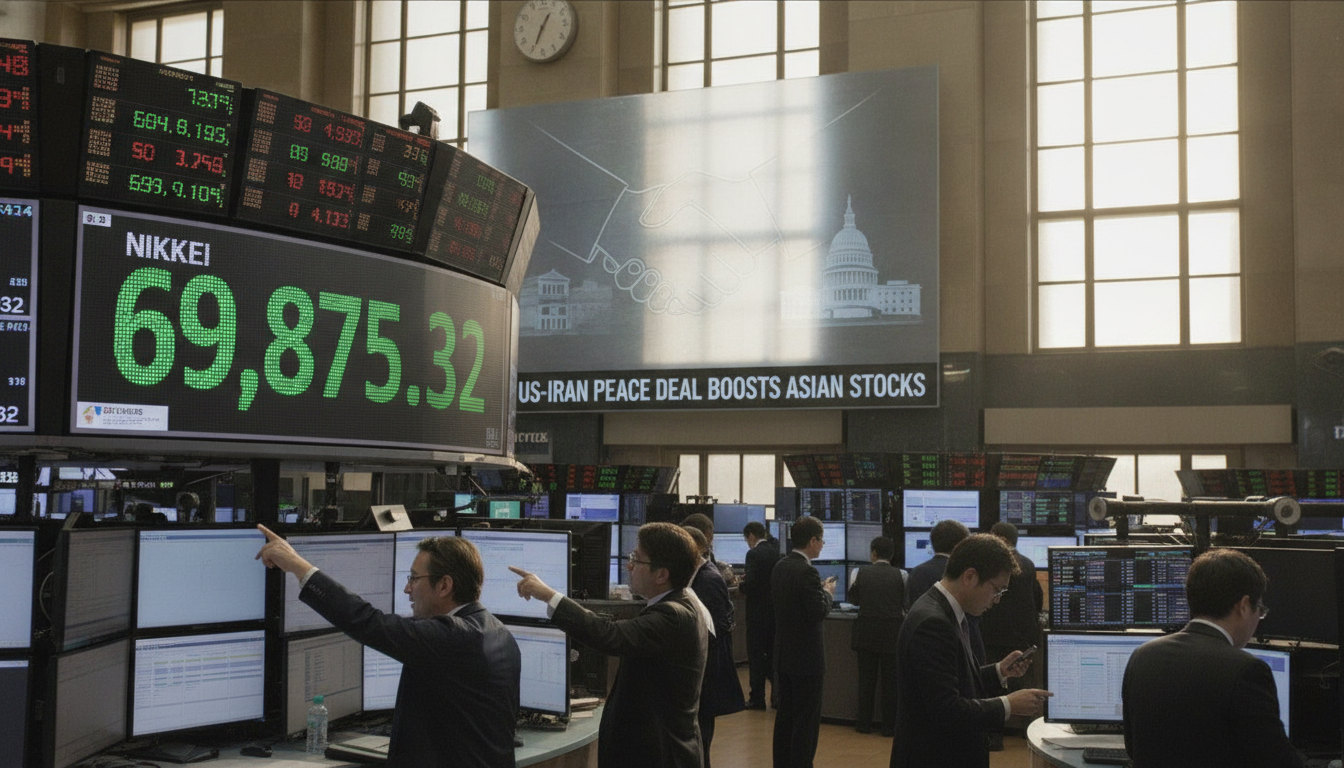
US-Iran Peace Deal Sends Nikkei Average Surging Near 70,000 Threshold
Japan’s Nikkei average jumped as Asian markets rallied after a U.S.-Iran peace deal on June 15, 2026, pushing stocks toward the 70,000 mark and altering investor risk appetite.
Asian markets opened sharply higher on Monday after reports that Washington and Tehran reached an agreement to end military operations in the Iran conflict. The Nikkei average reacted strongly to the development, climbing toward the psychologically important 70,000 threshold as traders priced in a reduction in geopolitical risk. Other regional bourses, including South Korea’s market, rose in tandem as investors rotated back into equities.
Markets Rally as US-Iran Deal Clears Way for Peace
The announcement on June 15, 2026 prompted a broad risk-on move across Asian equities, with investors interpreting the deal as a step toward stability in global energy and shipping routes. Markets that had been pressured by uncertainty linked to the Iran conflict saw rapid revaluation as premium for geopolitical risk receded. Equity rallies were accompanied by compression in oil risk premia and a pickup in trading volumes across Tokyo and Seoul.
Strategic asset managers and institutional traders cited the prospect of fewer supply disruptions and lower risk of escalation as key drivers behind the sudden shift in sentiment. Analysts noted that markets often respond quickly to resolved geopolitical shocks, particularly where trade and commodity flows are affected.
Nikkei Average Climbs Toward 70,000 Threshold
Japan’s Nikkei average moved decisively higher on the session, closing the gap to the 70,000 level that had been eyed by market participants as a landmark. The index’s advance reflected gains across large-cap exporters and domestically focused names, both of which benefited from improved global demand expectations. Market commentators said the move was notable for its breadth, rather than being confined to a handful of heavyweight stocks.
Traders emphasized that psychological thresholds like 70,000 can amplify market reactions as momentum-driven flows accelerate. While the index approached the level on Monday, analysts cautioned that sustained advances would depend on follow-through in earnings and macro data.
Sector Gains Led by Exporters and Banks
Export-oriented sectors outperformed as the prospect of a weaker yen and firmer global growth expectations lifted profit outlooks for manufacturers. Automakers, electronics producers and machinery firms led the advance, reflecting investor anticipation of stronger overseas sales. Banking stocks also rose on expectations that reduced geopolitical stress could normalize credit conditions and increase lending activity.
Conversely, defensives such as utilities showed more muted performance as risk appetite favored cyclical and economically sensitive names. Market participants highlighted the interplay between currency moves and sector rotation in determining short-term winners and losers.
Foreign Flows and Investor Sentiment Shift
The peace deal prompted a reallocation of foreign institutional flows back into Japanese equities, with portfolio managers citing improved risk-reward dynamics. Increased foreign buying helped support the Nikkei average’s rise, reversing part of the outflows that had occurred during heightened tension. Domestic retail investors, who had been cautious, showed greater willingness to re-enter markets on the back of clearer geopolitical headlines.
Sentiment gauges and implied volatility measures across the region declined sharply, signaling reduced demand for protective hedges. However, traders noted that while sentiment can swing rapidly, underlying allocation trends depend on broader macro signals and portfolio rebalancing cycles.
Currency and Bond Market Reactions
The yen weakened modestly against the dollar as risk appetite increased and carry trades regained appeal, supporting the gains in export-sensitive stocks. A softer yen tends to lift reported overseas earnings for Japanese multinationals, reinforcing positive investor sentiment. Japanese government bond yields edged up as some investors shifted from cash and sovereign paper into equities, though moves in fixed income were more measured than in stock markets.
Market analysts stressed that currency shifts would be watched closely by policymakers and corporate treasuries, given the potential impact on inflation and corporate results. Central bank communications and short-term flows will likely shape the next leg of moves in both FX and bond markets.
Outlook and Risks for Japanese Markets
While the immediate market reaction was upbeat, analysts warned that persistent upside will hinge on tangible improvements in trade, earnings and monetary policy signals. Corporate profit revisions and economic indicators in coming weeks will be decisive in confirming whether the rally is durable. Geopolitical uncertainty, although reduced by the deal, remains a wildcard if implementation falters or if other regional tensions flare.
Investors were advised to monitor liquidity conditions and valuation metrics, which have tightened with the recent run-up. Portfolio managers underscored the need for disciplined risk management amid the rapid change in market dynamics.
The Nikkei average’s move toward 70,000 on June 15, 2026 reflects a swift market reassessment following the U.S.-Iran agreement, but sustaining gains will require positive follow-through from corporate earnings, economic data and stable policy signals.

