
Takaichi Revises "Free and Open Indo-Pacific" to Prioritise Economic Security
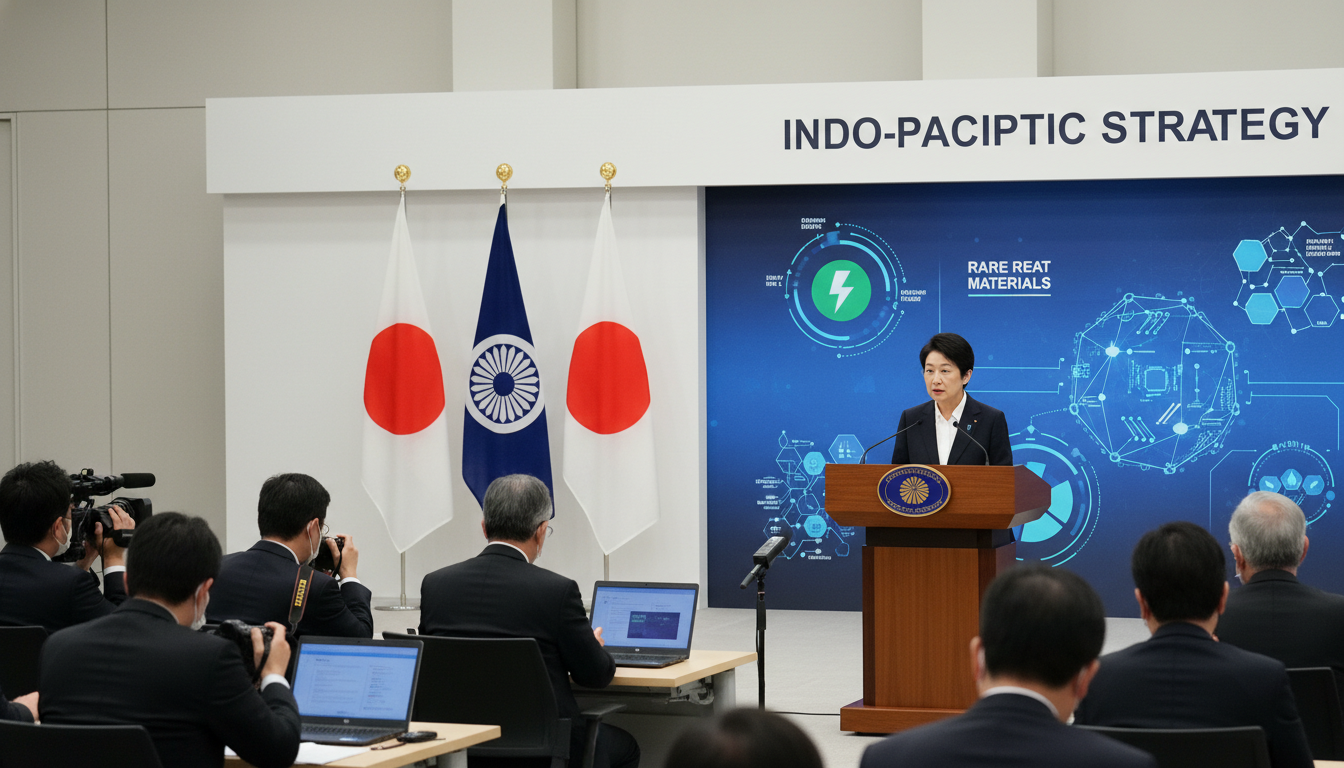
On May 2, 2026, Prime Minister Sanae Takaichi unveiled a revised "free and open Indo-Pacific" plan emphasising energy, critical materials and AI infrastructure.
Takaichi frames Indo-Pacific update around economic security
Japan’s prime minister announced in Hanoi on May 2 that the next iteration of the "free and open Indo-Pacific" will place economic security at its centre. The policy shift signals a broader focus on securing supply chains for energy and critical materials while promoting the construction of AI and data infrastructure across the region. Takaichi framed the changes as necessary to shield Japan and partner economies from strategic and market disruptions.
Energy supply resilience and diversification
A central pillar of the revised approach is strengthening energy security through diversification and partnership. The plan calls for closer coordination on fuel supplies, renewable energy projects and shared storage capabilities to reduce vulnerability to sudden shocks. Officials say the aim is to build predictable, diversified energy networks that support industry and national security simultaneously.
Securing critical materials and supply chains
Takaichi highlighted critical materials — including rare earths and battery metals — as another priority for the Indo-Pacific update. The updated policy proposes cooperation on sourcing, recycling and alternative materials to ease dependence on single suppliers. Measures to encourage transparent supply chains and joint strategic reserves were cited as ways to mitigate the economic risks of shortages and geopolitically driven disruptions.
Building AI and regional data infrastructure
The new framework extends beyond physical commodities to digital foundations, with a specific emphasis on AI and data infrastructure. Tokyo’s proposal calls for joint investments in secure data centres, interoperable standards and trusted AI development hubs across partner countries. Japanese officials described this as an effort to ensure that the region’s data ecosystems are resilient, ethically governed and aligned with economic-security objectives.
Partnerships with regional governments and industry
Takaichi’s announcement places a premium on public-private cooperation and regional partnerships to implement the policy. The plan envisions collaboration with governments, multinational firms and regional organisations to mobilise finance, technology transfer and regulatory alignment. Observers note that success will depend on concrete project pipelines and sustained diplomatic engagement across Southeast Asia and beyond.
Strategic balance and diplomatic signalling
Analysts interpret the economic-security emphasis as Tokyo’s attempt to balance deterrence and engagement in a contested regional environment. By strengthening economic ties, Japan aims to offer alternatives to coercive economic influence while deepening interoperability with like-minded partners. The policy update also serves as a diplomatic signal that Tokyo intends to be a leading provider of infrastructure and standards in the Indo-Pacific.
Financing, timelines and next steps
The announcement in Hanoi outlined ambitions but left many implementation details for follow-up negotiations. Officials indicated that Tokyo will seek bilateral and multilateral financing mechanisms and explore public guarantees to attract private investment. Expect technical working groups and ministerial-level talks in the coming months to translate broad priorities into specific projects and timetables.
The Indo-Pacific revision announced by Prime Minister Sanae Takaichi on May 2 reframes regional strategy around economic security, integrating energy, critical materials and digital infrastructure initiatives into Japan’s diplomatic agenda. The approach aims to strengthen resilience and provide partners with practical alternatives, but its impact will hinge on detailed financing plans, industry involvement and sustained cooperation across the region.

