
Islamic burial in Japan fuels local protests and prompts calls for dialogue
Growing opposition to Islamic burial in Japan has sparked demonstrations and heated local debates, raising questions about integration and cultural anxiety.
Japan has seen a rise in vocal opposition to plans for Islamic burial sites as foreign communities grow, sparking protests and anxious debate over cultural change. The issue of Islamic burial in Japan has become a flashpoint in several municipalities where residents and activists have clashed over proposals to provide ground interment that meets Muslim religious requirements. Officials, community leaders and civil society groups now face pressure to balance religious accommodation, local sentiment and legal frameworks.
Anti-immigrant protest in Sendai draws attention
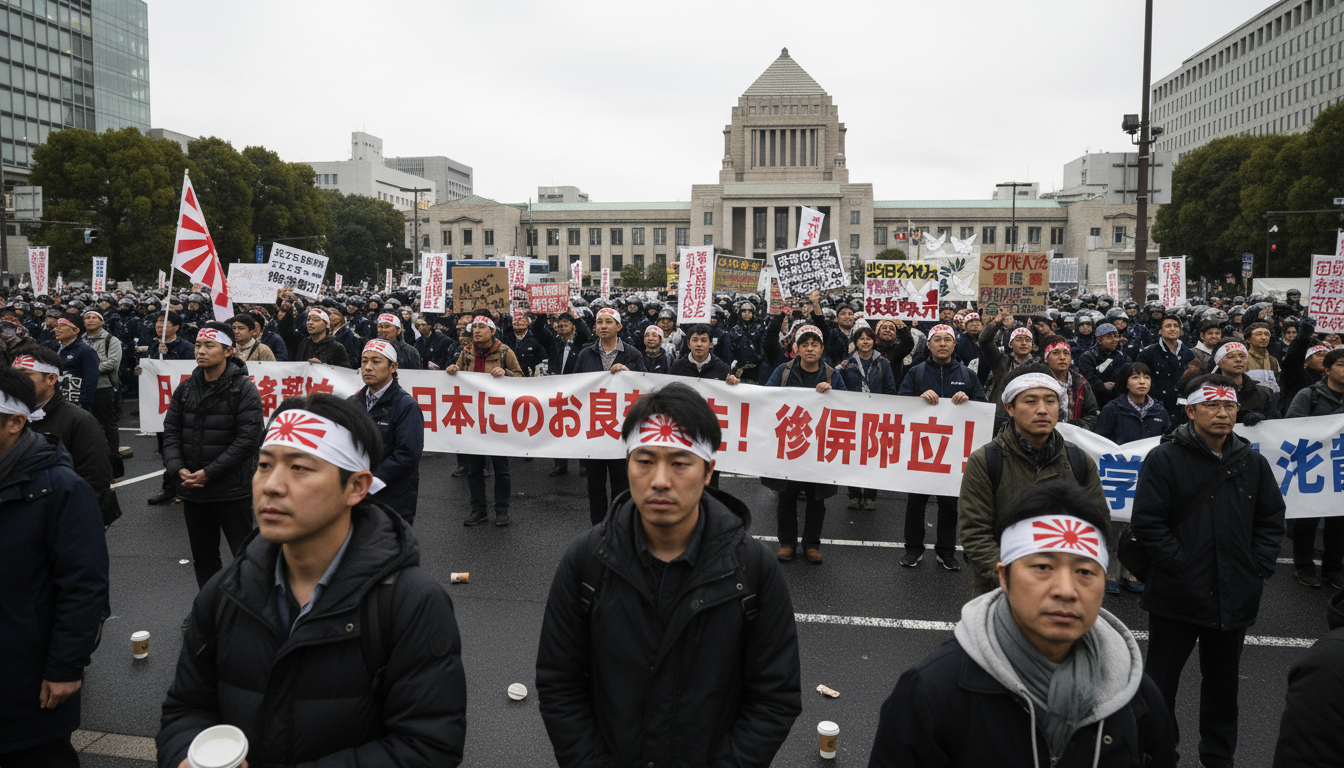
In late November, a small demonstration in central Sendai brought the issue into public view when about 30 protesters gathered with banners opposing immigration and soil burial. Participants displayed Japanese flags and carried signs asserting that immigration and ground burial would “destroy” Japanese culture, while speakers used loudspeakers to urge passersby to oppose proposed changes. The protest, though modest in size, illustrated how burial practices—often a private matter—can become highly symbolic in debates about national identity and social change.
Residents cite cultural disruption and public concern
Opponents say their unease stems from a sense that long-standing local customs could be undermined if burial practices that differ from cremation become more visible. Many in Japan are accustomed to cremation as the norm, and proposals for Muslim-style ground burial have triggered worries about land use, hygiene and the preservation of local landscapes. Surveying residents in affected areas reveals that concerns are rarely limited to religious doctrine; they often encompass broader anxieties about rapid demographic change and the perceived speed of cultural transformation.
Local governments navigate law, custom and public opinion
Municipal officials confronted with burial requests have several legal and administrative constraints to weigh, including zoning rules and cemetery management guidelines. Some town and city leaders have sought to hold public meetings, establish listening sessions and commission feasibility studies to address both technical issues—such as soil suitability and plot allocation—and social concerns. In at least one locality, a mayor convened community forums and met with Muslim residents to hear proposals for a limited, privately managed burial area, signaling a preference for dialogue over unilateral decisions.
Muslim residents stress accommodation and integration
Members of the Muslim community in Japan emphasize that requests for Islamic burial are limited and seek practical solutions that respect local law and customs. Community representatives describe efforts to explain religious requirements—such as timely burial and specific ritual practices—and to propose compromises like designated plots within existing cemeteries or small private facilities that meet regulatory standards. Many Muslim families express a clear desire to integrate: they participate in local events, contribute to neighborhood life and say that securing the option for traditional burial is about dignity and continuity rather than the imposition of a parallel social order.
Women activists recount shifts in perspective after dialogue
A number of local activists—some of whom initially opposed burial proposals—have reported changing views after encountering Muslim families and visiting prayer spaces and community kitchens. These women say direct conversation and exposure reduced fear rooted in unfamiliarity and helped them distinguish between abstract anxieties and concrete proposals. Their accounts highlight the role of face-to-face engagement in defusing tensions and suggest pathways for community-led initiatives that bring together residents on both sides of the debate.
Civil society and experts urge information and mediated talks
Academics and nonprofit organizations working on migration and social cohesion recommend structured information campaigns and mediated town-hall discussions to prevent misinformation from hardening into prejudice. They point to international examples where municipalities established clear technical criteria and community agreements for religious burial while maintaining respect for long-standing local practices. Legal scholars also note that Japan’s statutes leave room for municipal discretion on cemetery management, making early consultation and transparent procedures critical to reducing conflict.
Local leaders and community groups now face the practical task of designing processes that are technically sound and socially acceptable. That will require clear explanations about health and land-use implications, transparent application procedures, and opportunities for neighbors to ask questions before decisions are finalized. Without such steps, small sparks of concern could widen into more sustained opposition.
As Japan’s population becomes more religiously and culturally diverse, the debate over Islamic burial in Japan underscores a broader challenge: how to reconcile minority religious needs with majority norms while preventing fear from turning into exclusion. Many stakeholders are beginning to accept that the most durable solutions will come from patient dialogue, careful regulation and day-to-day interactions that build mutual understanding.

