
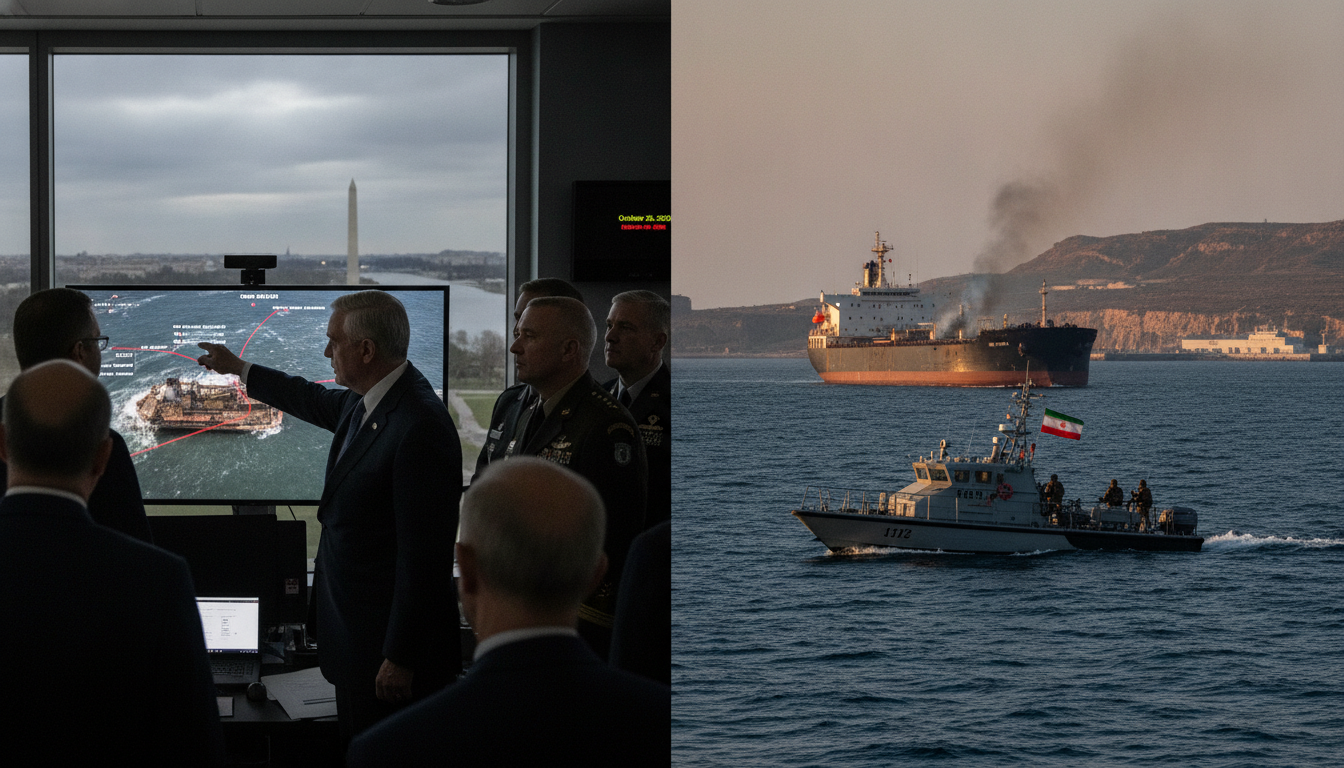
U.S. strikes Iran after alleged drone attack on Panama‑flagged tanker
U.S. strikes Iran after alleged drone attack on Panama-flagged tanker in the Strait of Hormuz, hitting military surveillance, air defenses and drone facilities. (June 27, 2026)
U.S. strikes Iran after tanker attack
The United States carried out air strikes against multiple targets inside Iran on June 27, 2026 after accusing Tehran of attacking a Panama‑flagged oil tanker in the Strait of Hormuz. The operation, announced by U.S. Central Command, was described by Washington as a calibrated response to what it called a renewed threat to commercial shipping in the international waterway. The phrase "U.S. strikes Iran" reflects the central action announced by U.S. officials early on June 27.
U.S. military statements said the strikes were targeted at Iranian military surveillance infrastructure, communications systems, air defense positions and drone storage facilities. U.S. officials asserted that the action was taken after Iran allegedly used a drone to strike a tanker transiting near the Strait of Hormuz at approximately 4:30 a.m. Eastern Time on June 27. The U.S. framed the strikes as necessary to protect vessels and to respond to what it viewed as violations of a ceasefire understanding reached earlier this month.
U.S. allegation of tanker attack
U.S. Central Command said the Panama‑flagged tanker was carrying crude oil when it was struck by an unmanned aerial vehicle near the strategically vital Strait of Hormuz. The command characterized the incident as part of a pattern of threats that had targeted commercial shipping lanes in recent days. U.S. officials said that, despite diplomatic agreements signed earlier in the month intended to end active hostilities, Iranian actions on June 26–27 constituted a breach.
The allegation has increased concern among maritime operators and governments about safety in the Gulf and adjacent seas. Panama, as the vessel’s flag state, and shipping industry groups typically coordinate with coastal nations and naval forces when such incidents occur, though official responses and damage assessments were pending at the time of the U.S. announcement.
Targets and scope of the strikes
According to U.S. military releases, the strikes focused on Iranian military monitoring stations, key communications nodes, air defense emplacements and locations where drones are stored and maintained. The action was described as "additional strikes" and was presented as proportionate to the threat posed by continued attacks on merchant shipping. U.S. spokespeople said the operation sought to degrade the capabilities used to threaten vessels without escalating to a wider conflict.
Independent confirmation of damage inside Iran was limited in the immediate aftermath, and Tehran had not issued a full public tally of losses when the U.S. statement was released. The U.S. did not provide detailed photographic evidence with the initial announcement, instead citing operational security and the need to protect ongoing forces.
Ceasefire memorandum and claims of violation
Earlier in June 2026, the United States and Iran signed a memorandum intended to mark an end to active combat operations and to lay the groundwork for a more stable ceasefire. U.S. officials said that Iran had been afforded opportunities to comply with the memorandum but, after what the U.S. described as renewed attacks, Washington concluded further action was necessary. The U.S. framed the June 27 strikes as both punitive and deterrent in nature.
Iranian authorities have historically denied allegations tying Tehran directly to attacks on commercial vessels, often pointing instead to proxy groups or to the complex security environment in the Gulf. The U.S. claim that Iran violated the ceasefire understanding adds a diplomatic dimension to the military response and raises questions about the memorandum’s durability.
Regional security and maritime consequences
The Strait of Hormuz is one of the world’s most important chokepoints for oil shipments, and any escalation there reverberates through global energy markets and shipping insurance costs. Repeated incidents involving merchant ships have already prompted increased naval patrols and convoy planning by affected states. Shipping companies may respond by redirecting routes, increasing security measures aboard vessels, or temporarily suspending transits through the area.
Commercial operators and insurers will closely watch follow‑up assessments from both navies and independent maritime monitors to gauge the practical risks to crews and cargoes. The U.S. military stressed that protecting freedom of navigation and the safety of commercial shipping were central to its decision‑making in the operation announced on June 27.
Diplomatic fallout and international responses
Diplomatic actors called for restraint even as they processed the implications of the strikes. Allies of the United States urged de‑escalation and verification of claims, while regional governments weighed their own security postures in response to renewed tensions. International organizations and shipping industry bodies typically seek impartial investigations into attacks on merchant vessels before assigning blame or endorsing retaliatory measures.
The coming days are likely to see intensified diplomatic exchanges aimed at preventing a broader spiral of reprisals. Nations with economic and security interests tied to Gulf shipping will be watching for clear signals from Tehran and Washington about whether the ceasefire memorandum can be salvaged or requires renegotiation.
The situation remains fluid, with U.S. and Iranian statements setting divergent narratives about responsibility and proportionality, and with commercial shipping and regional security hanging in the balance.

