
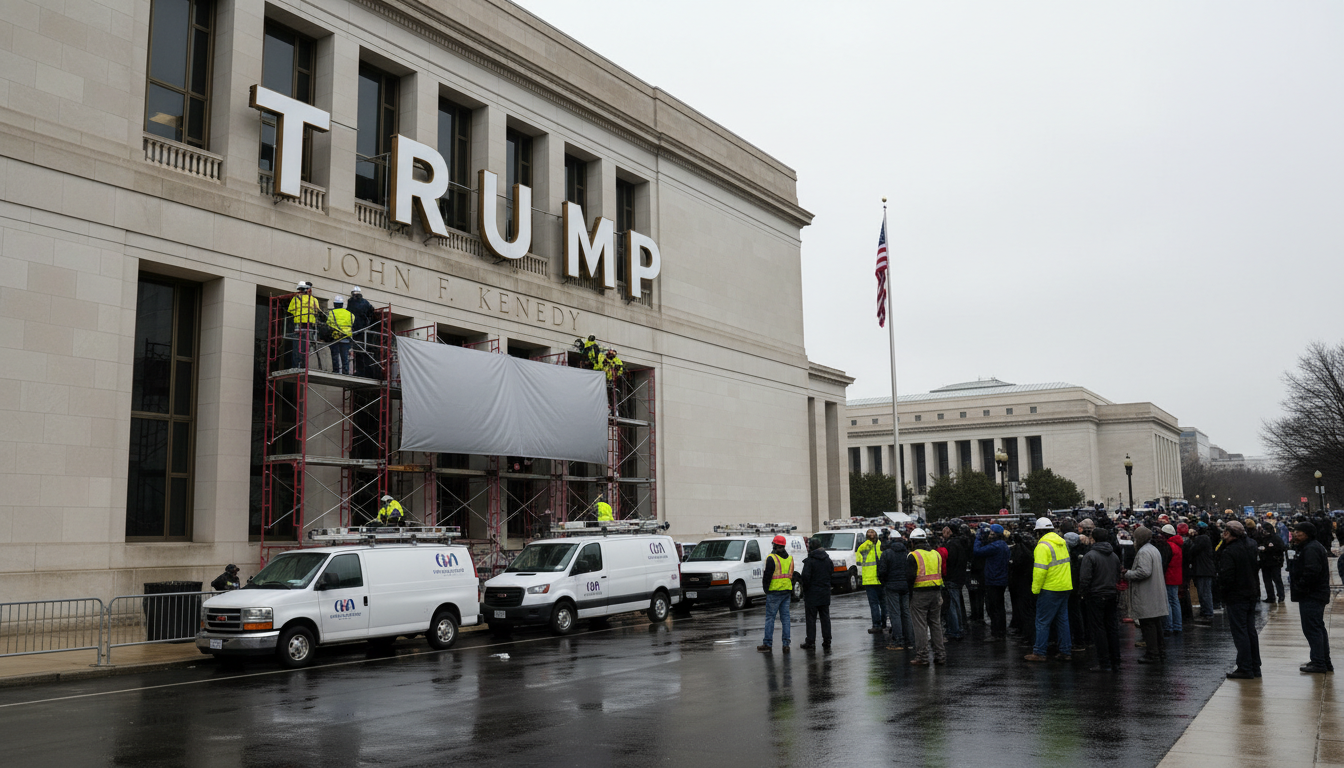
Trump’s Name Must Be Removed from Kennedy Center, Federal Judge Rules
Federal judge orders removal of President Trump’s name from the Kennedy Center façade and halts planned closure and renovations of the Washington cultural venue. (apnews.com)
Federal court finds name change illegal
A U.S. federal judge on May 29 ruled that adding President Donald Trump’s name to the John F. Kennedy Center for the Performing Arts was unlawful, and directed officials to remove the name from the building and related materials. (apnews.com)
The decision concluded the center’s formal name is set by statute and cannot be altered by the board without congressional approval. The ruling represents an immediate legal rebuke to the administration’s effort to rebrand the national cultural institution.
Order requires removal from façade and official materials
The court ordered that Trump’s name be taken down from the center’s exterior and any “official” signage and promotional materials within a set period. The judge gave a specific timeline for removal, underscoring the urgency of restoring the institution’s statutory identity. (forbes.com)
Plaintiffs had sought both a declaration that the renaming was invalid and prompt steps to reverse the change, arguing the board exceeded its authority by unilaterally altering the center’s public identity.
Renovation and closure plans temporarily blocked
In the same ruling, the court temporarily enjoined the Kennedy Center’s planned summer closure and two-year renovation program that the administration had announced. The judge determined the board’s decision to shutter the venue and begin major works lacked adequate deliberation and documentation. (abcnews.com)
The injunction preserves ongoing performances and events while the court examines whether the proposed work and the process that produced it complied with legal and procedural requirements.
Judge cites statutory naming provision and congressional role
The opinion emphasized that the center’s name is established by federal law and cannot be changed without an act of Congress, a point raised repeatedly by challengers to the rename. The court found the board’s unilateral action conflicted with the center’s enabling statute and therefore exceeded its statutory authority. (kpbs.org)
The ruling relied on text of the center’s organic statute and doctrinal limits on administrative bodies, framing the dispute as one about statutory interpretation rather than political preference.
White House and arts community respond
Following the decision, the White House indicated it would evaluate options, while President Trump said he would “back away” from portions of the overhaul after the court order. Key cultural organizations and performers that had expressed concern over the renaming and planned closure welcomed the ruling as a protection of the center’s mission. (apnews.com)
Some board members defended their action as a legitimate recognition of presidential contributions, but several arts groups and touring productions had already withdrawn or relocated events amid controversy and uncertainty.
Appeals and next legal steps expected
Legal analysts say the administration or the Kennedy Center board is likely to appeal the decision to the U.S. Court of Appeals, setting up a broader review of how statutory naming provisions interact with institutional governance. The appeals process could extend the dispute for months and determine whether the injunction is lifted or made permanent. (washingtonpost.com)
Meanwhile, the court ordered disclosure of documents related to the board’s decision-making and renovation plans, signaling that judges will scrutinize the administrative record as the case proceeds.
The ruling marks an unusual judicial intervention at the intersection of culture, law and presidential legacy, reaffirming that federal statutes can constrain institutional branding choices and that significant alterations to national memorials typically require legislative action.

