
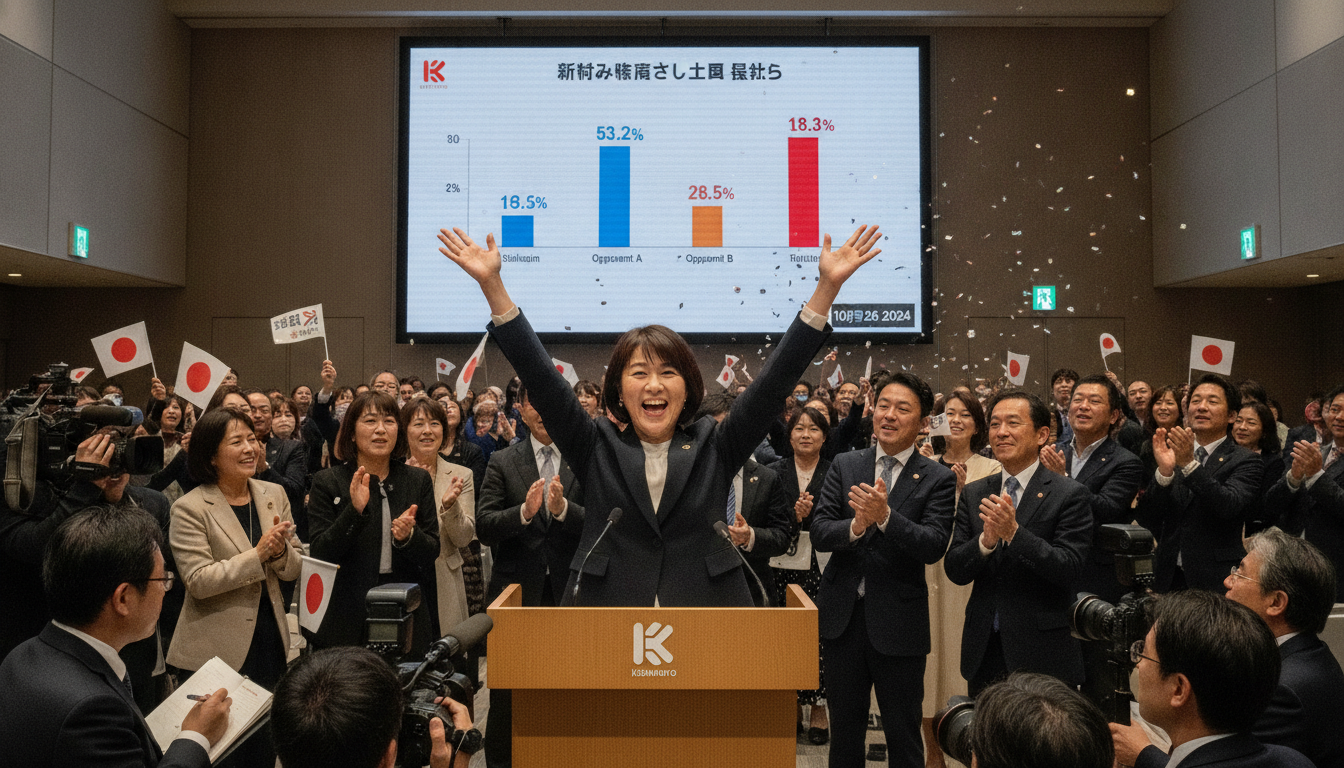
Kishimoto Wins Suginami Mayoral Election in Decisive Re-election
Incumbent Kishimoto Satoko won the Suginami mayoral election on June 29, 2026 with over 50% and a 42.54% turnout, defeating the LDP-backed candidate decisively.
Incumbent Kishimoto Satoko secured re-election in the Suginami mayoral election on June 29, 2026, winning an outright majority and beating her nearest rival by more than twofold. The result, declared on the morning of June 29, came after votes were counted across the ward that has an electorate of 478,530. Kishimoto, 51, celebrated with supporters and said the outcome reflected stronger public trust than at the previous poll four years earlier.
Kishimoto Secures Re-election
Kishimoto claimed a vote share that topped 50 percent, enabling her to avoid any runoff and to begin a second four-year term with a clear mandate. She told supporters that she wanted to expand “creative, forward-looking” policies and to deepen the dialogue between the ward office and residents. The result strengthens her position to continue initiatives launched in her first term.
Her campaign emphasized continuity and local reforms while presenting practical examples of achievements she said had earned voter trust. After the count, Kishimoto said the higher share of votes compared with four years ago validated the administration’s approach to participatory policymaking.
Margin and Voter Turnout
Official figures released after the count showed voter turnout at 42.54 percent, up from 37.52 percent in the previous Suginami mayoral election, an increase of roughly five percentage points. The turnout rise was noted by campaign officials as evidence that efforts to engage residents had broader resonance. The incumbent’s margin over the runner-up was decisive: her vote total exceeded that of the second-place candidate by more than twice.
Election officials reported the ward’s electorate as 478,530 eligible voters on election day. Analysts said the higher participation, while still below national averages for local contests, indicated energised interest in municipal issues and in the direction of local governance.
Campaign Platforms and Achievements
Kishimoto centered her campaign on what she described as “dialogue-based governance,” pledging to continue direct engagement with residents to shape policy priorities. She highlighted a slate of local measures from her first term, including expanded facilities for children, moves toward free school meals for elementary and junior high students, and the introduction of a district partnership system to recognise same-sex couples. These initiatives formed the core of her appeal to progressive and family-focused voters alike.
Opponents had criticised budgetary strains and questioned the pace of implementation, but Kishimoto’s team argued that visible results and sustained community outreach had translated into voter confidence. The campaign also repeatedly pointed to her attendance at public debates and meetings as proof of her commitment to open governance.
Use of Social Media and Campaign Strategy
Kishimoto’s campaign employed social media platforms such as X and Instagram to disseminate policy messages and to promote local dialogue, while deliberately refraining from paid YouTube advertising. Her campaign framed that decision as an effort to resist an electoral dynamic shaped by funds and algorithmic reach, and to instead focus on person-to-person outreach and grassroots engagement. Supporters credited that strategy with helping to mobilise younger voters and residents who value direct communication.
The campaign also leaned on community meetings and small-group forums, saying these settings made politics and administration feel closer to everyday life. Kishimoto’s team said creating repeated opportunities for conversation with residents helped voters understand the practical impact of her policies.
Opposition Performance and Reactions
The main challenger, Owada Shin, 45, a former ward assembly member backed by the Liberal Democratic Party, finished second but lagged far behind the incumbent. LDP officials expressed disappointment at the outcome and signalled they would review local strategy after the defeat. Two other candidates — former mayor Tanaka Ryo, 65, and Masuda Yoshihiko, 68, an international business consultant recommended by the regional party Saisei no Michi — took smaller shares of the vote and did not materially affect the head-to-head dynamic between the top two candidates.
Observers noted that despite the LDP’s organisational resources, the party’s machine proved insufficient to unseat an incumbent with strong local name recognition and a record of visible policy advances. Party strategists indicated the result would prompt reflection on local messaging and candidate selection ahead of future contests.
Looking ahead, Kishimoto’s second term will begin with expectations to translate campaign promises into concrete measures, and to manage fiscal trade-offs inherent in expanded services. Her victory sends a clear signal about local priorities in Suginami and will be watched by political observers as a measure of how progressive municipal platforms fare against established party-backed challengers.
The re-election of Kishimoto Satoko marks a reaffirmation of her first-term agenda and places renewed pressure on the ward administration to deliver on promises of expanded social services, inclusive policies and continued community engagement over the next four years.

