
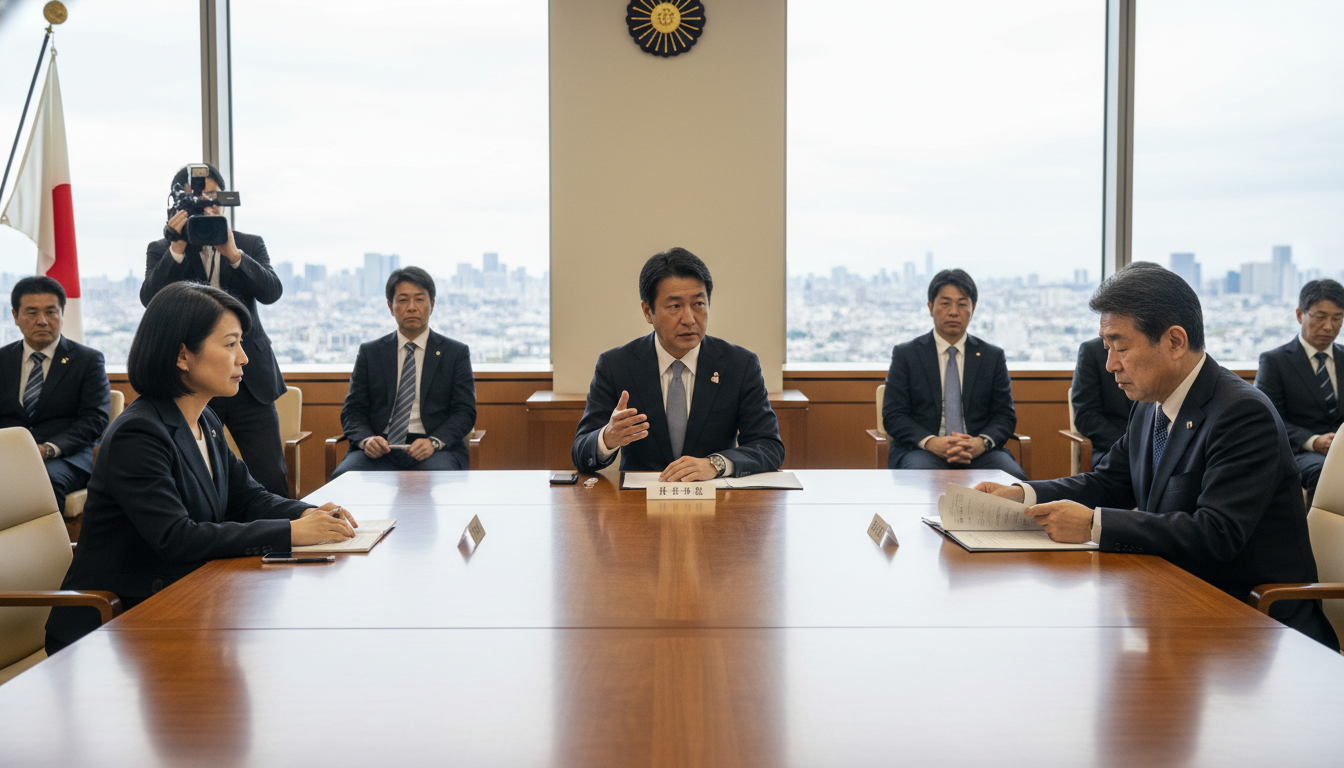
Komeito says talks to accelerate centrist merger with Rikken, aims for decision during Diet session
Komeito secretary-general Nishida announced accelerated talks for a centrist merger with the Constitutional Democratic Party and the Centrist Reform Union, aiming for a direction by July 17.
Public debate intensified on June 3 after Komeito secretary-general Nishida Mineto said the party is speeding talks toward a centrist merger with the Constitutional Democratic Party (Rikken) and the Centrist Reform Union.
Nishida told reporters he expects the parties and their supporting organizations to coalesce around a single centrist bloc and is aiming to produce a clear direction during the current special Diet session, which runs through July 17, 2026.
Nishida’s timetable and objectives
Nishida framed the acceleration of talks as a push to deliver tangible progress before the current Diet session concludes on July 17.
He said the optimal outcome would be an arrangement that allows both the House of Representatives and the House of Councillors to present a unified centrist formation, and he noted that further steps could be taken when an extraordinary Diet is convened in the autumn.
Response from Rikken support organizations
The statement appeared intended to counter moves within some Constitutional Democratic Party support groups that have floated alternative new-party plans.
Nishida downplayed those proposals, saying they do not divert from the larger goal of creating a single, middle-of-the-road bloc with shared backing from affiliated organizations.
Political calculations behind the centrist merger push
Party officials see a centrist merger as a way to consolidate moderate voters and create a clearer alternative to both the ruling coalition and more left-leaning forces.
For Komeito, aligning more closely with Rikken and the Centrist Reform Union could reshape legislative bargaining and campaign coordination ahead of future elections.
Internal challenges and factional tensions
Despite public expressions of unity, the merger faces internal hurdles, particularly among local party chapters and interest groups that may resist rapid integration.
Rikken’s more cautious elements have signaled concern over policy blend, leadership roles and the practical mechanics of merging distinct party organizations and support networks.
Legislative and procedural steps ahead
A full party merger would require coordination on leadership selection, policy platforms and legal registration, as well as agreement among elected lawmakers in both houses.
Officials say they are discussing procedural timetables and political sequencing, mindful that any formal unification would need to be presented in a way that secures majority support and avoids splintering regional bases.
Implications for parliamentary dynamics
If the centrist merger proceeds, it could alter committee alignments, coalition negotiations and the balance of influence within the Diet.
Observers say a consolidated centrist bloc might leverage a decisive role in close votes, especially on economic and social policy where middle-ground compromise can be pivotal.
Potential impact on voters and upcoming contests
A successful merger would aim to present a single, disciplined platform to voters who seek moderate alternatives, potentially changing campaign narratives in national and local races.
However, analysts caution that achievement depends on reconciling policy differences and convincing grassroots supporters that the new formation represents their interests.
The coming six weeks before the special Diet ends on July 17, 2026, will be pivotal as party officials attempt to move from broad agreement in principle to concrete arrangements.
Both the pace of negotiations and how the parties address internal dissent will determine whether the centrist merger remains an ambition or becomes a realized political force in Japan’s parliamentary landscape.

