
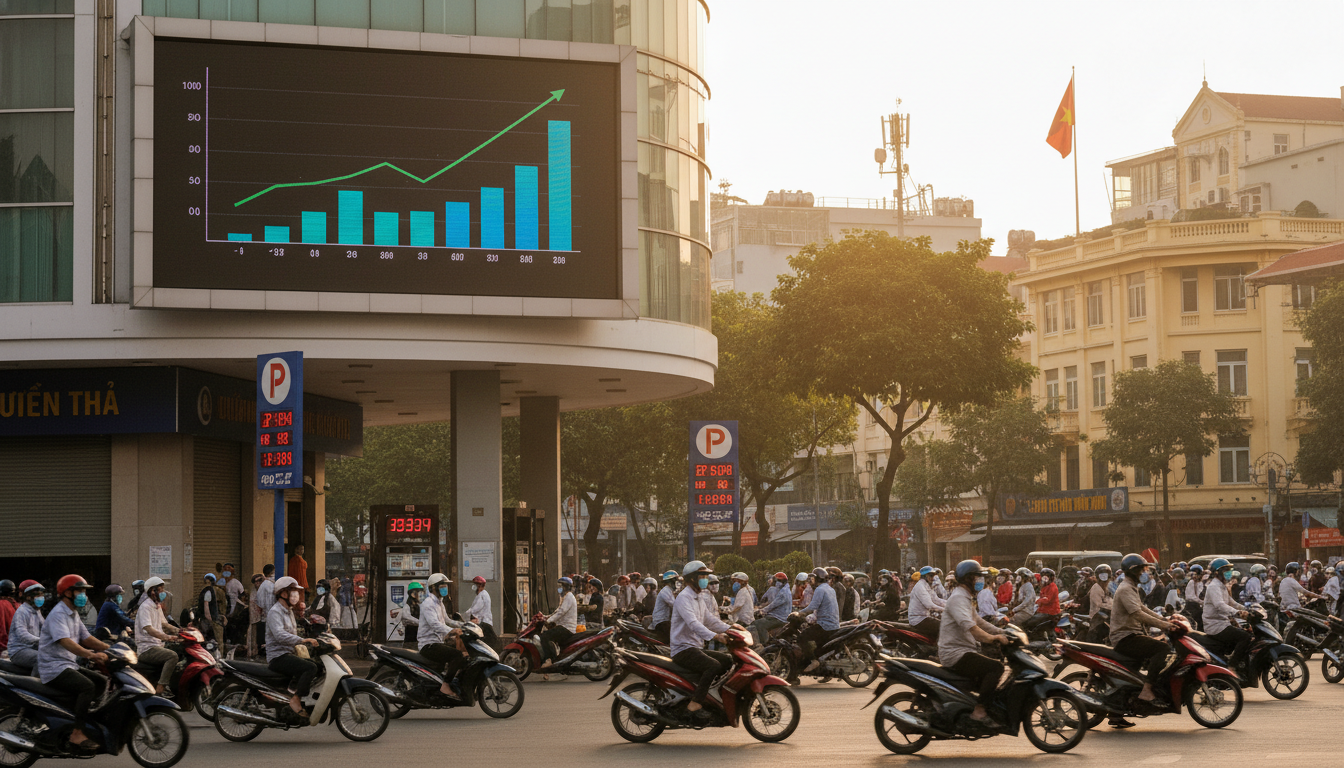
Vietnam inflation surges to highest level since January 2020 as fuel and power costs climb
Vietnam inflation accelerated in May to its highest level since January 2020, driven by surging fuel prices and higher electricity demand that pushed up imports and weighed on the trade balance.
CPI Hits Highest Since January 2020
Vietnam’s consumer price index rose sharply in May, marking the strongest month-on-month increase not seen since January 2020. The uptick in Vietnam inflation was concentrated in energy-related categories, which amplified upward pressure across transportation and utility bills. Officials and market observers noted the increase came after a period of relatively stable prices earlier in the year.
The jump in consumer prices has interrupted a modest disinflation trend and has drawn attention from both domestic policymakers and foreign investors. While some core components remain contained, the headline inflation reading was lifted chiefly by volatile energy costs.
Energy Prices Fuel Consumer Inflation
Global oil market tensions linked to the Middle East conflict pushed international crude prices higher, and those increases have been transmitted to domestic fuel costs. Retail fuel and petrol station prices rose, prompting longer queues at pumps and higher transport fares in urban centers such as Hanoi.
Concurrent hot weather raised electricity consumption for cooling, bolstering demand for power generation and lifting wholesale electricity prices. Utilities passed a portion of those higher generation costs through to consumers and businesses, adding another channel by which Vietnam inflation climbed in May.
Imports Outpace Exports, Trade Deficit Widens
Rising energy bills pushed up the value of imports at a faster clip than exports, creating a widening gap in trade flows. Higher import bills for fuel and power-related commodities reduced the net trade surplus enjoyed earlier in the year and placed additional strain on external balances.
Export sectors that benefit from global electronics and garments demand continued to perform, but their gains were offset by the steep import bill. Traders and economists warned that a sustained run of elevated commodity prices could erode Vietnam’s trade resilience over coming quarters.
Household Budgets and Business Costs
The direct impact of Vietnam inflation is being felt in household budgets, especially for lower-income families who spend a larger share of income on fuel and utilities. Increased costs for transportation and electricity are reducing disposable income and could dampen consumer spending on non-essential goods.
Manufacturers and small businesses are also seeing higher input costs, particularly those dependent on energy-intensive processes or reliant on imported materials. Some firms have begun adjusting margins and prices to cope with the squeeze, with risk of pass-through to consumers in more sectors if energy prices remain elevated.
Policy Response and Monetary Outlook
Policymakers face a balancing act between containing inflationary pressures and supporting economic recovery. The central bank has signaled vigilance in the past, and analysts say the spike in Vietnam inflation may prompt closer review of monetary stance and liquidity measures. Fiscal tools, including temporary adjustments to subsidies or targeted support for vulnerable households, are also under consideration by some economists.
Any tightening of monetary policy would be calibrated, officials are likely to argue, to avoid hampering credit for businesses while addressing second-round inflation effects. For now, the emphasis from authorities appears to be on monitoring price transmission and mitigating supply-side bottlenecks where feasible.
External Risks and Near-Term Outlook
International developments remain a crucial determinant of Vietnam inflation going forward. Continued volatility in oil markets related to geopolitical tensions could keep fuel prices elevated, while weather patterns that push up cooling demand would add further upward pressure on electricity costs. Currency fluctuations and global supply chain disruptions could also influence import bills and domestic prices.
Economists caution that if energy prices moderate, headline inflation could ease later in the year; however, a prolonged period of high commodity costs would complicate the outlook. Close monitoring of global markets and timely policy responses will be necessary to manage risks.
The May rise in consumer prices underscores the vulnerability of Vietnam’s inflation trajectory to external energy shocks and seasonal demand swings. As households and businesses adjust, policymakers will be watching incoming data closely to determine whether the May spike is a temporary blip or the start of a more persistent trend.

