
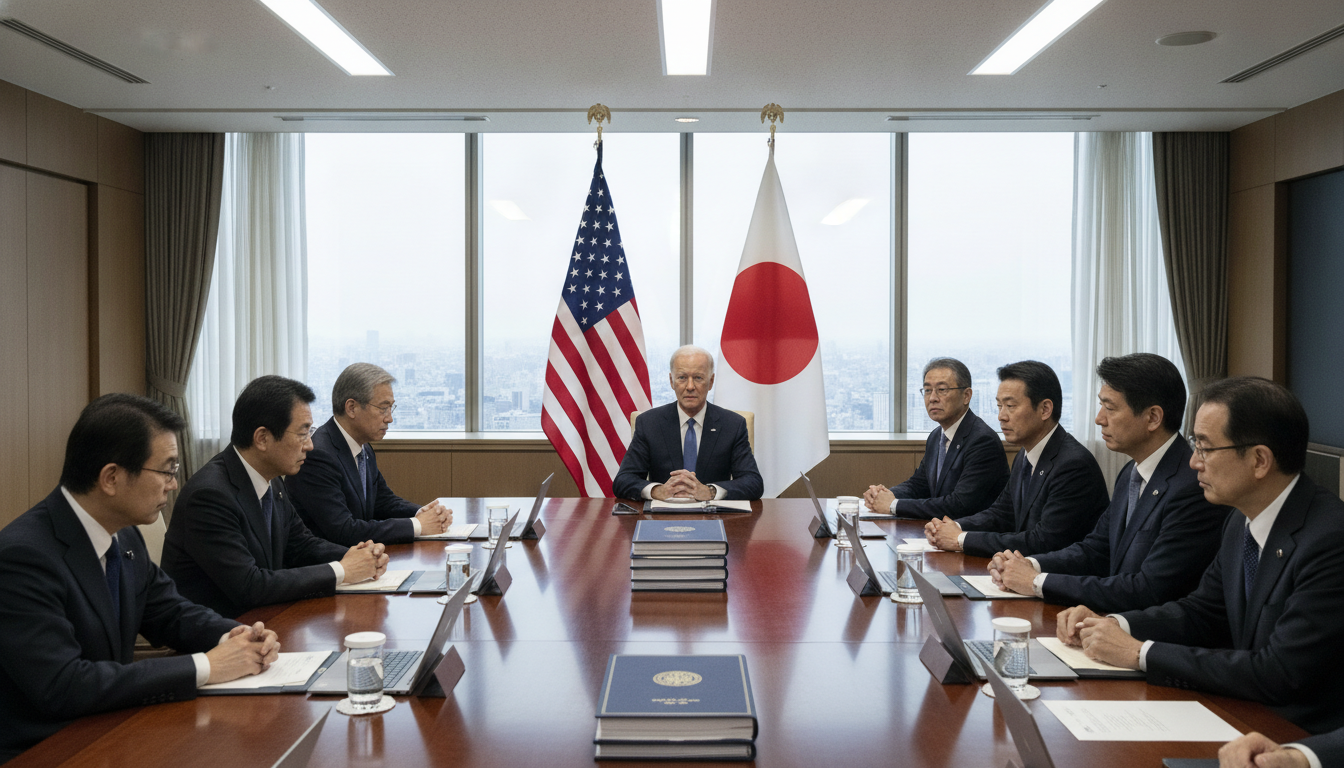
Japan to seek stronger U.S. extended nuclear deterrence in year-end security revisions
Tokyo will explore ways to bolster U.S. extended nuclear deterrence as it revises three core security documents by December 2026, responding to growing regional threats.
Government move to revise three security white papers
The Japanese government has announced plans to review and revise three core security documents, seeking ways to strengthen the extended nuclear deterrence provided by the United States. Officials said the revisions will be completed by the end of the year, with a target for final decisions by December 2026. The documents under review include the National Security Strategy, the National Defense Program Guidelines, and Japan’s mid-term defense plan, which together shape policy, force posture and defense procurement.
The move signals a shift toward more explicit language on deterrence and alliance coordination. Senior ministry sources said Tokyo intends to clarify how U.S. nuclear guarantees would be reinforced without departing from Japan’s longstanding non-nuclear principles.
Options under consideration to reinforce deterrence
Japanese officials are weighing a range of measures to make extended nuclear deterrence more credible and visible to potential adversaries. Proposals under discussion include deeper operational coordination with U.S. forces, enhanced intelligence-sharing, and strengthened conventional strike capabilities that contribute to deterrence.
Tokyo is also examining improvements to command-and-control arrangements and contingency planning with American counterparts. Officials emphasize that the intent is to rely on U.S. nuclear guarantees while maximizing Japan’s conventional and defensive options.
Regional military developments prompting the review
The policy review comes amid a spike in regional military activity, including the launch this month of a ballistic missile from a Chinese submarine, a move reported by state and international agencies as evidence of Beijing’s expanding offensive reach. Japanese defence planners say such developments have heightened concerns about the ability to deter sudden, escalatory attacks in and around Japan’s maritime approaches.
Analysts point to increased sorties, missile tests and maritime operations in the East and South China Seas as factors raising the perceived need for clearer deterrence signals. Tokyo’s reassessment seeks to align its posture with what officials describe as a more complex and volatile regional security environment.
Parliamentary and public debate over non-nuclear stance
The government’s consultations are likely to ignite renewed public and parliamentary debate about Japan’s non-nuclear principles, long enshrined in postwar policy. Some lawmakers and commentators have already suggested that rapidly changing threats could prompt calls to revisit the scope of Japan’s non-nuclear position, while others warn that any discussion of nuclear options would provoke deep domestic and regional unease.
Defense ministry officials have framed the work as doctrinal and operational, not a change in Japan’s legal or constitutional commitments. Nonetheless, opposition parties and civic groups have signaled they will press for detailed explanations and parliamentary scrutiny as the revisions are drafted.
Alliance consultations and U.S. assurances
Tokyo says it will coordinate closely with Washington as it develops options to enhance the credibility of U.S. extended nuclear deterrence. Japanese diplomats and defense officials have held preliminary talks with U.S. counterparts to outline potential security wording and operational concepts to be included in the revised documents.
U.S. officials, according to Japanese sources, have emphasized the importance of alliance unity and of communicating clear deterrence signals to potential adversaries. Any formal changes to how deterrence is described or operationalized are expected to be worked out in bilateral consultations before being presented domestically.
Budget, force posture and procurement implications
Revisions to security doctrine could shape Japan’s force posture and influence procurement decisions in the coming years. Defense planners say the updated strategy will inform the multiyear defense buildup plan and could accelerate investments in long-range strike, integrated air and missile defenses, and intelligence, surveillance and reconnaissance capabilities.
Budgetary implications will be a central point in parliamentary deliberations, where lawmakers will weigh increased spending against competing domestic priorities. Officials note that clearer doctrine can also improve procurement efficiency by aligning capability investments with explicitly stated deterrence goals.
Timeline and next steps
Inter-agency working groups will draft proposed text and options through the summer and autumn, with public briefings and internal consultations scheduled ahead of cabinet approval. The government aims to present finalized revisions to the Diet and to allied partners by December 2026.
Deliberations will include classified assessments of threats, formal consultations with the United States, and parliamentary review, all intended to ensure the revised documents are operationally coherent and politically sustainable.
The government says the revision is meant to strengthen deterrence while maintaining Japan’s non-nuclear principles, and officials emphasize that the measures sought are defensive in purpose and consistent with existing legal constraints.

