
Laos Aims to Become Regional Clean Power Hub While Shielding Economy from Middle East Shock
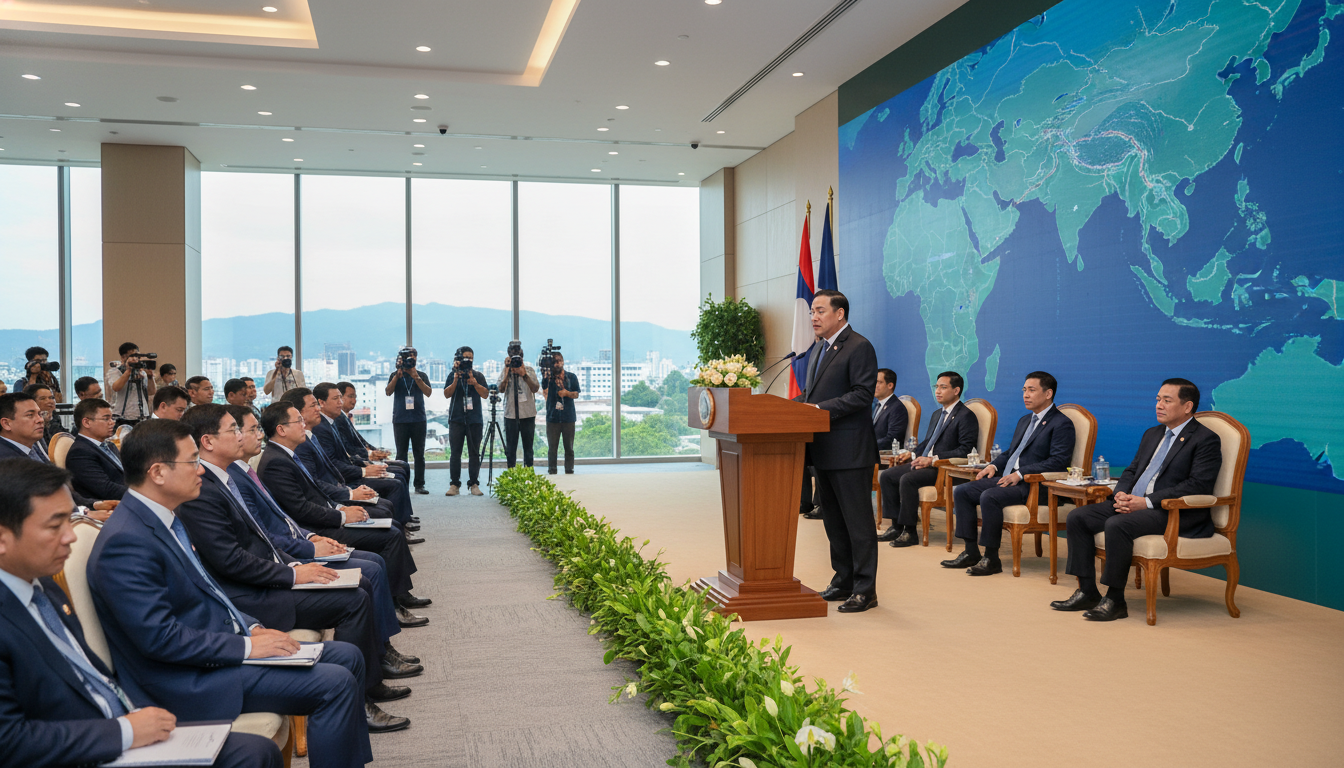
Laos seeks to become a regional clean power hub, Prime Minister Sonexay Siphandone said at Nikkei’s Future of Asia forum in Tokyo on June 11, outlining plans to expand renewables and logistics while reducing economic fallout from the Middle East conflict.
Laos Positions Itself as a Clean Power Hub
Laotian Prime Minister Sonexay Siphandone told business and policy leaders that Laos is pursuing a strategy to become a regional clean power hub for Asia. He said the government will coordinate with neighbouring countries and investors to scale up renewable energy production and cross-border power links.
The announcement at the Nikkei forum framed energy development as central to Laos’s economic transformation. Officials described the effort as a mix of generation expansion, grid integration, and targeted investment to turn the country’s resources and location into a regional asset.
Plans for Renewable Energy Expansion and Grid Integration
Government representatives outlined ambitions to increase generation from renewable sources, including hydropower and other low-carbon technologies. They said planned projects will be designed with cross-border transmission in mind so Laos can export clean electricity to regional markets.
Officials highlighted the importance of grid upgrades and regulatory adjustments to enable reliable power flows. The government indicated it will seek private sector financing alongside bilateral and multilateral support to build interconnectors and modernise domestic transmission systems.
Transport Logistics Strategy to Complement Power Exports
Laos is aiming to pair power ambitions with improvements in transport logistics to strengthen its role as a transit and trade hub. Senior ministers argued that better rail and road links will reduce costs for exporters and make power export projects more commercially attractive.
Delegates at the forum noted that coordination between energy and transport planning could unlock synergies for regional supply chains. The government plans to prioritise corridors that connect generation sites with border crossings and port facilities in neighbouring countries.
Middle East Conflict Seen as an Economic Risk
Prime Minister Sonexay warned that the war in the Middle East poses economic risks for Laos, particularly through volatility in commodity and energy markets. He said the government is taking measures to lessen those effects while pursuing long-term development goals.
Officials described a set of short-term fiscal and monetary steps aimed at cushioning the economy from price shocks and trade disruptions. They also signalled a focus on diversifying revenue sources to reduce exposure to external shocks beyond traditional sectors.
Seeking Regional Partners and Investor Confidence
Laos’s officials used the Tokyo forum to court regional partners and private investors, emphasising policy predictability and project pipelines. They said engagement with neighbouring governments and multilateral institutions will be critical to secure financing and technical know-how.
Speakers stressed that transparent procurement, stronger regulatory frameworks, and public-private partnership models will be tools to attract capital. The government also pledged to streamline permitting and strengthen environmental and social safeguards for major infrastructure projects.
Timeline and Policy Measures Ahead
Officials outlined a phased approach to deliver on the clean power hub vision, beginning with preparatory studies, legal reforms, and pilot interconnection projects. They indicated an early focus on feasibility work and securing memorandums of understanding with partner countries before major construction begins.
Policy measures mentioned include tariff reform, incentives for renewable investment, and steps to improve grid reliability. Authorities said they will publish clearer project timelines in the coming months to provide certainty for investors and partners.
Laos’s push to become a regional clean power hub is framed as part of a broader economic strategy to modernise infrastructure, expand trade links, and reduce vulnerability to external shocks. The government’s messaging in Tokyo sought to reassure investors that energy and logistics projects will proceed alongside measures to protect the domestic economy from geopolitical risks.
The coming year will test whether diplomatic outreach, financing commitments and domestic reforms can align to deliver the capacity and connectivity Laos has described at the Nikkei forum.

