
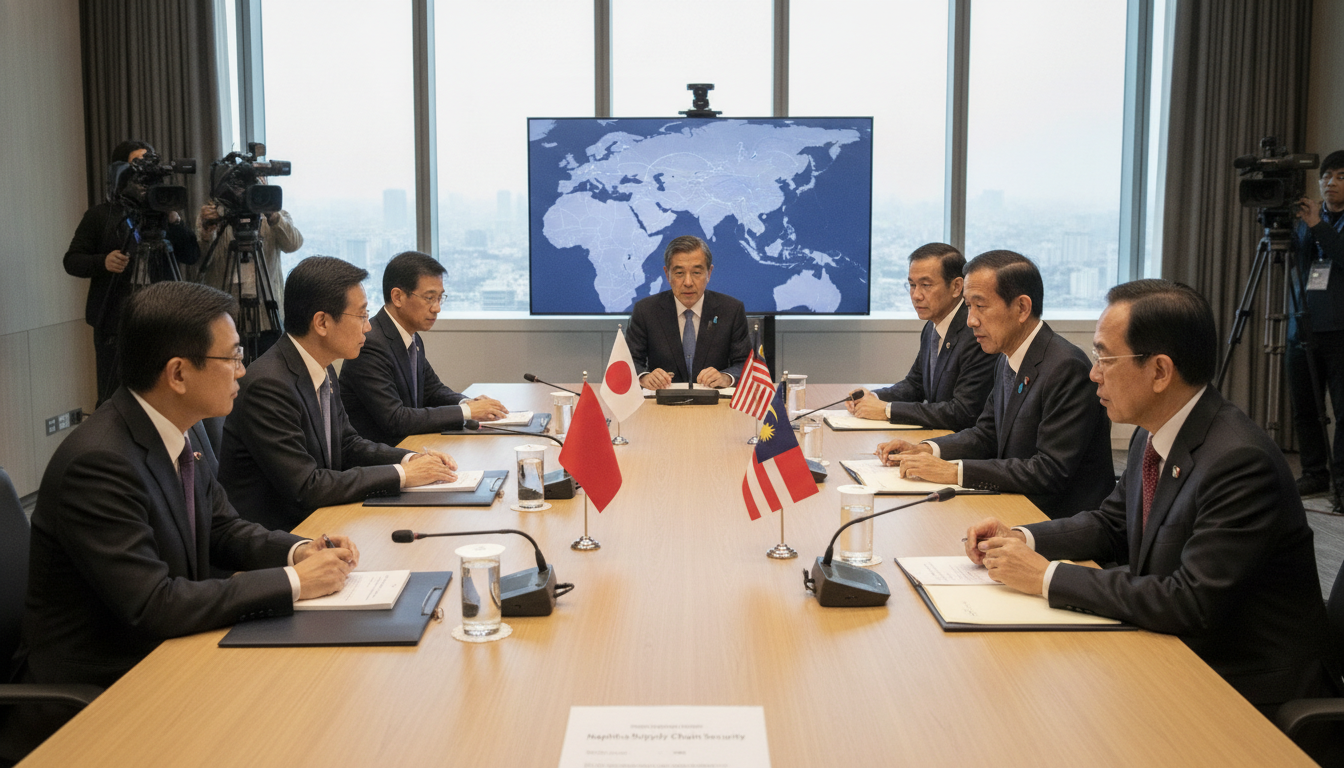
Japan Pursues Asian Partnerships as Naphtha Supply Disruption Hits Chemicals Sector
Japan moves to forge Asian partnerships after the Iran conflict caused a naphtha supply disruption, seeking resilient regional chains for chemicals and petrochemicals.
Immediate Impact on Refineries and Petrochemical Plants
Japan and South Korea have faced sharp operational strain after the naphtha supply disruption linked to the Iran conflict disrupted customary import routes. Several refineries and large petrochemical complexes, particularly those clustered around Tokyo Bay and Keiyo, scaled back production runs as feedstock deliveries became uncertain. Companies reported higher procurement costs and logistical headaches as they scrambled to cover shortfalls from alternative suppliers. The interruption has amplified concerns over just-in-time sourcing in a sector that depends on steady volumes of light hydrocarbons.
Major downstream users, including firms producing plastics, solvents and basic chemicals, have signalled adjustments to production schedules and inventory management. Some manufacturers shifted priorities to higher-margin lines to conserve limited feedstock, while others drew down strategic inventories. The ripple effects have been felt across supply chains for packaging, automotive parts and consumer goods, where naphtha-derived intermediates are critical inputs.
China’s Diversified Sourcing Blunts the Shock
China, by contrast, has proved more resilient to the naphtha supply disruption because of broader supplier relationships and higher inventory buffers. Firms in China that import naphtha and crude-derived feedstocks maintained operations more steadily by drawing on contracts from a wider range of producing countries. State-owned traders and integrated refiners were able to reroute cargoes and tap domestic stockpiles, softening the immediate industrial impact.
That resilience has created short-term market distortions across Asia, with buyers in Japan and South Korea competing for reshuffled cargoes and facing steeper premiums. The disparity underscores how supplier diversification and contractual flexibility are now strategic assets for petrochemical security.
Government Talks and New Asian Partnerships
Japanese authorities have accelerated diplomatic and trade outreach to regional partners to shore up access to naphtha and other feedstocks. Tokyo’s efforts include discussions with neighbouring governments, state-linked trading houses and private-sector consortiums aimed at coordinated procurement and shared contingency planning. Officials say the goal is to build more resilient, Asia-centric supply chains that reduce single-source dependencies.
Industry groups are exploring multilateral memoranda of understanding to facilitate emergency sharing of inventories and the rapid reallocation of cargoes. There is also growing interest in joint investments in storage and terminal capacity in Southeast Asia to create buffer stocks accessible to several importing nations.
Private Sector Responses and Contract Strategies
Companies are re-evaluating long-term procurement contracts and logistics strategies in light of the naphtha supply disruption. Buyers are increasingly pushing for more flexible terms, including destination clauses that allow rerouting and options to tap alternate sources without heavy penalties. Some firms are negotiating for staggered delivery windows and larger minimum stock thresholds to avoid immediate production interruptions.
Trading houses and refiners are also expanding their supplier lists — moving beyond traditional Gulf suppliers to include different Middle Eastern ports, Southeast Asian refineries and, where feasible, Russian and African producers. These adjustments come with trade-offs, however, as longer shipping distances and different product specifications can increase costs and complicate processing at existing cracker units.
Technical and Feedstock Alternatives Under Consideration
The disruption has prompted a closer look at alternative feedstocks and technical adjustments that could reduce reliance on imported naphtha. Some manufacturers are reviewing the viability of switching portions of their feedstock slate to liquefied petroleum gas (LPG), ethane or heavier naphtha streams that can be produced domestically or sourced from nearer suppliers. Such changes require plant modifications and new processing agreements, and they carry capital and time costs.
Energy industry consultants say the feasibility of substitution varies across facilities depending on cracker configuration and product mix. Where conversion is possible, companies may phase in alternative inputs to diversify risk, but widespread shifts will take months to years and require coordinated planning between refiners and petrochemical operators.
Economic and Energy-Security Implications
The naphtha supply disruption has renewed debate in Japan over energy security and industrial policy for chemicals manufacturing. Policymakers must weigh the costs of building larger public or private strategic reserves against the economic drag of sustained supply uncertainty. Analysts note that while stockpiles cushion short-term shocks, they do not replace the benefits of diversified sourcing and regional cooperation.
Higher input costs for chemicals could feed through to downstream industries, potentially lifting prices for plastics and intermediate goods. That prospect increases pressure on both industry and government to accelerate measures that improve supply resilience without imposing disproportionate costs on consumers.
Outlook and market adjustments are already underway as buyers, traders and governments recalibrate sourcing and contingency plans.
The naphtha supply disruption has exposed vulnerability in tightly integrated supply chains and prompted a rapid search for regional solutions. Japan’s push for Asian partnerships, combined with private-sector contract reshaping and consideration of alternative feedstocks, aims to reduce future exposure to similar conflicts. The coming months will test how quickly these measures can translate into steadier deliveries and more predictable operating conditions for the chemicals sector.

