
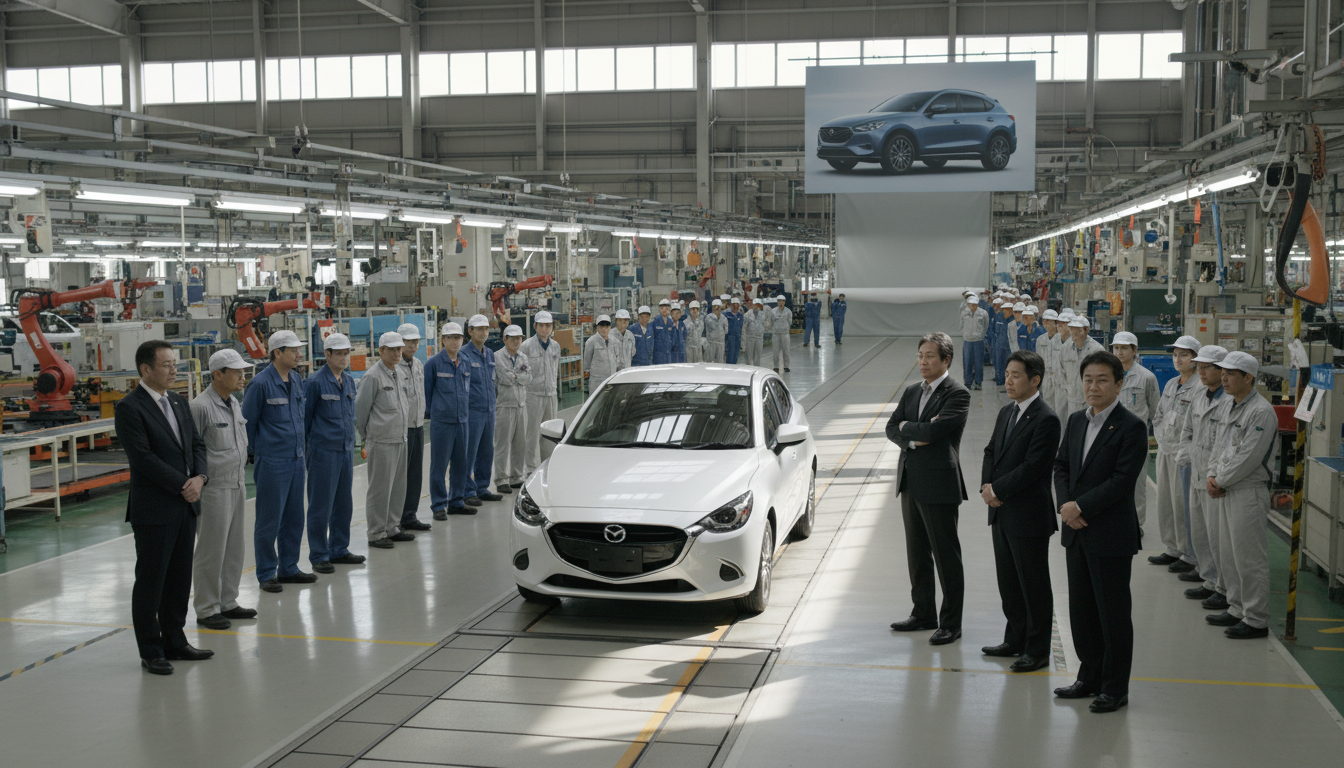
Mazda2 domestic production to end in August as company shifts focus to SUVs
Mazda2 production ending in Japan will stop in August, and sales in the domestic market will cease once inventory is sold, marking a strategic shift for Mazda toward SUV models.
Mazda2 domestic production to end in August
Mazda has decided to terminate domestic production of the Mazda2 compact car in August, according to company sources, with retail sales in Japan winding down as remaining stock is depleted. The move closes a chapter for the model that evolved from the Demio nameplate introduced in 1996 and later rebranded as Mazda2 in 2019 to align with Mazda’s global naming. Company officials conveyed that the decision reflects long-term product planning rather than an immediate recall or safety issue, and that production of some variants will continue outside Japan. The phase-out at Japanese facilities will be coordinated to minimize disruption for dealers and existing customers.
Sales performance and historical context
Mazda2 posted 23,644 units sold in Japan last year, making it the automaker’s second-best seller behind the CX-5 SUV, which recorded 24,518 units during the same period. Despite those recent totals, the model’s domestic sales have fallen substantially from earlier highs and are now roughly one-fourth of its peak performance. The decline has been driven by shifting consumer preferences, tighter emissions and fuel regulations, and strategic product rationalization within Mazda’s compact range. The Demio/Mazda2 lineage spans three decades, but recent market forces have pushed the company to reassess where to allocate production resources.
Shift of corporate resources toward SUVs
Mazda is reallocating investment and manufacturing focus toward its SUV lineup, which has become the firm’s most consistent revenue driver in Japan and key overseas markets. Executives argue that SUVs deliver stronger margins and better align with changing consumer demand for higher-riding vehicles with greater perceived utility. The CX-series, in particular, has been central to this strategy and outperformed smaller passenger cars in both sales and profitability. Mazda’s reorientation mirrors a broader industry trend in which compact hatchbacks face shrinking market share relative to crossovers and SUVs.
Hofu plant to end gasoline model output
The decision includes ending production of gasoline-powered Mazda2 models at the company’s Hofu plant in Yamaguchi Prefecture, following an earlier move to discontinue diesel variants in 2024. Plant managers are reportedly coordinating line changes and workforce adjustments as gasoline model tooling is removed or repurposed. Mazda has signaled that it aims to redeploy manufacturing capacity to support SUVs and other priority models that will be produced domestically. Local suppliers and dealerships will be informed of the schedule and transition plans to reduce logistical and employment impacts.
Overseas production to continue in Thailand and Mexico
While domestic manufacturing of the Mazda2 will cease, Mazda plans to continue producing the model in its overseas plants, notably in Thailand and Mexico, where demand and production economics remain favorable. Those facilities will supply markets where compact models still command volume and where the Mazda2 name retains stronger brand traction. The company emphasized that the international production decision allows Mazda to maintain a footprint in the global compact segment without using Japanese assembly capacity. Export flows and model variants for remaining markets will be adjusted to reflect regional demand and regulatory requirements.
Implications for dealers and customers
Dealers will phase out Mazda2 inventory through standard sales channels, and Mazda said warranty and aftersales support for existing vehicles will continue under current policies. Prospective buyers seeking the compact model after domestic stocks are sold will need to consider imports from markets where the model remains manufactured. Mazda’s move is likely to prompt dealers to emphasize crossover and SUV offerings and to revise sales plans and training to align with the updated product mix. Consumer groups have been advised to monitor supply of spare parts and service schedules as production shifts internationally.
Mazda’s decision to end domestic Mazda2 production underscores the automaker’s broader pivot toward higher-margin SUVs and reflects the long-term reshaping of passenger vehicle lineups in response to consumer tastes and regulatory pressures. The company will manage the transition at the Hofu plant while maintaining Mazda2 availability in markets served by overseas plants.

