
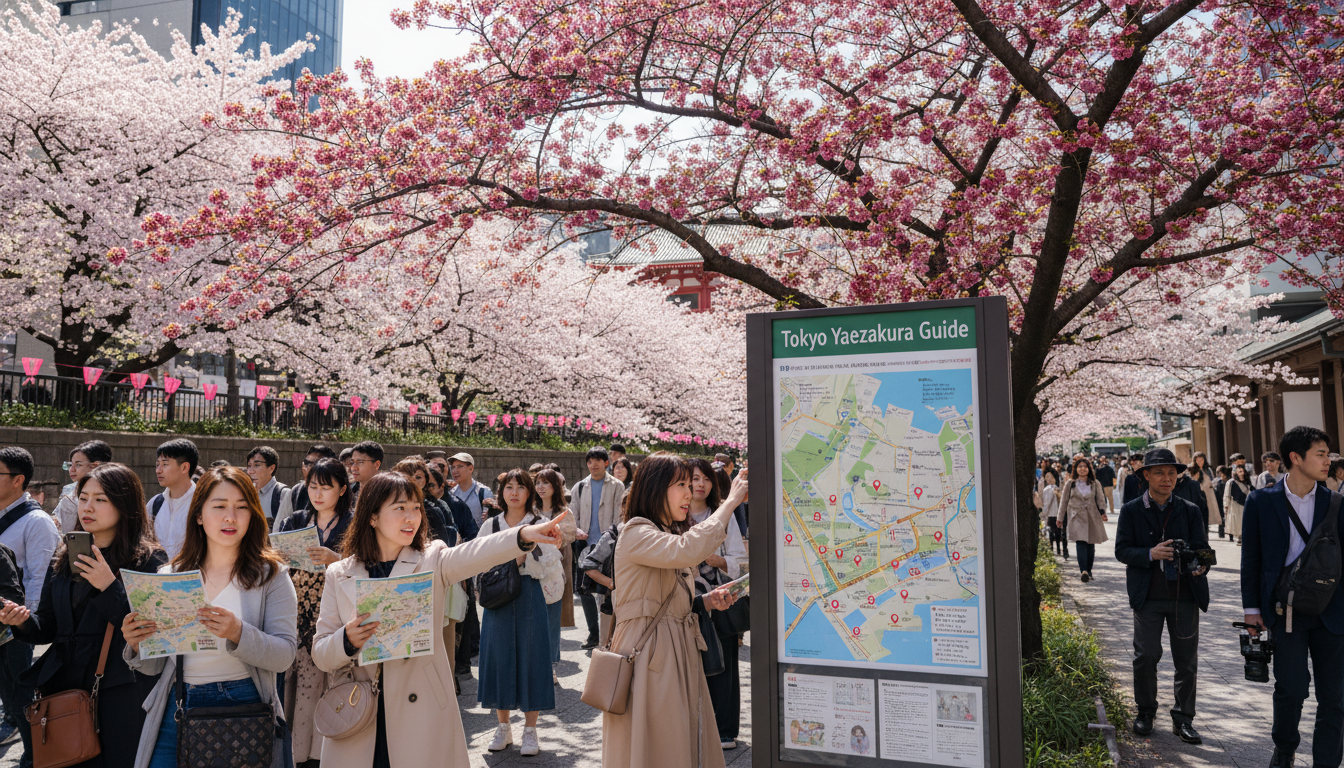
Late-blooming cherry blossoms in Tokyo: 12 places to catch yaezakura’s spring encore
Late-blooming cherry blossoms in Tokyo guide: where to see yaezakura in mid- to late‑April, practical visiting tips, and 12 top parks and neighborhoods from Shinjuku to Saitama.
Tokyo’s late-blooming cherry blossoms, commonly known as yaezakura, stage a secondary spring spectacle from mid‑April onward, offering a different palette of pinks and fuller blooms than the Somei‑yoshino wave that peaks earlier in the month. This guide to late-blooming cherry blossoms in Tokyo highlights twelve accessible locations across the city and its outskirts, with practical information for planning visits during mid‑ and late‑April.
Yaezakura—literally “multi‑layered cherry blossom”—are defined by their double or multiple petal formations and are often darker, denser, and longer‑lasting than single‑petaled varieties. Those seeking a quieter hanami experience after the main cherry season should look to these spots where kanzan, ichiyō, fugenzo and other double‑flowered types come into bloom.
The list below groups sites by ease of access and visitor character, and it includes municipal gardens, urban parks, neighborhood streets and a notable Mint viewing that traditionally opens in early to mid‑April. Practical tips on timing, transport and etiquette follow to help readers make the most of the yaezakura season.
Top 12 Tokyo spots for late-blooming cherry blossoms
Asukayama Park remains a compact city park where visitors can follow the tail end of the sakura season by seeking out its late-blooming trees. Located near Ōji Station, the park mixes early and late varieties and typically sees yaezakura flower roughly a week after full bloom of Somei‑yoshino. With around 180 late-blooming specimens, Asukayama is an accessible option for a short stroll or a calm afternoon outdoors.
Imperial Palace East Gardens and the adjacent Kōkyo Gaien area provide a blend of formal landscaping and historic architecture beneath late-blooming varieties such as kanzan. These central gardens are convenient for visitors arriving from Tokyo Station and offer benches and broad pathways where mixed plantings produce extended sakura interest into mid‑April. Expect a measured, contemplative atmosphere rather than festival crowds.
Shinjuku Gyoen National Garden is notable for its botanical diversity, with nearly seventy cherry types across formal and English landscape sections. The park’s mix includes many yaezakura varieties and a concentrated group of ichiyō trees in the English Landscape Garden, making it a reliable destination for late blooms. Paid admission helps limit overcrowding and preserves a more relaxed hanami environment.
Hamarikyū Gardens sits amid office towers in Shiodome yet feels like a tranquil retreat, with a pond and tearoom providing viewpoints for late‑season blooms. The site features fewer yaezakura than some larger parks, but its unusual green‑tinged varieties and reflective waters create distinctive photo opportunities. Hamarikyū also offers easy transit access for visitors combining garden time with a walk along the waterfront.
Ueno Park, one of Tokyo’s most famous hanami destinations, continues to reward visitors after the main wave with late varieties scattered through its tree-lined avenues. While the park is busiest during the early season, pockets of kanzan and ichiyō will remain attractive well into mid‑April, and the broad lawns provide space for relaxed viewing. Ueno’s cultural institutions and museums make it an easy full‑day option for visitors combining sakura and arts.
Chidorigafuchi Moat offers a scenic, moat‑side walk beneath a sweep of trees where a few late varieties extend the sakura season. The site is better known for its nighttime illuminations during the main bloom, but a quieter mid‑April visit rewards walkers with moated reflections and an intimate corridor of late blossoms. Swan boats on quieter days can add a tranquil, pastoral element to the stroll.
Central gardens and palace precincts where late blooms linger
The Imperial Palace East Gardens are managed with historic plantings that include several late‑blooming cultivars, creating a long season of floral interest. Many of the yaezakura trees here are positioned to complement castle walls and watchtowers, so visits combine horticultural and cultural context. Nearby Kōkyo Gaien also hosts benches beneath ichiyō specimens, offering a straightforward city-center option.
Shinjuku Gyoen’s deliberate collection of cultivars makes it one of the most dependable places to see late‑season cherries in an organized setting. Garden maps identify areas where yaezakura and other double-flowered types cluster, so visitors can plan a route that maximizes late‑bloom viewing. The combination of multiple garden styles—Japanese, English and French—produces varied backdrops for the blossoms.
Hamarikyū Gardens is compact and carefully maintained, making individual late-flowering trees more prominent than in larger parks. The teahouse by the water is an appealing place to pause and observe petals drifting on the pond surface, an image that differentiates yaezakura viewing from earlier, busier hanami scenes. The contrast between the manicured garden and surrounding modern skyline is part of its appeal.
Neighborhood hanami: Setagaya, Kinuta and Sakurashinmachi’s local charm
Sakurashinmachi is a neighborhood shopping street where residents line the avenue with cherry trees that tend to bloom later than the city’s central varieties. The street’s mix of small shops and cafés means visitors can combine blossom viewing with local food and shopping, capturing a more everyday Tokyo hanami. The intimate scale makes it a pleasant choice for those seeking a slower pace.
Kinuta Park, a short walk from Yōga Station, attracts families and local groups who bring blankets and picnics to enjoy late-blooming trees across open lawns. The park’s distance from major transit hubs reduces weekend congestion and often yields more space for visitors to spread out beneath yaezakura. For photographers, the park’s wide vistas and clustered trees produce attractive compositions.
Hie Shrine, located near Tameike‑Sannō Station, pairs late cherry trees with traditional shrine architecture and a tunnel of red torii gates. The shrine’s compact grounds make it an atmospheric stop for those combining shrine visits with late-season viewing, and the juxtaposition of wooden structures and layered sakura petals is particularly evocative. Timing a visit on a weekday morning will usually avoid the larger tourist groups.
Western Tokyo and suburban gardens that extend sakura season
Jindai Botanical Gardens and the neighboring temple precincts are destinations where botanical variety supports an extended flowering calendar. The gardens’ collection includes satozakura and other later varieties that show well after the main city wave has passed. Jindai’s horticultural focus also makes it a good place to study different cherry forms up close.
Koganei Park, near the Edo‑Tokyo Open‑Air Architectural Museum, hosts traditional performances during early festival days but retains good late‑season interest through its satozakura and other double‑flowered trees. Wide meadows and historic house backdrops make Koganei a more relaxed alternative to crowded central parks. Visitors can pair a blossom walk with a visit to the open‑air museum for a day that combines nature and architectural history.
Beyond the urban fringe, the Saitama branch of the Japan Mint offers a curated viewing experience that is known for showcasing many double‑flowered cultivars. The Mint’s viewing typically opens in early to mid‑April; in 2026 the Saitama Mint’s public viewing period ran from April 6 to April 19. When open, the Mint provides orderly access and an opportunity to see a broad range of yaezakura varieties away from central Tokyo crowds.
Timing, transport and etiquette for late-season hanami
Late-blooming cherry trees usually flower from mid‑April onward, with exact timing influenced by temperature and seasonal weather patterns. While Somei‑yoshino tends to peak in late March to early April, yaezakura varieties such as kanzan and ichiyō routinely arrive later and often remain in good condition for a longer window. Expect mid‑ to late‑April to be the best period for planning targeted visits.
Public transport access and short walks from key stations make most of the city parks listed here straightforward for visitors using Tokyo’s rail network. Smaller neighborhood streets and suburban gardens may require brief bus rides or 15–30 minute walks, so plan itineraries that cluster nearby sites to minimize transit time. For weekday visits seek early mornings when parks are quieter and petals are fresh.
Respectful hanami etiquette remains important during the late season; many of these sites are managed public spaces rather than festival zones. Avoid leaving litter or decorations, use designated picnic areas where provided, and be mindful of local regulations about alcohol and amplified sound. When viewing in shrine or temple precincts, maintain a respectful distance from sacred structures and follow on-site signage.
Photographing and identifying yaezakura varieties
Yaezakura are identifiable by their multi‑layered petals and richer colors; common cultivars include kanzan, ichiyō, fugenzo and shogetsu. Kanzan typically shows dense, deep‑pink clusters while ichiyō tends toward lighter pink with layered form; fugenzo and others display a range from white to dark pink. Observers interested in identification should approach blossoms closely to count petal layers and note branching patterns.
Photographers can emphasize the textural difference between early and late varieties by shooting against darker backgrounds or pond reflections to accentuate petal density. Overcast days often enhance color saturation and reduce harsh shadows, which benefits close‑up shots of layered blossoms. When photographing in crowded parks, be considerate of other visitors and avoid blocking pathways or congregating under trees for extended periods.
Practical gear for a comfortable late‑season outing includes a light blanket, water, a small waste bag for trash, and a compact umbrella in case of spring showers. Sturdy walking shoes will help on uneven paths, and a printed or downloaded map of garden sections can speed locating specific varieties without wandering. Carrying cash for small garden admissions or tea houses remains useful, even in a largely cashless city.
What to expect when planning a late-season itinerary
A well‑timed late-season itinerary can combine a major garden with a quieter neighborhood stop to contrast crowds and atmosphere. For example, pairing an early morning at Shinjuku Gyoen with an afternoon walk in Sakurashinmachi or Kinuta Park allows both botanical variety and local flavor. If the Saitama Mint is open during your visit, allocate time for its linear displays of multiple cultivars and consider booking transit that avoids peak commuter hours.
Weather in April can be variable, so plan for both sunshine and cool, damp conditions; layered clothing is advisable. If your schedule is flexible, monitor local forecasts and shift visits by a day or two to capture peak conditions for specific varieties. For popular central sites, arrive early on weekends or choose weekday afternoons to reduce time spent queuing for entry or facilities.
Keep in mind that late-blooming yaezakura often draw smaller, more local crowds, which makes these destinations ideal for photography, study, and a gentler hanami experience. Parks with admission controls, such as Shinjuku Gyoen and Hamarikyū, typically offer better-managed facilities and seating areas that make longer stays more comfortable.
Ultimately, viewing late-blooming cherry blossoms in Tokyo is an opportunity to extend the city’s sakura season and to appreciate varieties that differ in color, form and endurance from the ubiquitous Somei‑yoshino. Whether visiting major gardens, suburban botanical collections, or intimate neighborhood avenues, the mid‑ to late‑April window presents a quieter, richly textured phase of spring in and around Tokyo.
Plan your route, check opening times for paid gardens, and observe local etiquette to ensure a rewarding yaezakura experience this season.

