
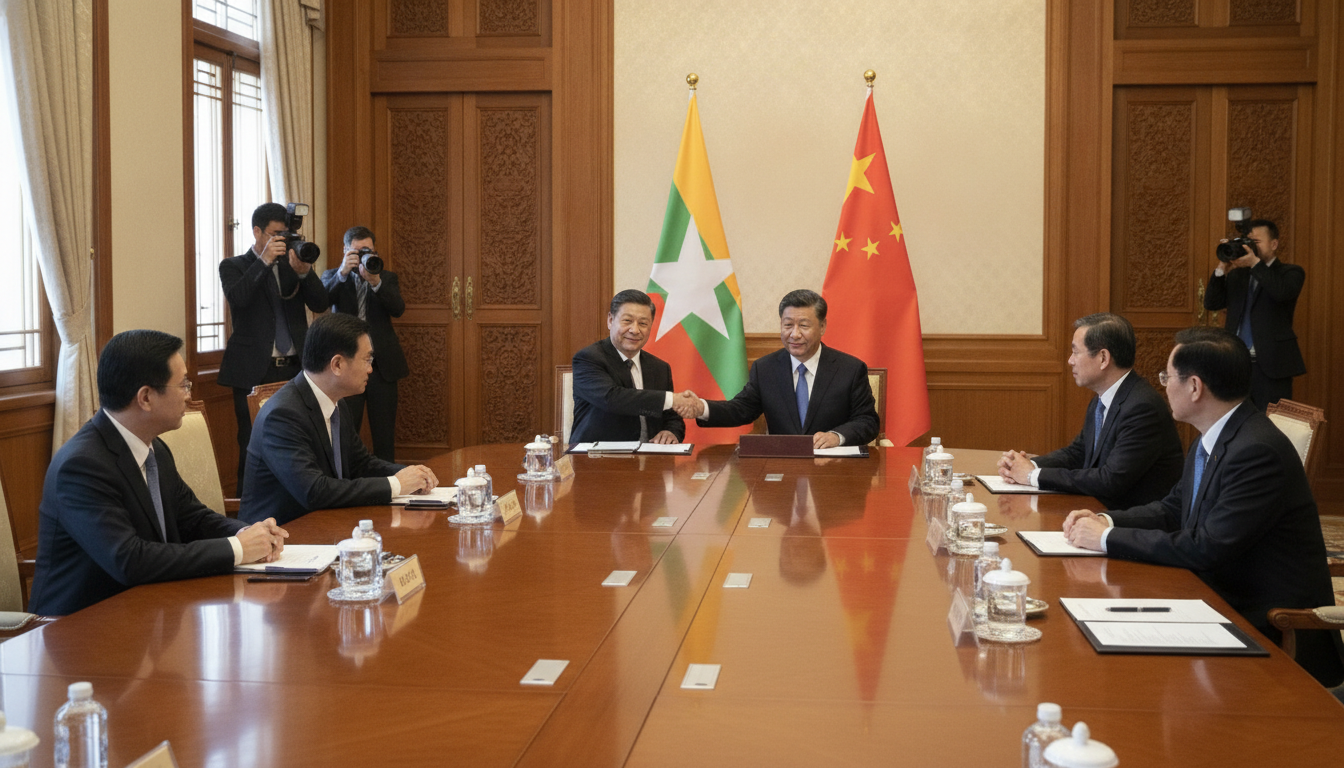
Min Aung Hlaing state visit to China on June 16, 2026 signals Beijing’s diplomatic embrace
Chinese-hosted state visit on June 16, 2026 in Beijing highlights growing ties between Xi Jinping and Myanmar’s leader; analysts warn of wider regional implications.
Min Aung Hlaing’s state visit to China on June 16, 2026 brought the Myanmar leader a highly visible display of diplomatic recognition from Beijing. The visit included an honor guard review and formal state ceremonies, underscoring China’s willingness to engage at the highest level. The trip offers the junta enhanced international standing even as critics in the West and the region continue to question its legitimacy.
State protocol in Beijing
Min Aung Hlaing was received with full ceremonial honors on the second day of his visit to the Chinese capital. The review of an honor guard and state banquet reflected the formal status China accorded to his delegation on June 16. Chinese state media and officials described the engagement in terms of bilateral partnership and regional stability.
The public ceremonies contrasted with persistent international criticism of Myanmar’s post‑coup leadership. Nevertheless, Beijing’s decision to host a state visit signals a clear diplomatic choice, elevating interactions beyond routine ministerial talks to leader‑level diplomacy.
Meetings and agenda items
Bilateral sessions in Beijing covered a range of topics, including trade, infrastructure projects, cross‑border cooperation and security matters. Leaders from both countries emphasized economic cooperation and the need to manage shared border challenges. Officials said agreements and memoranda of understanding were discussed to deepen commercial and logistical ties.
China’s focus is expected to include long‑standing projects and investments in transport, energy and commerce that hinge on political stability. Delegations held technical and ministerial meetings to map out follow‑up steps after the leader‑level talks.
China’s strategic calculus
Analysts say Beijing’s embrace of Min Aung Hlaing reflects a pragmatic approach to influence and stability on its southwestern frontier. Myanmar borders China’s Yunnan province and is a strategic corridor for trade and energy, making the relationship important for Beijing’s regional priorities. Chinese officials frame the engagement as support for peaceful development and cooperation.
At the same time, providing high‑level recognition to Myanmar’s leader enables China to shape outcomes on issues such as border security, counter‑insurgency cooperation and investment protection. Observers note that Beijing often balances public diplomacy with guarded language on internal political arrangements.
Regional and international response
Reactions were mixed across Southeast Asia and beyond, with some governments urging restraint while others maintained criticism of the junta’s seizure of power. Western capitals reiterated concerns about democratic backsliding and human rights, and underscored that state‑level ties do not erase calls for accountability. Diplomatic sources said Beijing’s move would complicate unified international pressure on Myanmar.
ASEAN countries face a delicate balancing act as they weigh constructive engagement against their own principles and regional stability goals. The state visit is likely to revive debates within multilateral forums about how to handle ties with Myanmar’s current authorities.
Implications for Myanmar’s domestic politics
The visit lends Min Aung Hlaing a degree of international legitimacy that could strengthen his negotiating position at home. Support from a major power may embolden the junta in domestic policymaking and slow momentum toward political concessions demanded by opposition groups. Observers caution that such recognition can alter the incentives for compromise inside Myanmar.
Myanmar’s opposition networks and pro‑democracy groups have consistently rejected the junta’s authority, and external endorsement may harden stances on both sides. The long‑term political trajectory will depend on whether internal and international pressures combine to produce meaningful political dialogue.
Economic and security cooperation prospects
Economic engagements discussed in Beijing are likely to prioritize infrastructure, trade facilitation and connectivity projects that serve mutual interests. Chinese firms have long been active in Myanmar, and continued access to markets and resources forms a key component of bilateral ties. Officials signaled interest in practical cooperation that can be implemented even amid political controversy.
Security cooperation is expected to focus on border stability and countering transnational crime, areas China describes as essential for regional peace. Any formal security arrangements, however, would be watched closely by neighbouring states and external powers concerned about shifts in the regional balance.
The state visit by Min Aung Hlaing in Beijing on June 16, 2026 marks a consequential moment in Myanmar‑China relations that will reverberate across Southeast Asia and international diplomacy. While China frames the engagement as pragmatic partnership, the visit reshapes diplomatic dynamics around Myanmar and raises questions about the prospects for political resolution inside the country.

