
U.S. strikes Iran after Iran-fired drones hit merchant ship, jeopardizing ceasefire memorandum
U.S. strikes Iran after Iran-fired drones struck a Singapore-flagged cargo ship in the Strait of Hormuz, jeopardizing a ceasefire memorandum and security.
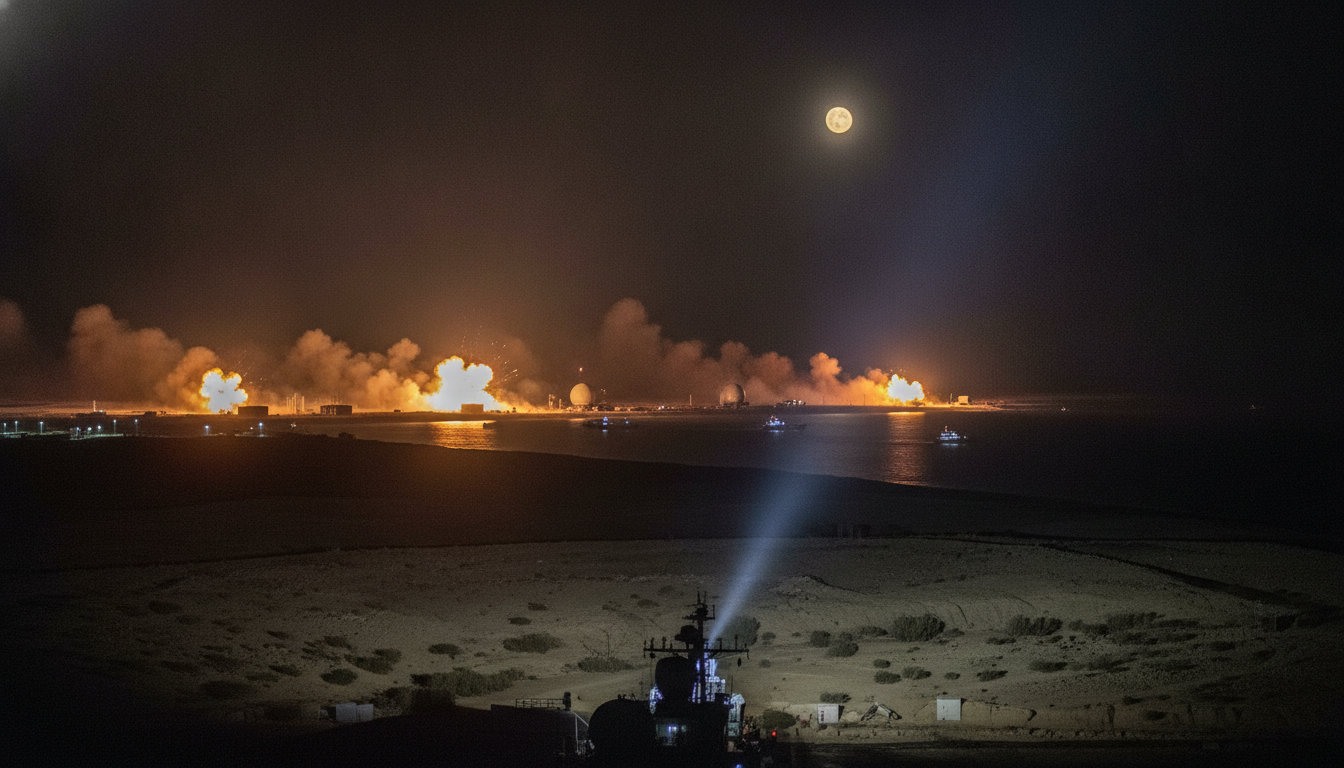
The U.S. military said on June 26, 2026, that it launched strikes on Iranian missile and drone storage sites and coastal radar installations after Tehran-fired drones attacked a merchant vessel transiting the Strait of Hormuz. The action, announced by U.S. Central Command, was described as a “powerful response” and raises fresh doubts about the implementation of a memorandum intended to halt direct hostilities. The U.S. explanation and Iranian media reports of explosions in southern Iran have intensified international concern over shipping safety and regional escalation.
U.S. Says It Struck Iranian Missile and Drone Sites
U.S. Central Command said the strikes targeted locations used to store missiles and unmanned aerial systems, along with coastal radar sites that support such operations. The command framed the action as retaliation for an incident on June 25, 2026, when Iran allegedly launched drones at a Singapore-flagged cargo ship that was attempting to transit out of the Strait of Hormuz. U.S. officials asserted the strike was carried out to degrade Iran’s capacity to mount similar attacks and to deter further aggression at sea.
The announcement emphasized that Iran’s reported attack violated a memorandum that Washington and Tehran had previously agreed would help bring fighting to an end. U.S. spokespeople characterized the Iranian action as a clear breach of that understanding and said the response was intended to enforce the agreement’s terms.
Washington Links Response to Attack on Merchant Vessel
U.S. authorities said the targeted cargo ship was struck by multiple unmanned aerial vehicles while navigating on the Oman side of the strait. According to comments made publicly by the U.S. president on June 26, at least four drones were fired and hit the vessel, which he described as a large and valuable commercial ship. The president denounced the attack as a “stupid violation” of the memorandum and signaled that the United States would take action, comments that prefaced the military response.
U.S. Central Command framed the strikes as proportionate and defensive, stressing the need to protect freedom of navigation in one of the world’s busiest chokepoints. Officials noted that a failure to respond could embolden further attacks on civilian shipping and escalate maritime insecurity across the Gulf and Arabian Sea.
Iranian Media and Revolutionary Guard Report Explosions
Iranian state-affiliated media and outlets close to the Islamic Revolutionary Guard Corps reported explosions in the southern port area of Sirik on June 26, 2026, attributing the incident to U.S. strikes. The Tasnim news agency and other domestic outlets described the attack as a violation of the memorandum, repeating Tehran’s view that Washington had undermined the ceasefire framework. The Revolutionary Guard, a leading military force in Iran, has previously warned that foreign strikes would be met with retaliation.
Tehran’s public statements have so far framed the sequence of events differently, insisting that its actions were defensive and tied to perceived threats around the strait. Iranian officials are expected to lodge diplomatic protests and to rally regional partners as they assess further military or political responses.
Implications for Shipping in the Strait of Hormuz
The strikes and the preceding drone attack on a merchant vessel raise immediate concerns about maritime safety for commercial traffic that routinely passes through the Strait of Hormuz. The narrow waterway handles a significant share of global oil and cargo shipments, and any disruption can quickly affect insurance premiums, chartering decisions, and shipping routes. Operators and insurers will likely reassess risk in the area, and some carriers may choose to reroute vessels around the Arabian Sea to avoid exposure.
Naval forces from multiple countries maintain a presence in nearby waters to protect commercial traffic and evacuate crews if necessary. Analysts warn that repeated incidents targeting civilian ships could prompt broader international naval coordination and tighter military escorts, increasing the risk of miscalculation at sea.
Diplomatic Fallout and Risk of Wider Escalation
Diplomatically, the strikes place the memorandum intended to end direct hostilities in a precarious position, with both sides accusing the other of breach. Allied governments and maritime agencies will face pressure to condemn attacks on civilian shipping while urging restraint to prevent an all-out escalation. Regional actors such as Oman, which borders the transit lanes where the incident occurred, may be called upon to mediate or provide assurances to commercial operators.
The potential for tit-for-tat actions remains high, and any additional strikes or maritime interdictions could draw in other states, complicating efforts to de-escalate. International bodies and foreign ministries are likely to issue statements in the coming days seeking verification of the claims and urging restraint from both Tehran and Washington.
The situation remains fluid, and independent verification of damage and casualties on the ground and at sea is incomplete. International monitors and shipping agencies have been asked to track movements and report disruptions, while diplomatic channels work to clarify the circumstances and reduce the immediate risk to commercial navigation.

