
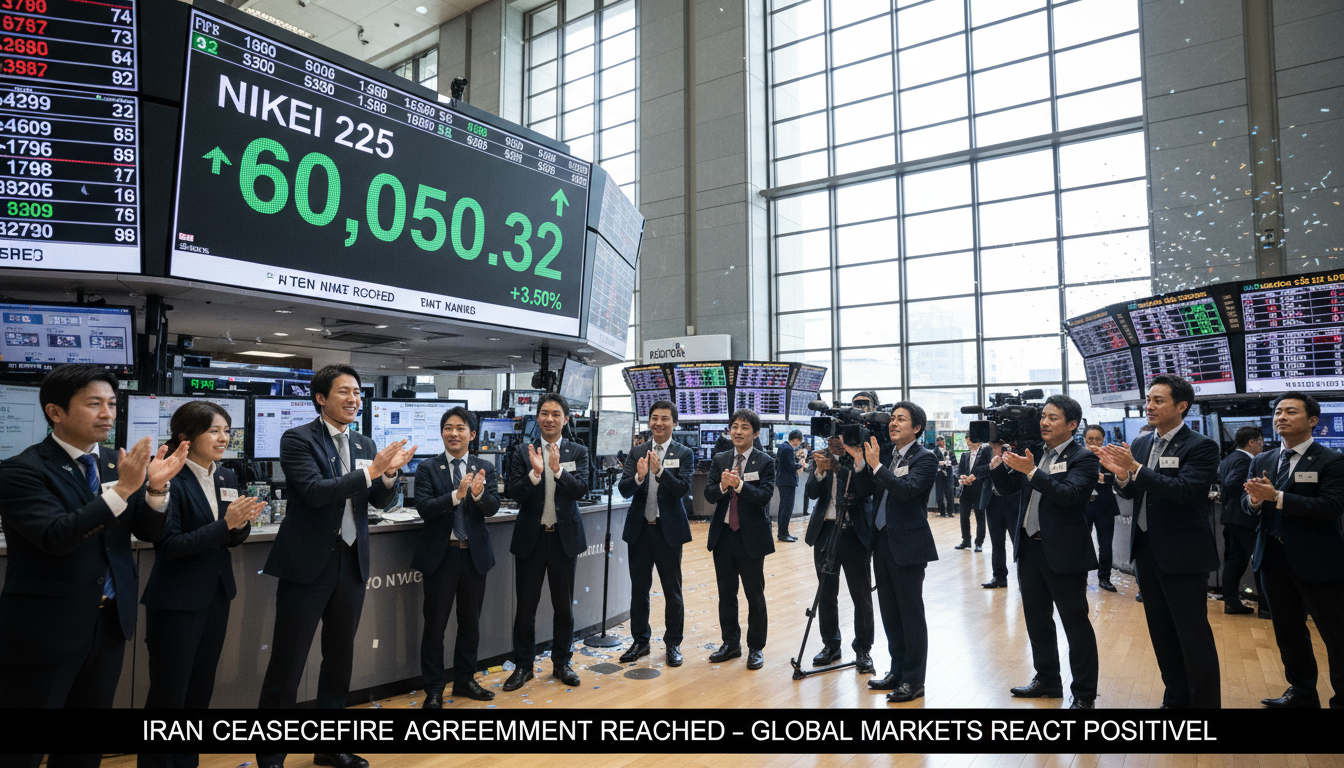
Nikkei 60,000 milestone: Tokyo stocks hit historic intraday high as US rally and Iran ceasefire lift markets
Nikkei 60,000 milestone: Tokyo’s benchmark surged above the 60,000 level intraday as a US-led market rally and an extended Iran ceasefire boosted global risk appetite and technology shares.
Tokyo equities vaulted to a record intraday level on Thursday, with the Nikkei Stock Average climbing past the 60,000 mark amid a broad global advance. Market participants attributed the surge to a powerful US market rally and an announcement that eased tensions in the Middle East, prompting a rotation into higher-risk assets. The move reflected renewed investor confidence in growth-sensitive sectors, particularly technology, which led gains across domestic exchanges. Trading on the day was characterized by heavy participation from both retail and institutional investors seeking exposure to cyclical upside.
Nikkei Surges Past 60,000 in Intraday Trade
The benchmark Nikkei topped 60,000 intraday for the first time, a psychologically significant threshold that caught the attention of global investors. Dealers said the break above this level was driven by momentum from US markets that had rallied overnight. The intraday high prompted rapid re-pricing across futures and options, with some short positions covered aggressively. While the close may differ from the intraday peak, the milestone underscores a notable shift in market sentiment.
Market analysts noted that the speed of the move amplified headline risk, with volatility indicators contracting as buyers dominated. Several blue-chip names recorded their highest prices in months, further reinforcing the sense of a sustained upswing. Observers cautioned that such milestones can stimulate both renewed buying and profit-taking in subsequent sessions. Nonetheless, crossing 60,000 will likely remain a reference point for traders and strategists in the near term.
US Market Rally and Iran Ceasefire Cited as Catalysts
Traders said a strong session on Wall Street set the tone for Asia, with US technology and megacap stocks posting sizable gains that filtered through to Tokyo markets. At the same time, reports that an Iran ceasefire had been extended reduced geopolitical risk, a development investors said freed capital to flow back into equities. The combination of a positive macro backdrop in the US and diminished conflict risk in the Middle East created a rare confluence of supportive factors. Together, those drivers helped lift the Nikkei and related indices across the region.
Market strategists emphasized that while geopolitical headlines can flip quickly, the immediate effect was to lower the premium investors demanded for holding risk assets. Currency moves also reflected the mood, with the yen showing modest depreciation that helped exporters. The interplay between dollar strength, equity rallies, and safe-haven flows will remain a focal point for market watchers. Participants will be monitoring follow-up announcements for confirmation of the ceasefire’s duration and scope.
Tech Stocks Lead Gains; Exporters Also Buoyant
Technology-related names powered much of the advance, mirroring the sector’s leadership in global markets this year. Semiconductor and software shares pushed higher, buoyed by expectations for continued demand and positive earnings momentum. Export-oriented manufacturers also benefited from a weaker yen, which improved profit prospects for companies with significant overseas revenues. The combined lift from tech and exporters amplified index gains and widened the rally’s breadth.
Sector rotation was evident as investors trimmed positions in defensive names and shifted into cyclicals seen as leveraged to a global growth rebound. Analysts noted that trading volumes in several large-cap tech stocks surged as momentum traders and long-term holders both increased exposure. Some asset managers signaled modest rebalancing toward equities within multi-asset portfolios. Still, commentators stressed the importance of corporate fundamentals to sustain gains beyond headline-driven rallies.
Market Breadth, Volumes and Foreign Flows
Market breadth improved markedly on the session, with a majority of constituents posting gains rather than concentrated advances in a handful of stocks. Daily turnover rose as both local retail investors and overseas accounts participated, reflecting the global nature of the move. Foreign buying was singled out by several brokers as a notable feature, with non-resident flows contributing to upward pressure on prices. Increased liquidity helped reduce intraday price dislocations and supported orderly trading.
Options markets priced in lower near-term volatility after the surge, though implied measures remained elevated relative to pre-rally levels. Trading desks reported aggressive demand for call options on benchmark names, signaling bullish sentiment among derivatives traders. At the same time, bond yields in Japan edged up modestly as investors rotated into risk assets. Central bank watchers will be attentive to whether persistent equity strength begins to influence bond-market dynamics.
Economic and Policy Considerations for Tokyo Market
Economists cautioned that while equity markets responded to shorter-term catalysts, underlying economic data and policy decisions will shape the sustainability of the advance. Domestic indicators on inflation and corporate earnings due in the coming weeks could either reinforce or temper investor enthusiasm. The Bank of Japan’s stance on monetary policy and any signals regarding forward guidance will be watched closely by market participants. Policy clarity, or lack thereof, may determine whether foreign investors maintain increased allocations to Japanese equities.
Government officials and market regulators historically step into conversations when rapid moves raise concerns about orderly markets, though there was no immediate indication of intervention. Analysts highlighted the importance of corporate governance and capital returns as longer-term drivers of equity valuations. Investors will also be tracking global macro data, including US growth and central bank communications, for signs of a durable recovery in risk assets. A balance of strong corporate results and accommodative policy would be the most favorable backdrop.
Investor Reactions and Short-Term Outlook
Market participants expressed mixed views about the durability of the rally after the dramatic intraday rise, with some favoring profit-taking in the near term. Portfolio managers surveyed by brokers said they would scale into positions selectively rather than fully chase valuations. Others signaled readiness to add exposure on dips, citing improving earnings prospects and stronger global liquidity. The coming sessions are likely to feature increased sensitivity to corporate earnings releases, economic surprises, and any fresh geopolitical developments.
Short-term technical indicators suggest the market may consolidate around the new levels as participants digest the move. Investors should prepare for heightened headline sensitivity and maintain risk management protocols accordingly. For many, the Nikkei breaching 60,000 intraday represents both an opportunity and a reminder of the rapid shifts that can occur in global capital markets.
Tokyo’s trading day closed with the Nikkei’s intraday milestone still fresh in investor minds, but the market’s path forward will depend on a mix of corporate performance, policy signals and the persistence of the global rally that helped push it there.

