
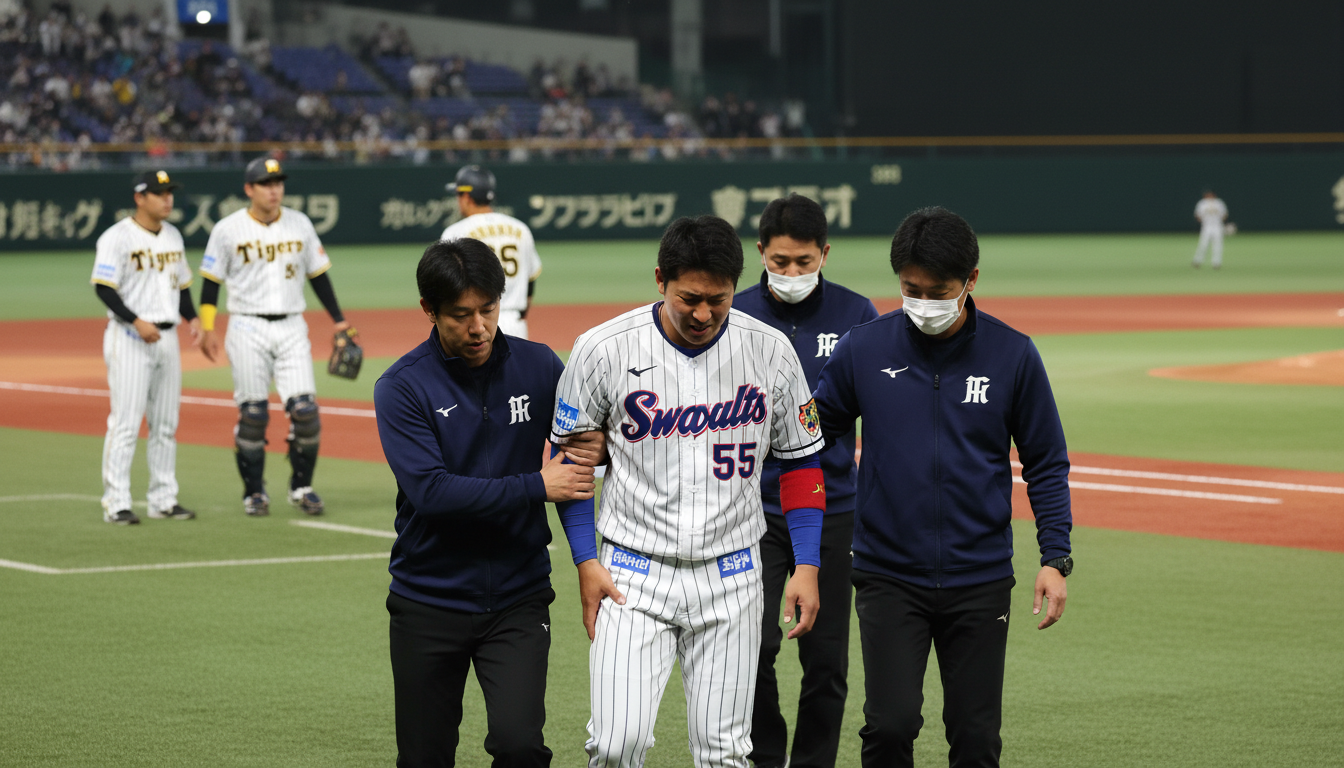
Munetaka Murakami Exits Early vs. Tigers with Right Hamstring Tightness
Munetaka Murakami left the White Sox game vs. Tigers on May 29 with right hamstring tightness after a third-inning sprint; team will evaluate his availability.
Early exit in third inning
Munetaka Murakami, the Chicago White Sox infielder, was removed in the third inning of the May 29 game against the Detroit Tigers due to tightness in the back of his right thigh. Murakami started at first base and hit second in the lineup before the stoppage. The club sent in a pinch runner in the third inning and replaced Murakami after he signaled discomfort following a play on the basepaths.
The immediate removal came after Murakami completed a full-effort run to first base and appeared to grimace while clutching the back of his right thigh. Team staff escorted him from the field and a substitute took his place defensively and on the basepaths. The White Sox identified the issue as right hamstring tightness and indicated further evaluation would follow.
Play sequence that drew medical attention
In his second plate appearance, Murakami grounded to second base with one out and a runner on first. The lead runner was thrown out at second, and Murakami sprinted through first base to reach safely. His reaction after passing the bag — a visible wince and hand to the rear of his thigh — prompted the immediate substitution. The play itself resulted in an out at second, but Murakami’s effort to beat a potential rundown was notable.
Club medical staff were on the field quickly after the play and made a prompt decision to insert a pinch runner. There was no extended on-field treatment, and Murakami did not return to the game. The team’s swift action reflected an abundance of caution on a lower-body complaint that can hamper power hitters’ running and throwing mechanics.
White Sox medical response and next steps
After being removed, Murakami was evaluated by team trainers, who described the problem as tightness in the posterior right thigh. The club has scheduled further testing and monitoring to determine the severity and to rule out a more significant hamstring strain. At present, the organization has not released a timeline for his return to full activity.
Standard protocol for hamstring tightness includes rest, imaging if warranted, and a graduated rehabilitation program emphasizing range of motion and eccentric strengthening. The White Sox medical staff will likely follow a stepwise approach, beginning with conservative measures and advancing only as symptoms allow.
Implications for immediate roster and lineup
Murakami’s early departure forced the White Sox to use bench options at first base and on the basepaths for the remainder of the game. Depending on the outcome of medical evaluations, the club may adjust the starting lineup in the short term to protect his leg and maintain offensive balance. Managers commonly weigh day-to-day status and game cadence when deciding whether to rest a player or pursue diagnostic imaging.
If the tightness resolves quickly, Murakami could be available on a day-to-day basis. However, hamstring issues can be unpredictable and may necessitate multiple games of rest to prevent escalation. The White Sox front office will monitor progress closely before making any roster moves.
Seasonal context for Murakami’s role with the White Sox
Murakami has been a cornerstone of the White Sox lineup, contributing both power and run production while playing first base regularly. Any absence could alter protection for middle-order hitters and shift defensive alignments. The club’s depth at first base and designated hitter will be tested if Murakami requires an extended spell off the field.
Beyond immediate lineup concerns, even a short-term limitation can affect a player’s timing and mobility at the plate. The team’s performance in upcoming games will hinge on how quickly Murakami recovers and how effectively the coaching staff adjusts offensive and defensive plans.
Outlook and monitoring ahead of upcoming games
The White Sox indicated that further clarification on Murakami’s condition will come after additional evaluation by the medical staff. The team typically provides updates as diagnostic results become available and as the player progresses through any prescribed treatment. Fans and media will be watching for an official status report before the next scheduled start.
For now, the club has treated the situation as one of caution rather than alarm, but the precise impact on roster construction and Murakami’s availability depends on the results of the follow-up assessments. The organization’s priority will be a careful, medically guided plan to return him to full strength while minimizing re-injury risk.
The White Sox will provide updates when there is a clearer medical diagnosis and a defined recovery timeline.

