
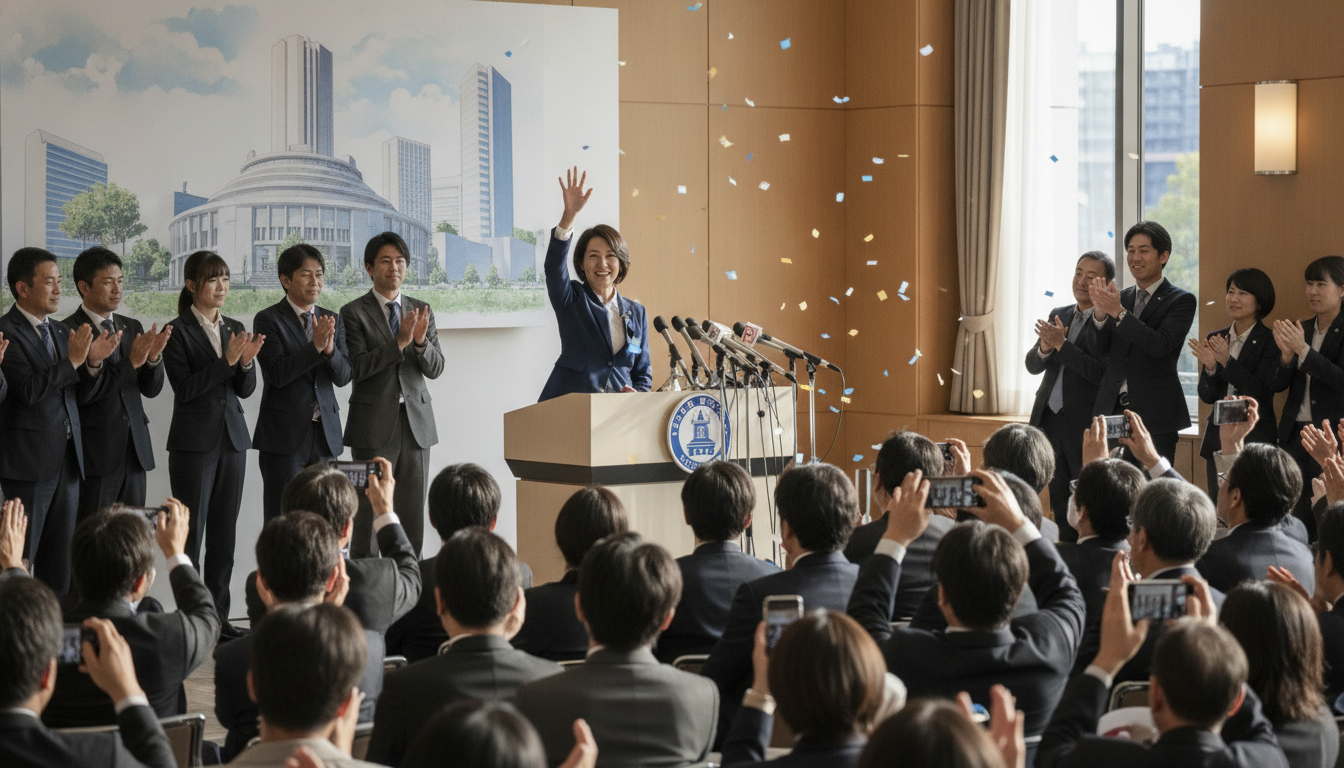
Naoto Sakai Re-elected in Nakano Mayoral Election as Sunplaza Redevelopment Divides Voters
Incumbent Naoto Sakai won a third term in the Nakano mayoral election, defeating four newcomers in a vote dominated by debate over the future of Nakano Sunplaza. The Nakano mayoral election on June 7, 2026, saw a turnout of 35.05% as voters weighed competing plans for the stalled redevelopment.
Sakai secures third term in Nakano mayoral election
Naoto Sakai, 54, prevailed over four challengers to claim his third consecutive term as mayor of Tokyo’s Nakano Ward. He faced a field that included a former metropolitan assembly member, a former manufacturing worker, an audit-firm employee and a local disaster-preparedness specialist. The result cements Sakai’s leadership after two terms and an eight-year record that became a central element of his campaign.
Sakai ran on a platform that emphasized replacing and renewing aging public facilities, arguing the ward must modernize to meet future needs. He highlighted his administration’s record on social support measures while framing the Sunplaza decision as a question of long-term urban planning.
Turnout edged up to 35.05% with 275,286 eligible voters
Voter turnout in the Nakano mayoral election rose to 35.05%, up from 33.72% in the previous contest, with 275,286 registered voters on the rolls. The modest increase reflected heightened public interest in the Sunplaza redevelopment issue, which drew local media attention and spirited debate during the campaign. Municipal officials noted that the turnout remained below levels seen in larger municipal contests, underscoring persistent challenges in mobilizing local electorates.
Election officials reported a clear count on the night of June 7, 2026, and confirmed that Sakai’s margin held across multiple precincts. Observers said the turnout pattern suggested that residents most affected by redevelopment and community services were more likely to vote.
Sunplaza redevelopment became the campaign’s decisive issue
The stalled Nakano Sunplaza redevelopment, suspended amid soaring project costs, dominated the mayoral race and shaped voter priorities. Sakai consistently advocated for a full rebuild of the Sunplaza site, arguing a new facility would better serve the ward’s cultural and civic needs while spurring local economic activity. Opponents countered that the financial and community risks of redevelopment required alternative approaches, making the site the clearest dividing line among candidates.
The redevelopment’s cancellation earlier in the year after cost estimates rose sharply left a policy vacuum that candidates sought to fill with competing proposals. Residents and local business groups voiced concern about both the economic burden and the potential loss of a cultural venue, pressuring contenders to present concrete plans.
Challengers proposed reuse, lease and cultural-hub options
Opponents of Sakai’s rebuild plan offered several alternatives that emphasized reuse and financial prudence. One challenger urged protecting the Sunplaza’s land from outright sale and proposed using long-term lease arrangements as a way to preserve public interest in the property. Other candidates called for rapid reactivation of existing facilities or conversion of the site into a cultural hub that could generate revenue while maintaining community access.
Those opposing a full rebuild argued that adaptive reuse or phased interventions could meet local needs without the costs associated with a new development. Despite outlining practical-sounding alternatives, these challengers were unable to consolidate sufficient voter support to unseat the incumbent.
Campaign alliances and policy record shaped voter perception
Although Sakai ran without formal party endorsements, he drew visible backing from some national figures and centrist groups during the campaign. He pointed to policy achievements across two terms, including expanded support for single-parent households and measures to reduce or eliminate charges for school trips and school lunches. Supporters emphasized these social policies when defending the administration’s broader redevelopment agenda.
Rival candidates criticized the administration’s communication on the Sunplaza issue, saying information from the ward had been insufficient and contributed to public confusion. That critique resonated with some voters, but not broadly enough to change the outcome.
Concurrent ward council by-election held with three candidates
On the same day, Nakano held a by-election for a single ward council seat, with three candidates contesting the post. The simultaneous municipal votes added to local attention around governance and development issues, and campaigners said the overlap encouraged voter engagement on neighborhood-level policymaking. Officials confirmed the by-election proceeded without incident, though final results for the council race were released separately by the ward.
Local stakeholders indicated that the new mayor and the council will face immediate pressure to present a clearer timetable and financial plan for the Sunplaza site, and to intensify public consultation ahead of any decisive move.
Sakai’s third term begins with a clear mandate to address Nakano’s most pressing planning question, but the narrow policy divides exposed during the campaign suggest his administration will need to broaden outreach and build consensus to advance any major redevelopment proposal.

