
China Challenge to Arbitration: Philippines’ Counsel Says Ruling Still Binding on South China Sea
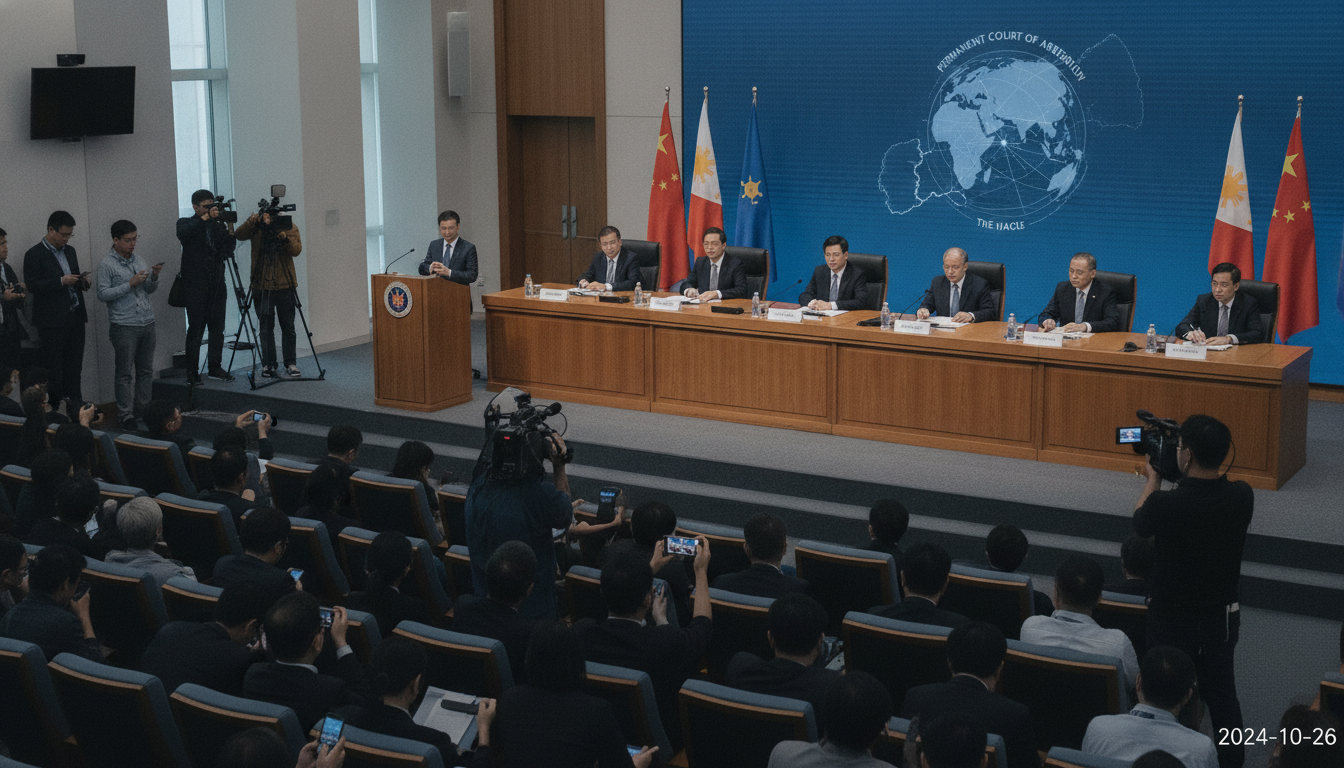
On the 10th anniversary of the 2016 tribunal, Philippines lead counsel Paul Reichler said the South China Sea arbitration ruling remains legally binding despite actions that have weakened its practical effect.
Paul Reichler, who served as lead counsel for the Philippines in the 2016 arbitration case, reiterated ahead of the July 12, 2026, commemoration that the ruling’s legal force endures under the United Nations Convention on the Law of the Sea (UNCLOS). He acknowledged that actions by Beijing over the past decade have reduced the decision’s immediate impact on the waterway’s governance. The dispute over territorial claims in the South China Sea continues to shape Manila’s diplomatic and maritime posture in Southeast Asia.
Reichler: Ruling’s Legal Force Persists
Reichler told visitors and officials that the tribunal’s findings remain binding on the parties to UNCLOS and on the issues it resolved on July 12, 2016. He stressed that legal clarity provided by the Permanent Court of Arbitration decision cannot be erased by unilateral acts at sea. Legal experts say the distinction between legal validity and on-the-water enforcement is a central tension in the decade since the award.
International lawyers maintain that the tribunal’s legal determinations are part of the corpus of maritime law, even as states differ in their willingness to comply. Manila’s counsel argues that adherence to that legal framework underpins long-term stability in the region.
Beijing’s Moves Have Reduced Practical Impact
Analysts and Philippine officials say a series of actions by China — including island construction, increased coast guard activity and the deployment of maritime militia — have altered realities on the water. These moves, they argue, have made it harder for the tribunal’s conclusions to change daily operations and access in contested areas. Beijing rejects the arbitration ruling and continues to assert broad claims, often described as the “nine-dash line,” over much of the South China Sea.
Observers note that the mismatch between legal rulings and state behavior creates enforcement gaps that small claimant states struggle to close without external support or costly escalation.
Incidents Around Second Thomas Shoal Highlight Tensions
The ongoing standoff at Second Thomas Shoal — where a grounded Philippine warship, the BRP Sierra Madre, serves as a physical marker of Manila’s presence — remains a focal point for clashes. In May 2024, Chinese coast guard vessels fired water cannon at a Philippine resupply ship, an episode captured by international media and cited by Philippine officials. Manila continues routine resupply missions to sustain its personnel and installations, while China says it is protecting its maritime rights.
Such incidents underline how maritime law interpretations translate into repeated operational encounters that risk escalation, according to security analysts.
Regional and Extra-Regional Responses Remain Mixed
Southeast Asian governments, external powers and maritime institutions have issued statements stressing adherence to international law and freedom of navigation, while urging restraint. The United States, Japan and the European Union have publicly affirmed the importance of a rules-based order at sea, often framing the arbitration award as a legal benchmark. ASEAN members, meanwhile, have varied in tone and intensity, reflecting differing diplomatic and economic ties with China.
Diplomats say sustained multilateral engagement and confidence-building measures will be necessary to manage incidents without turning to force.
Manila’s Legal and Diplomatic Pathways Forward
Philippine policymakers face a set of legal and diplomatic options as they mark the ruling’s tenth anniversary. Manila can continue documenting incidents, file diplomatic protests, seek multilateral support in forums such as the United Nations and the International Maritime Organization, and press for joint mechanisms with neighbors. Strengthening coast guard capacity and deepening security partnerships are also part of Manila’s toolkit, analysts say.
Experts caution that military responses carry risks, and that long-term solutions will likely depend on sustained diplomacy combined with international pressure to uphold maritime norms.
Implications for Regional Stability and Rule of Law
The persistence of a legal ruling alongside ongoing contestation highlights a broader challenge for the Indo-Pacific: how to align state behavior with judicially defined limits. Countries that rely on maritime trade and regional stability view clarity from arbitration as a foundation, yet the decade since 2016 shows the limits of law without effective compliance mechanisms. Scholars and practitioners argue that strengthening regional institutions and cooperative mechanisms will be central to bridging the gap.
As the Philippines and its partners mark July 12, 2026, the anniversary provides an opportunity to renew calls for adherence to UNCLOS and to explore practical steps that reduce the risk of confrontation.
The tenth anniversary of the 2016 arbitration underscores a stark reality: the South China Sea ruling remains a binding legal milestone, but translating legal authority into lasting stability will require persistent diplomacy, collective will and measures that close the enforcement gap at sea.

