
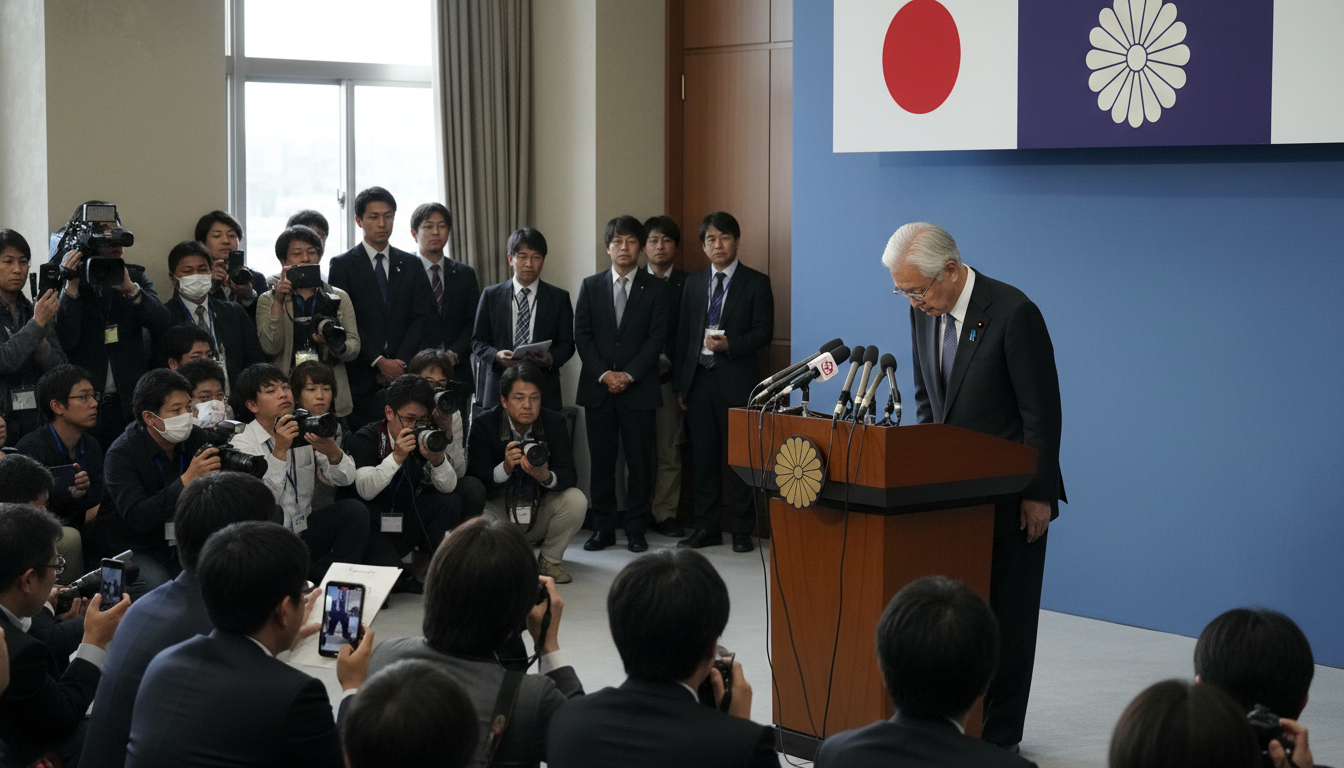
Mori Apologizes Over Imperial Succession Remarks
Speaker Mori apologizes over imperial succession remarks after saying adopted male-line heirs’ sons have succession rights; he called the remark ‘word‑short’.
Mori apologizes over imperial succession remarks, House Speaker Mori Eisuke said on June 10, 2026, that his June 8 comments about adopted male-line heirs and their children were “word‑short” and risked causing misunderstanding. The apology came during a cross-party representatives’ meeting convened to consolidate measures for securing the number of Imperial Family members. Mori stressed that the meeting’s outcome was intended to address the immediate issue of imperial household numbers, not to bind the future legal framework for succession.
Speaker Mori’s Apology and On-the-Record Clarification
House Speaker Mori opened the June 10 session by acknowledging that his earlier statements had been insufficiently explained and apologizing for the confusion they caused. According to Democratic Party for the People leader Tamaki Yuichiro, Mori said the gathering was intended to assemble a consensus on securing the number of imperial family members and was not meant to decide or constrain future succession law. The speaker’s clarification aimed to separate the immediate policy goal of maintaining household numbers from the more complex, contested question of succession rules.
What Mori Said on June 8
At a June 8 press conference following a representatives’ meeting, Mori remarked that an adopted male would not himself hold succession rights but that “if a boy is born to him, that child would have succession rights.” That comment introduced a scenario involving descendants of adopted members that had not been a central point in the session’s deliberations. Observers and some opposition figures treated the remark as an unanticipated foray into how succession might be determined in the longer term.
Opposition Response and Criticism
The speaker’s June 8 statement drew pointed criticism from some parties, with members of smaller opposition groups calling the intervention inappropriate. Kasa Hiroshi of the Centrist Reform Union told reporters that it was regrettable for the speaker to suddenly wade into issues that, he argued, should be left to future legislative consideration. Several opposition representatives signalled concern that statements from presiding officials carry weight and could be interpreted as shaping or prejudging parliamentary debate on sensitive constitutional and dynastic questions.
Background: The Ongoing Debate Over Imperial Household Measures
Lawmakers convened on June 10 amid a broader effort to secure the number of Imperial Family members, a topic that has re-emerged in recent years as births and retirements have reduced the household’s size. The cross-party meeting reported an agreement on measures including the possibility of recognizing male-line members from former branches of the imperial house through adoption as one way to bolster numbers. Participants framed that agreement as a statement of parliamentary consensus on the immediate objective of maintaining the imperial household, not as a final settlement on succession law.
Legal and Institutional Implications
Legal experts and lawmakers caution that questions of imperial succession touch on constitutional norms, hereditary principle, and long-standing public sensitivities, and therefore require careful legislative deliberation. A single remark from a high-ranking parliamentary official can complicate the negotiation atmosphere by suggesting preferred legal outcomes before committees have completed formal study. Mori’s clarification that the June 10 summary was intended to secure household numbers — and was not meant to bind future succession rules — reflects recognition of the institutional need for deliberate lawmaking and broader consultation.
Political Fallout and Prospects for Further Deliberation
Politically, the episode underscored the tight balance lawmakers must strike between producing practical measures to sustain the imperial household and avoiding preemption of future legislative judgment on succession. Parties across the spectrum have emphasized that any change affecting the throne’s hereditary line would likely require extended debate and possibly constitutional review. For now, the representatives’ meeting outcome addresses immediate staffing concerns within the imperial family, while leaving the more complex question of succession criteria to subsequent parliamentary processes.
House Speaker Mori’s apology narrowed the immediate controversy but also highlighted the sensitivity of public statements on imperial matters, and it is likely to shape how officials and lawmakers discuss the subject in the coming weeks.

