
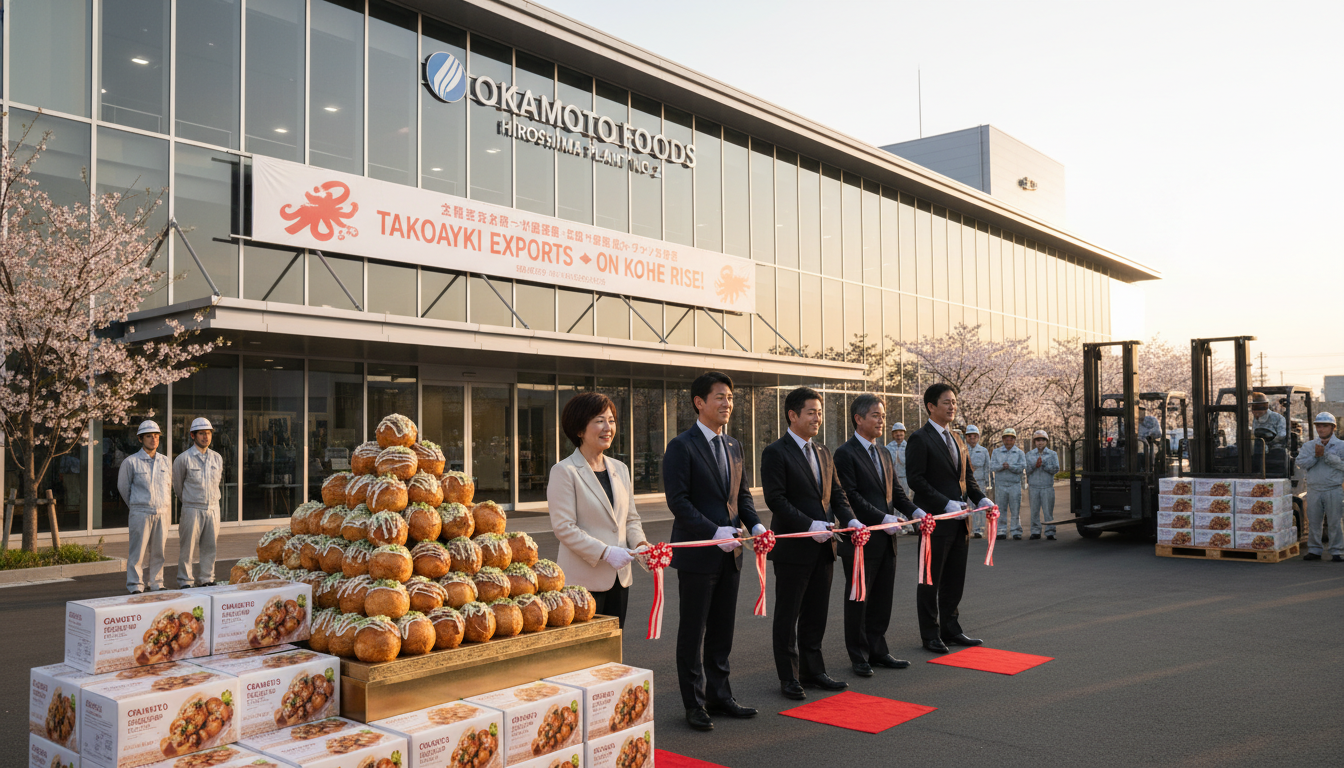
Okamoto Foods opens second Hiroshima plant as takoyaki popularity surges overseas
Okamoto Foods opened a second factory in Hiroshima in May 2026 to meet rising demand for frozen takoyaki abroad, targeting markets such as Vietnam and the Philippines.
Hiroshima plant opens to boost frozen takoyaki exports
Okamoto Foods, a Hiroshima-based producer of frozen takoyaki, inaugurated a second manufacturing facility in Hiroshima prefecture in May 2026. The expansion is explicitly aimed at increasing shipments to Southeast Asian markets where appetite for Japanese prepared foods has been growing.
Company officials say the new plant will raise production capacity for frozen octopus dumplings and help streamline exports to countries including Vietnam and the Philippines. President Michio Nishizawa has described the overseas opportunity as a major focus for the company’s next phase of growth.
Rising inbound tourism raises takoyaki profile
Japan’s rebound in international tourism has exposed more visitors to street-food staples such as takoyaki, a bite-sized, octopus-filled snack that originated in Osaka. Tourists sampling takoyaki at festivals and food stalls have helped elevate the dish’s international profile and sparked interest in retail and frozen formats overseas.
That heightened visibility has translated into demand beyond Japan’s borders, with retailers and foodservice operators in parts of Asia seeking ready-made versions that fit local supply chains. Industry observers say the convergence of tourism-driven awareness and growing middle-class spending in Southeast Asia is creating an opening for frozen Japanese specialties.
Southeast Asia targeted for frozen takoyaki sales
Okamoto Foods is focusing initial export efforts on Vietnam and the Philippines, markets where Japanese cuisine has gained traction in recent years. Frozen products appeal to distributors and supermarket chains because they reduce preparation time and can be sold in the chilled or frozen sections familiar to shoppers.
Local partners in destination markets are testing product mixes that adapt to regional tastes while preserving the takoyaki core of batter and octopus. Manufacturers are also packaging instructions and seasoning options to suit home cooks and foodservice outlets, broadening potential sales channels beyond convenience stores.
Production and supply-chain adjustments at the new facility
The Hiroshima expansion includes production lines optimized for frozen takoyaki formats, according to company statements. Okamoto Foods has invested in automated processes intended to ensure consistent shape, filling distribution and freeze quality, which are critical for export shelf life.
Logistics adjustments accompany the plant build-out, with the company coordinating cold-chain partners and export paperwork to reduce transit time and maintain product integrity. These upstream changes are essential as frozen foods move through ports and retail networks in Southeast Asia.
Quality control and regulatory hurdles for frozen Japanese snacks
Exporting a perishable, ready-to-eat product creates regulatory and quality-control challenges that manufacturers must navigate. Producers must comply with destination-country food safety rules and labeling requirements, and they often undergo additional inspections to satisfy importers.
Producers like Okamoto Foods are responding by strengthening traceability and batch testing, and by providing clear ingredient and allergen information for international consumers. These measures are aimed at building retailer confidence and minimizing the risk of recalls or shipment delays.
Market outlook and industry implications
Industry watchers say takoyaki’s rise reflects a broader trend in which Japanese street foods become packaged for global consumption. Frozen and ready-to-heat formats allow producers to export regional specialties economically while keeping flavor profiles that appeal to international palates.
For mid-sized manufacturers, successful entry into Southeast Asian markets could open second waves of expansion and encourage competitors to explore similar strategies. The combination of product adaptation, improved cold-chain logistics and brand recognition built by inbound tourism will likely shape next steps across the sector.
Okamoto Foods expects the Hiroshima expansion to position the company for steady overseas growth while continuing to serve domestic demand for takoyaki. The company’s move illustrates how a local street snack can transition into an export product when production, logistics and market demand align.

