
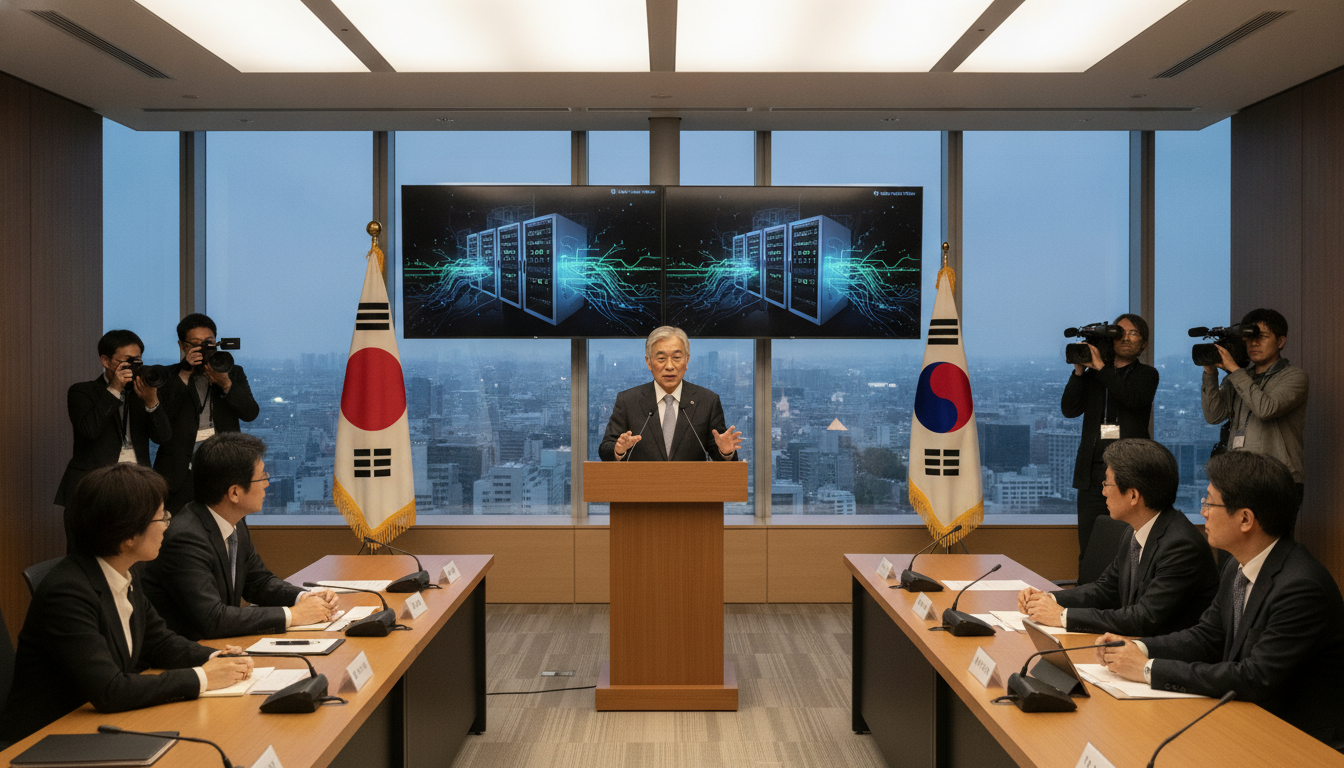
Tokyo Electron CEO urges Japan–South Korea semiconductor cooperation at Future of Asia forum
Tokyo Electron CEO Toshiki Kawai and SK Group chairman urged stronger Japan–South Korea semiconductor cooperation at Nikkei’s Future of Asia forum in Tokyo.
Tokyo Electron CEO Frames Cooperation as Essential
Toshiki Kawai, president and CEO of Tokyo Electron, told the Future of Asia forum in Tokyo on June 9, 2026, that Japan–South Korea semiconductor cooperation is essential to meet rapidly rising power and performance demands. He said the semiconductor equipment industry must deliver cutting-edge tools to support data centers and advanced computing, and that such technological progress cannot be achieved by one country alone. Kawai positioned closer business and research ties between Japan and South Korea as a practical response to industry pressure.
Kawai highlighted the specific challenge of escalating energy consumption in data centers and the need for more efficient chips and manufacturing processes. He argued that companies in both countries possess complementary strengths — Japan’s equipment and materials expertise and South Korea’s system integration and large-scale production — that, if aligned, could accelerate innovation. The CEO urged firms and policymakers to reduce friction that limits cross-border collaboration.
SK Group Chairman Reinforces Call for Bilateral Ties
A chairman of SK Group also used the same forum to echo the call for enhanced collaboration between the two economies, stressing that private-sector leadership will be vital to any progress. The chairman emphasized shared economic interests and the potential for coordinated investment in next-generation semiconductor research. Both executives framed cooperation as not only commercially prudent but strategically important for the region’s technological competitiveness.
The SK Group statement at the forum underscored business urgency amid geopolitical and supply-chain uncertainties that have reshaped global semiconductor sourcing. The chairman suggested practical steps, including joint R&D projects and platform-level partnerships, that could create scalable benefits. Their joint messaging sought to shift the discussion from bilateral political tensions to industry-driven alignment.
Data Center Power Needs Drive Technology Race
Speakers at the forum pointed to surging demand from artificial intelligence applications and cloud services as a primary driver of the current technology push. Data centers now consume more power and require more specialized chips, which in turn puts pressure on both semiconductor design and the fabrication equipment used to produce them. Industry leaders said that improving chip energy efficiency and manufacturing throughput will require closer cooperation on equipment development, process integration, and materials science.
Panelists noted that the transition to advanced nodes and heterogeneous computing architectures creates new engineering challenges that cross national boundaries. Addressing those challenges will likely demand joint investment in pilot lines, shared testbeds, and workforce training programs. Forum participants argued that such collaborative approaches could shorten development cycles and reduce duplication of costly infrastructure.
Supply-Chain Resilience and Shared Capabilities
Executives at the forum framed Japan–South Korea semiconductor cooperation as a pathway to strengthen regional supply-chain resilience without duplicating capacity. Japan’s strengths in high-precision equipment, specialty chemicals and substrate technologies were presented as complementary to South Korea’s mass-production capabilities and system-level integration. Closer cooperation, they said, could reduce dependencies on single-source suppliers and improve responsiveness to demand shocks.
Industry leaders discussed practical mechanisms to achieve this, including coordinated procurement, joint ventures, and reciprocal investment in key nodes of the value chain. They also highlighted the role of common technical standards and shared testing facilities to enable interoperability and faster commercialization. Such measures, the forum argued, would make both countries more attractive partners for global chipmakers and cloud providers.
Policy and Diplomatic Context for Industry Action
Speakers acknowledged that political and export-control issues have complicated Japan–South Korea relations and can hinder private-sector collaboration. They urged governments to create clearer, predictable frameworks that allow companies to cooperate while managing national-security concerns. Forum participants recommended targeted regulatory dialogues and industry-government task forces to address legal and logistical barriers to cross-border projects.
Industry representatives also suggested that policymakers could support cooperation through joint funding programs, tax incentives for collaborative R&D, and eased visa processes for specialized talent mobility. These policy tools, executives said, would accelerate joint initiatives without compromising legitimate security safeguards. The message was that pragmatic, narrowly tailored measures could unlock significant industrial value.
Industry Reaction and Potential Next Steps
The forum generated immediate interest from executives and investors monitoring the semiconductor supply chain, who viewed joint initiatives as feasible if backed by clear business cases. Several companies in attendance indicated they would explore pilot programs to test collaborative production and R&D models, though no formal agreements were announced at the event. Market watchers noted that announcements of joint facilities or co-funded research centers could follow if preliminary pilots show promise.
Observers at the forum urged industry leaders to set measurable targets and timelines for cooperation, such as jointly developed process nodes or demonstrator products within two to three years. They also recommended public disclosure of progress to build broader momentum and reassure stakeholders of tangible benefits. The tone at the forum suggested a convergence of commercial interest and strategic urgency.
Tokyo and Seoul face both practical and diplomatic hurdles in deepening ties, but corporate leaders at the Future of Asia forum on June 9, 2026, signaled willingness to pursue pragmatic solutions. Their appeals for Japan–South Korea semiconductor cooperation centered on aligning complementary industrial strengths to meet a global technology challenge, and they called on governments to craft enabling frameworks that balance security with innovation.

