
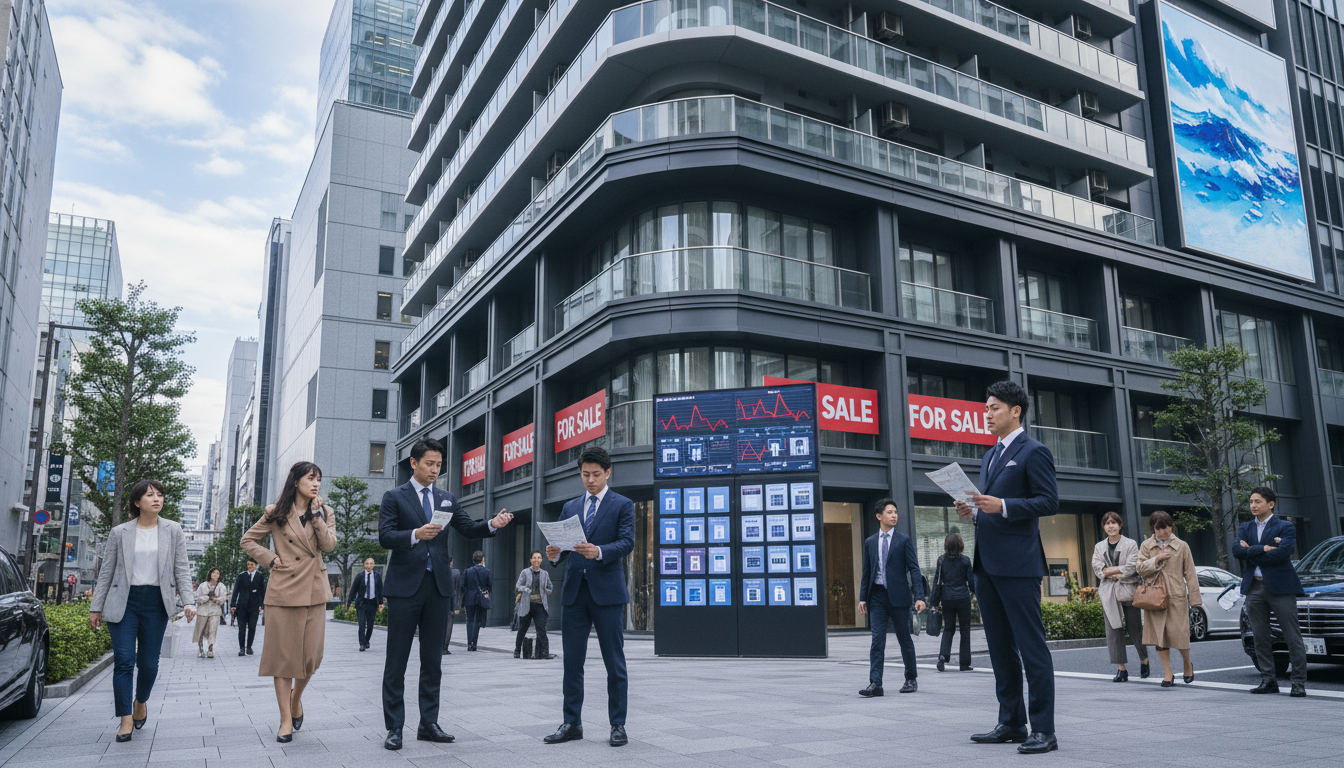
Tokyo used condominium prices show signs of reversal after record April peak
Tokyo used condominium prices peaked at ¥188.22 million in April 2026, but new Tokyo Kantei data show rising inventory and price cuts that point to a possible trend reversal.
The latest figures from real estate researcher Tokyo Kantei show that listing prices for used condominiums in Tokyo’s central six wards reached a record ¥188.22 million in April 2026, even as early indicators point to softening demand. The term "Tokyo used condominium prices" has dominated market headlines as investors and homeowners reassess valuations following years of rapid gains.
April listing prices in Tokyo’s central six wards hit record ¥188.22 million
Tokyo Kantei reported the average listing price for resale condominiums in the central six wards — including Chiyoda, Minato and Bunkyo — at ¥188.22 million in April 2026, a 0.5% month-on-month increase that marked a new high. The research house noted that prices in the area have roughly doubled over the past five years and are about 2.6 times higher than a decade ago, driven by investment demand and limited new supply.
Despite the record, Tokyo Kantei flagged emerging weaknesses in the market that suggest peak pricing may not translate into sustained transaction growth. Analysts said that record listing levels often precede a period of longer sales times and more frequent price adjustments when demand softens.
Supply expands as resale tower inventory swells
A commonly watched short-term indicator, the flow of resale units on the market, rose to 4,682 listings in the six central wards as of April, Tokyo Kantei found. That volume represents the highest level since 2005 and has been rising steadily since last summer, signaling increasing availability of high-end apartments including new and resale towers in waterfront and central business districts.
Industry participants say a growing supply of high-end units can weaken sellers’ negotiation power, particularly when many listings concentrate in similar buildings or neighborhoods. Developers and owners who had delayed listings during earlier tight markets may now be bringing units to market, expanding choice for buyers but adding pressure on prices.
Nearly half of listings have been reduced in recent months
Tokyo Kantei’s measure of price revisions shows a sharp jump: the share of properties that reduced their asking price within three months of listing was 49.1%, up from 34.0% a year earlier. The average magnitude of cuts was 6.1%, the largest decline recorded in the past decade. Together, these metrics indicate that sellers increasingly lower expectations to close deals.
The rise in price revision share and cut magnitude suggests more negotiation room for buyers and reduced ability for sellers to command premiums set at the top of recent trading ranges. Brokers say this pattern is especially visible among luxury tower units priced aggressively by investors seeking quick gains.
Senior researcher attributes shift to unwind of speculative investment money
Tokyo Kantei’s senior researcher Masayuki Takahashi told reporters the market is seeing a correction in segments that had been dominated by investor money. He suggested that parts of the market had become a venue for speculative trading and that a pullback or "rebalancing" was now emerging as those investors reassess positions.
Takahashi and other analysts caution that the correction is not uniform across Tokyo’s housing market; while central luxury assets show signs of oversupply and price adjustments, other submarkets with strong fundamentals continue to see solid demand. They emphasize watching transaction volumes, days on market and the flow of newly listed units for confirmation of a sustained reversal.
Potential impacts for buyers, developers and the broader market
For prospective buyers, the shift could mean improved bargaining power and more options in Tokyo’s high-end resale market, particularly for tower apartments where inventory has clustered. Some owner-occupiers who had been priced out may find opportunities to enter central locations if sellers sharpen pricing.
Developers and investors may respond by delaying new launches, adjusting pricing strategies, or redesigning offerings to match evolving buyer preferences, such as greater emphasis on livability and commuter convenience. Financial institutions and institutional investors, which supplied sizable capital during the upswing, will likely monitor leasing and sales performance before committing further funds.
The broader implications for Japan’s urban housing market depend on whether this is a targeted correction in investor-dominated segments or the start of a wider moderation. Observers note that even with the pullback signs, Tokyo used condominium prices remain substantially higher than in previous cycles.
As market participants digest these developments, the key indicators to watch in coming months will be transaction closings, the pace of new listings, and whether the price-revision share stabilizes below the current near-50% level.

