
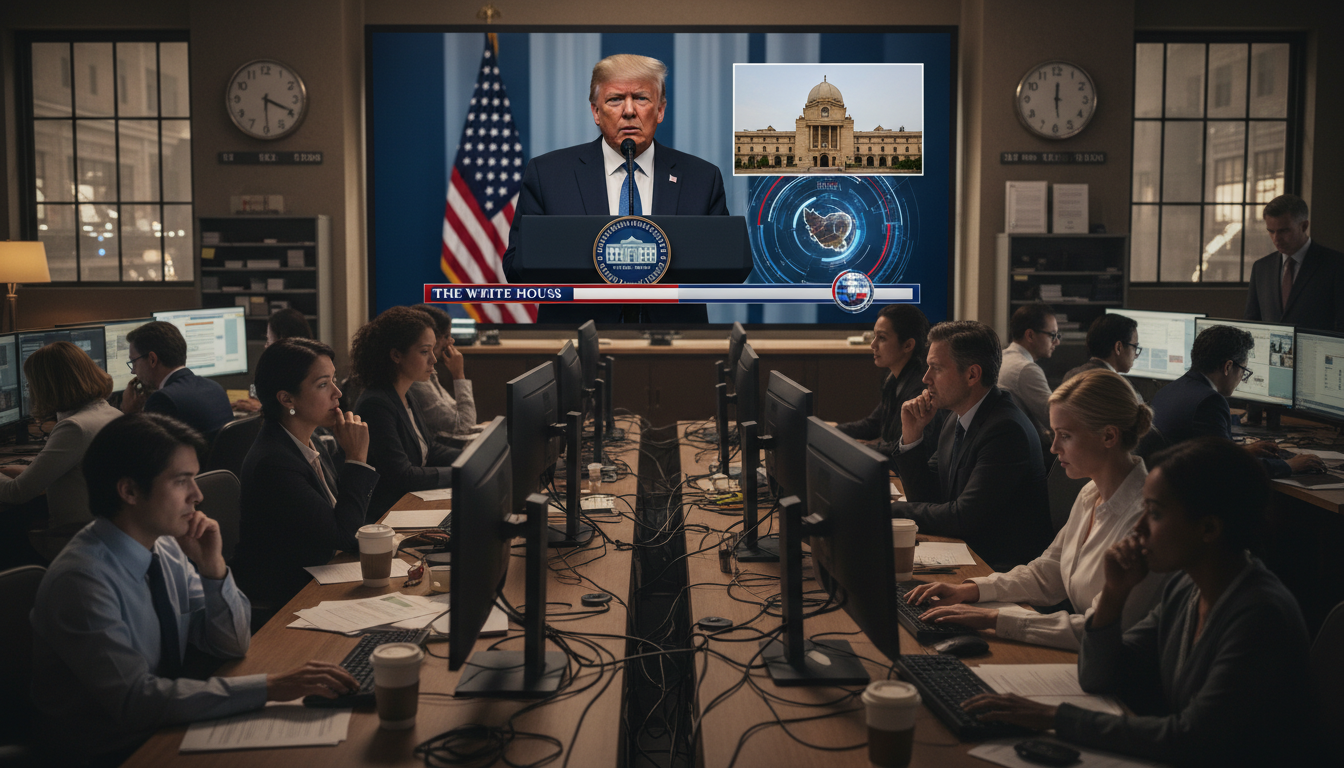
Trump Cancels Pakistan Trip by Envoys, Raising Doubts Over Iran Ceasefire
Trump cancels Pakistan trip after instructing Jared Kushner and envoy Steve Witkoff to stand down, a move that raises fresh concerns about the durability of the Iran ceasefire.
Immediate announcement and context
U.S. President Donald Trump announced on Saturday that he had called off a planned diplomatic trip to Pakistan by his senior envoys, saying the travel was unnecessary and inefficient. The president informed his son-in-law Jared Kushner and special envoy Steve Witkoff that they should not make the journey, and he framed the decision as a response to wasted time and internal confusion. The canceled mission had been intended to support negotiations tied to the ongoing Iran conflict and the fragile ceasefire currently in place.
President’s remarks on social media
In a public social media post, Trump wrote that there had been “Too much time wasted on traveling.” He also accused the parties the envoys were to meet of suffering from internal infighting and unclear leadership, and instructed them that “If they want to talk, all they have to do is call.” The message conveyed impatience with extended diplomatic missions and emphasized the administration’s preference for direct, simpler channels of communication.
Envoys and the planned mission
The trip was to involve Jared Kushner and Steve Witkoff as top U.S. envoys engaging regional interlocutors in Pakistan. Kushner, a senior adviser in the previous administration and a familiar diplomatic figure, was reported to lead discussions alongside Witkoff, who was identified as a special envoy for the assignment. The mission’s publicly stated objective was to help sustain and expand the ceasefire mechanism that has reduced direct hostilities connected to the Iran conflict.
Questions about the ceasefire’s durability
The cancellation has prompted immediate questions about the durability of the current ceasefire. Analysts and regional observers have long stressed that diplomatic engagement and confidence-building are key to preventing a return to active hostilities. The abrupt halt to a planned face-to-face diplomatic push introduces uncertainty about the extent to which outside mediation can reinforce the fragile pause in fighting.
Diplomatic implications for Pakistan and regional actors
Pakistan had been seen as a potential convener or facilitator for discussions related to the Iran situation, given its geographic and political position. The decision to cancel the envoys’ visit reduces the prospect of near-term, in-person negotiations hosted in Islamabad and could shift activity back to phone calls or virtual meetings. Regional governments and international organizations that had anticipated the trip will now need to reassess coordination plans and next steps for engagement.
Administration’s alternate options and likely next moves
With travel canceled, the White House signaled that direct calls and remote diplomacy are still on the table. Officials could opt for teleconferences, limited bilateral conversations, or delegating duties to other diplomats and agencies already stationed in the region. The administration’s public insistence that interlocutors “call” if they wish to engage suggests a willingness to continue talks, but it also places the onus on other parties to initiate contact.
Reactions from stakeholders and potential consequences
Observers say the move may be read in different ways by regional leaders: as an expression of impatience with prolonged shuttle diplomacy, or as a withdrawal of high-level political momentum at a delicate moment. For negotiators working to consolidate the ceasefire, the lack of an in-person visit by senior envoys could slow the pacing of talks and complicate efforts to address contentious implementation issues. At the same time, a streamlined approach centered on direct telephonic engagement could reduce logistical delays if all parties are willing to cooperate.
The cancellation also shines a light on internal dynamics within the groups the envoys were to meet, echoing the president’s comment about infighting and leadership confusion. If those internal disputes remain unresolved, any diplomatic outreach—remote or in person—may face barriers to producing durable agreements.
The administration has not announced an alternative travel schedule or a timetable for renewed in-person talks, leaving officials and partners to weigh whether to press for a new mission or to pursue an extended series of remote contacts.
U.S. and regional actors now face a choice between rebuilding momentum through a rescheduled visit or intensifying remote diplomacy to shore up the fragile pause in violence. The outcome will depend on how readily the parties engaged in the Iran conflict respond to calls for immediate contact and whether they can present coherent leadership capable of negotiating credible steps to sustain the ceasefire.

