
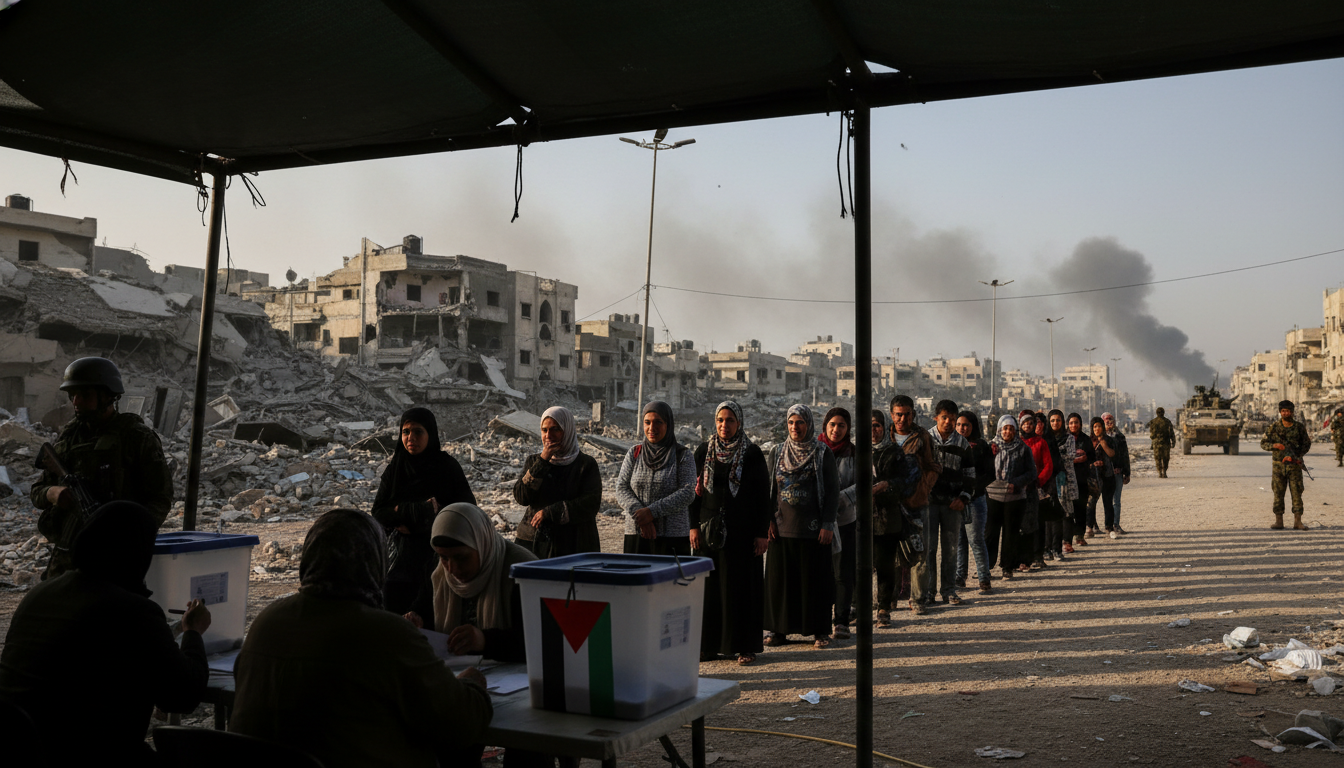
Israeli strikes escalate as Palestinians vote in first municipal elections since Gaza war
Israeli strikes and cross-border attacks marred municipal elections in the occupied West Bank and Gaza, with multiple civilians killed or injured and diplomatic tensions rising across the region.
Israeli strikes and raids across the region intensified on Saturday as Palestinians in the occupied West Bank and central Gaza went to the polls in municipal elections, officials and local media reported. Medical sources said six Palestinians were injured when Israeli forces entered a polling station in the Khirbet Khallat al-Miyya cluster, while a separate strike near Al-Dahyan School in northern Gaza City killed three people, including a child. Lebanese state media and the health ministry reported fresh Israeli strikes in multiple sites in southern Lebanon that left at least six dead, even after a ceasefire extension earlier in the week. Meanwhile, diplomatic ripples continued as a U.S. envoy visit to Pakistan was canceled and Turkey signaled potential involvement in demining operations in the Strait of Hormuz under a possible Iran–U.S. agreement.
Raid at Khirbet Khallat al-Miyya injures six near polling station
Medics reported that Israeli forces injured six Palestinians during a raid on a polling station in the Khirbet Khallat al-Miyya cluster in the occupied West Bank. The incident occurred as residents attempted to participate in municipal voting, marking one of several security incidents on election day. Local medical sources characterized the injuries as the result of clashes and said they were treating both civilians and bystanders. Election officials said voting continued in other areas despite the raid and heightened security presence.
Municipal elections held amid the war in Gaza
Palestinians in parts of the occupied West Bank and central Gaza took part in municipal elections on Saturday, the first such vote since Israel’s war on Gaza began. Organizers described the polls as a test of civic resilience under extraordinary security pressures and disruption. Voters in contested areas faced checkpoints, military operations, and limited access to some polling sites. Observers noted that holding elections during active hostilities raises questions about turnout, representation, and the ability to conduct free and fair voting.
Strike near Al-Dahyan School kills three in Gaza City
A strike struck the vicinity of Al-Dahyan School in northern Gaza City on Saturday evening, Wafa news agency reported, killing three Palestinians, including a child, and wounding others. The attack came as municipal voting took place in portions of Gaza, compounding fears among residents about the safety of schools and civilian infrastructure. Humanitarian groups have repeatedly warned about the dangers of conducting civic activities in proximity to active conflict zones. Local agencies called for independent inquiries into strikes affecting civilian facilities.
Multiple sites in southern Lebanon struck despite ceasefire extension
Lebanese state media reported a series of Israeli strikes in at least four locations across southern Lebanon on Saturday after Prime Minister Benjamin Netanyahu ordered a vigorous response to alleged Hezbollah positions. Lebanon’s health ministry said the strikes killed six people, underscoring how cross-border exchanges have continued even after a recent ceasefire extension. The strikes and counter-attacks have kept the south on edge, prompting emergency services to treat the wounded and evacuate affected communities. International actors have repeatedly expressed concern that renewed hostilities in Lebanon risk widening the conflict.
U.S. diplomatic move and comments on Iran raise regional questions
In separate diplomatic developments, Washington canceled an envoy’s planned visit to Pakistan and a senior U.S. figure indicated that Iran could “call us” to negotiate, according to statements reported Saturday. The cancellation added an unexpected diplomatic twist amid broader regional tensions and raised questions about coordination with partners on security and mediation. Analysts say such moves could affect lines of communication between capitals and complicate efforts to de-escalate multiple fronts. Official spokespeople in involved countries have not provided full public clarifications beyond brief statements.
Turkey offers conditional role in Hormuz demining after possible Iran–U.S. deal
Turkish Foreign Minister Hakan Fidan said Turkey could consider participating in demining operations in the Strait of Hormuz contingent on a potential peace agreement between Iran and the United States. The remark signals Ankara’s interest in playing a practical role in stabilizing key maritime routes if diplomatic breakthroughs occur. The Strait of Hormuz is a strategic chokepoint, and proposals for joint demining would require multilateral planning and security guarantees. Regional navies and international organizations would likely need to coordinate closely to implement any such operation.
Growing humanitarian concerns and electoral implications
Humanitarian agencies and local health services reported civilian casualties and mounting strains on medical resources after a day of strikes and raids. The coincidence of municipal elections with renewed Israeli strikes highlighted how governance, public services, and civic processes are being conducted under severe security constraints. Political leaders on all sides face pressure to address civilian protection while maintaining security objectives. International calls for restraint and independent investigations into civilian harm were reiterated by several observers and rights groups.
The overlap of military operations, municipal voting, and diplomatic maneuvering on Saturday left communities across the occupied West Bank, Gaza and southern Lebanon facing immediate security and humanitarian challenges. As authorities and international actors weigh responses, residents continue to cope with the daily consequences of strikes, checkpoints and disrupted services while attempting to exercise electoral rights.

