
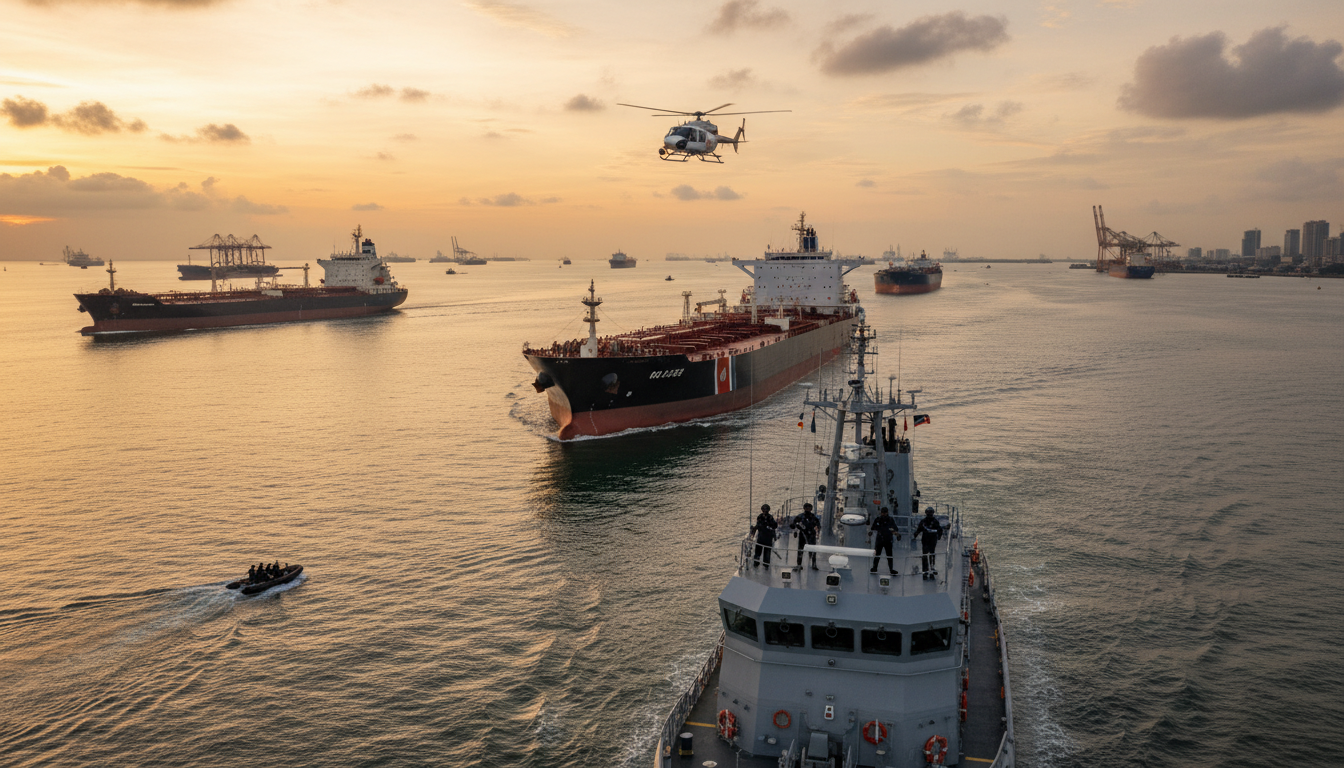
Strait of Malacca Faces Fresh Security Scrutiny After Strait of Hormuz Closure
Closure of the Strait of Hormuz raises alarm over the Strait of Malacca’s security; Asian governments and navies weigh measures to protect vital trade routes.
The sudden closure of the Strait of Hormuz has intensified concerns about the security of the Strait of Malacca, a choke point that underpins Asia’s trade and energy flows. Policymakers across the region are reassessing vulnerabilities, logistics alternatives, and naval posture as the prospect of another major disruption looms. The Strait of Malacca, the world’s busiest waterway for international trade, now sits at the center of strategic planning discussions in capitals from Tokyo to Jakarta.
Strait of Malacca’s strategic importance
The Strait of Malacca is a narrow maritime corridor roughly 900 kilometers long that links the South China Sea and the Andaman Sea. It provides the shortest sea route between major East Asian economies and markets in the Middle East and Europe, handling a significant share of container and tanker traffic. Any loss of access or sustained disruption would ripple through global supply chains and energy markets.
How the Hormuz closure sharpened focus
The recent closure of the Strait of Hormuz exposed how a single chokepoint can quickly alter global shipping patterns and raise insurance and fuel costs. Governments and shipping firms have been reminded that geopolitical events far from Southeast Asia can still jeopardize routes that are foundational to Asian trade. This connection has prompted routine security reviews and scenario planning by regional maritime agencies.
Trade and energy transit vulnerabilities
Analysts say the Strait of Malacca concentrates risk because of its narrow channels, shallow shoals and heavy traffic, which make vessel maneuvering and enforcement of maritime law complex. Tankers carrying crude oil and liquefied natural gas, along with millions of containers, transit the strait daily, making it a tempting target for state and non-state actors seeking leverage. Rerouting around the Indonesian archipelago or via the Lombok and Sunda routes carries higher fuel costs and adds days to delivery times, amplifying economic consequences.
Regional naval posture and patrols
Naval forces from ASEAN countries, as well as partner states such as Japan and India, have increased patrols and surveillance exercises in recent months to reassure commercial shipping and deter hostile actions. Joint exercises and information-sharing arrangements are being emphasized as practical ways to maintain situational awareness in a crowded maritime environment. Defense officials caution that patrols alone cannot eliminate risk and must be combined with diplomatic engagement and civilian maritime enforcement.
Economic impact and supply chain implications
Shipping insurers and cargo owners are watching for signs of disruption that could drive up freight rates and insurance premiums, affecting the price of goods across Asia. Industries from electronics to automotive parts, which rely on just-in-time delivery, are particularly exposed to delays or sudden re-routing costs. Smaller ports and economies that depend on transshipment through the Strait of Malacca could face disproportionate disruption if traffic patterns shift for an extended period.
Policy options under consideration
Policymakers are weighing a mix of measures that include strengthening maritime domain awareness, expanding legal frameworks for interdiction of illicit activity, and promoting infrastructure alternatives such as pipeline capacity and diversified port hubs. Regional forums and bilateral talks are expected to explore convoy or safe-passage mechanisms for high-value or vulnerable cargoes. Economic measures, including contingency planning by trade ministries and industry, are being coordinated alongside military and diplomatic steps.
Longer-term strategies discussed by officials emphasize resilience: investments in port capacity outside the choke point, improved logistics to reduce dwell time, and diplomatic engagement to lower regional tensions. The balance between military deterrence and cooperative maritime governance will shape outcomes for both security and commerce.
As governments and the private sector take stock of potential risks, the Strait of Malacca’s role as a linchpin of Asian trade has been reaffirmed, prompting a pragmatic push to shore up defenses and diversify options without disrupting the flow of goods that underpins regional economies.

