
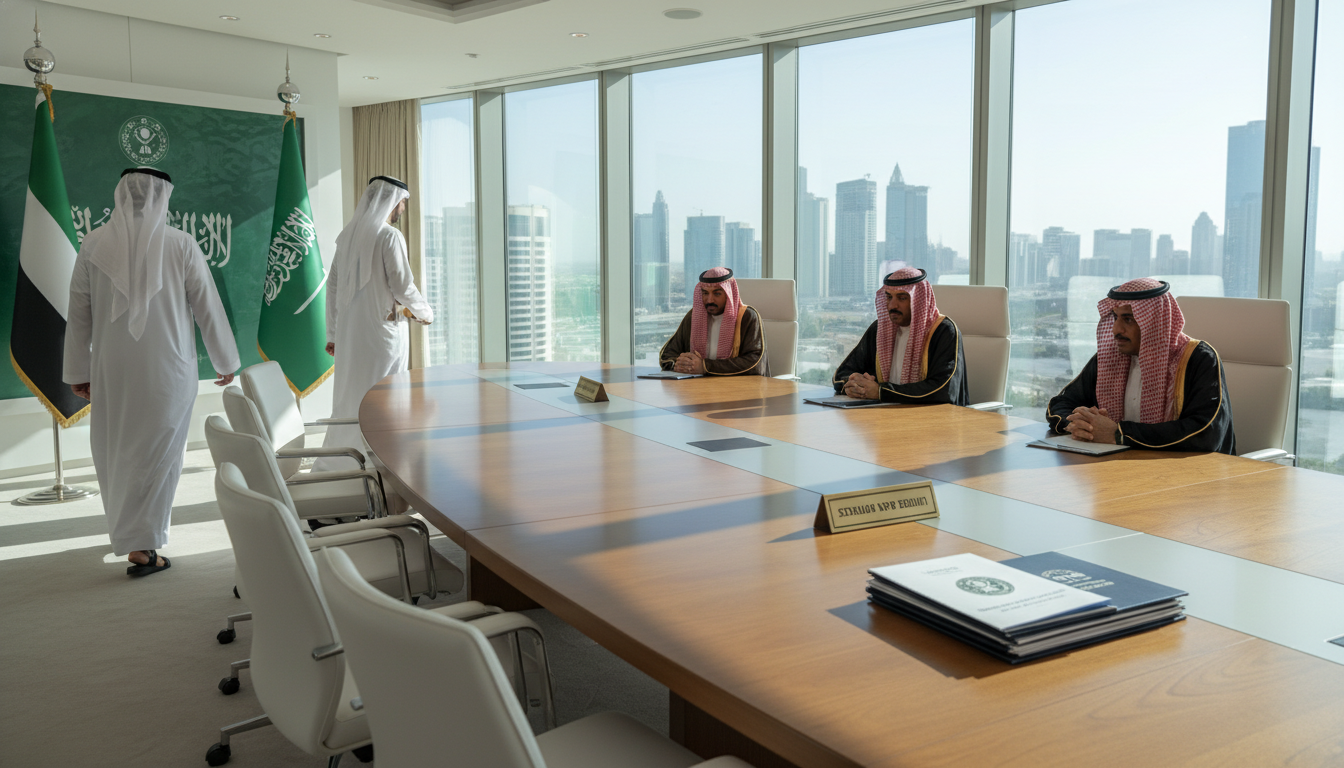
UAE quits OPEC and OPEC+: Abu Dhabi’s exit exposes Gulf rift
UAE quits OPEC and OPEC+: Abu Dhabi’s exit exposes a widening rift with Saudi Arabia, reshaping oil governance and regional geopolitics amid the Iran war.
The United Arab Emirates’ decision to quit OPEC and OPEC+ has publicly exposed longstanding tensions with Saudi Arabia and marked a significant shift in Gulf oil politics. The move, announced this week, signals Abu Dhabi’s intent to assert greater control over its production policy and to distance itself from Saudi-led coordination. Political analysts say the withdrawal is rooted in deeper strategic disagreements than a simple quarrel over output quotas.
UAE Announces Exit from OPEC and OPEC+
The UAE announced it will leave both OPEC and the OPEC+ framework that has guided coordinated oil production decisions in recent years. Abu Dhabi framed the decision as a recalibration of its energy policy and a reassertion of national control over output. Gulf sources and analysts note the statement reflects a broader push by the UAE to act independently on energy and foreign policy matters.
The departure breaks with a pattern of collective decision-making that has defined the cartel and its allied producers since OPEC+ arrangements were expanded. For decades, Riyadh has played an influential coordinating role within the group, and the UAE’s exit removes one of the region’s most prominent voices from formal consensus processes. Market participants and diplomats will watch closely for how this affects future coordination and bilateral consultations.
Rift with Saudi Arabia Deepens
Observers say the move has brought simmering bilateral tensions into the open, underscoring a shift in the balance of influence within the Gulf. Abu Dhabi appears to be signalling that it will no longer defer to Saudi preferences when it believes its national interests are at stake. Analysts interpret the exit as part of a wider pattern in which Gulf states pursue more autonomous policies rather than rely on Riyadh-led frameworks.
Officials and regional experts indicate the split is not merely personal or transactional; it aligns with divergent strategic calculations about energy, security, and diplomatic posture. The change complicates a regional landscape where cooperation on oil policy has long been a pillar of Gulf solidarity, and it raises questions about how closely other producers will align with Riyadh in future OPEC+ deliberations.
Dispute Over Quotas and Production Policy
UAE officials and Gulf sources have pointed to disagreements over OPEC production quotas as a proximate cause of the split. Abu Dhabi has argued that recent quota allocations did not adequately reflect its production capacity and investment plans, creating a perception of imbalance. The UAE’s exit therefore represents both a protest against perceived inequities and an assertion of the right to manage its own output without external constraint.
Industry analysts say the dispute highlights tensions between national investment strategies and collective supply management. For Abu Dhabi, long-term hydrocarbon development and economic diversification objectives rest on predictable production rights and revenue flows. The loss of formal quota negotiation leverage could push the UAE to pursue bilateral agreements or market measures to safeguard its interests.
Geopolitical Context: Iran War and Regional Rebalancing
Regional experts link the timing of the move to wider geopolitical shifts, including the ongoing conflict involving Iran that has reshaped security calculations across the Middle East. The Iran war, they say, has prompted Gulf states to reassess alliances and strategic dependencies, and energy policy is increasingly being used as a tool of statecraft. In that context, Abu Dhabi’s decision can be read as part of a broader rebalancing of power and posture in the Gulf.
Analysts emphasize that security concerns and divergent diplomatic priorities can bleed into energy diplomacy, altering how producers coordinate. The UAE’s choice to leave the group may reflect a desire to avoid being constrained by collective decisions during a period of heightened regional uncertainty. This environment makes coordinated policy more difficult and increases the salience of unilateral options.
Market and Industry Reactions
Markets reacted with caution after the announcement, with traders and analysts assessing potential impacts on supply dynamics and price volatility. Some market observers warned that loss of formal coordination could create greater uncertainty about future output levels, particularly if other members adjust production independently. Energy firms and investors are expected to re-evaluate risk models and contract strategies in light of a less predictable coordination framework.
At the same time, industry sources note that practical mechanisms for oil trade and technical cooperation can persist informally even after a formal exit. Oil markets are influenced by a broad set of factors beyond cartel membership, including global demand trends, investment in capacity, and geopolitical disruptions. The near-term effect on global prices may therefore hinge on how quickly other producers respond and whether informal consultations can fill the coordination gap.
Diplomatic and Economic Implications for the Gulf
Diplomats say the UAE’s withdrawal will prompt renewed talks among Gulf capitals aimed at repairing ties and re-establishing channels for consultation. The move complicates long-running efforts to present a united front on energy and foreign policy, and it may encourage other producers to privately reassess their positions. Some Gulf partners could see the change as an opportunity to renegotiate bilateral terms, while others may worry about fragmentation.
Economically, the decision could spur Abu Dhabi to pursue alternative mechanisms to protect its revenue streams, including closer ties with major buyers or greater flexibility in contract negotiations. The UAE’s sovereign funds and energy companies have the scale to adapt, but the broader implications for regional investment and cooperation will be shaped by ensuing diplomatic exchanges and market responses.
The UAE’s exit from OPEC and OPEC+ marks a consequential moment in Gulf energy politics, revealing fault lines that extend beyond quotas to deeper strategic and geopolitical differences. How Riyadh and Abu Dhabi navigate the aftermath will influence oil market stability, regional diplomacy, and the future shape of Gulf cooperation.

