
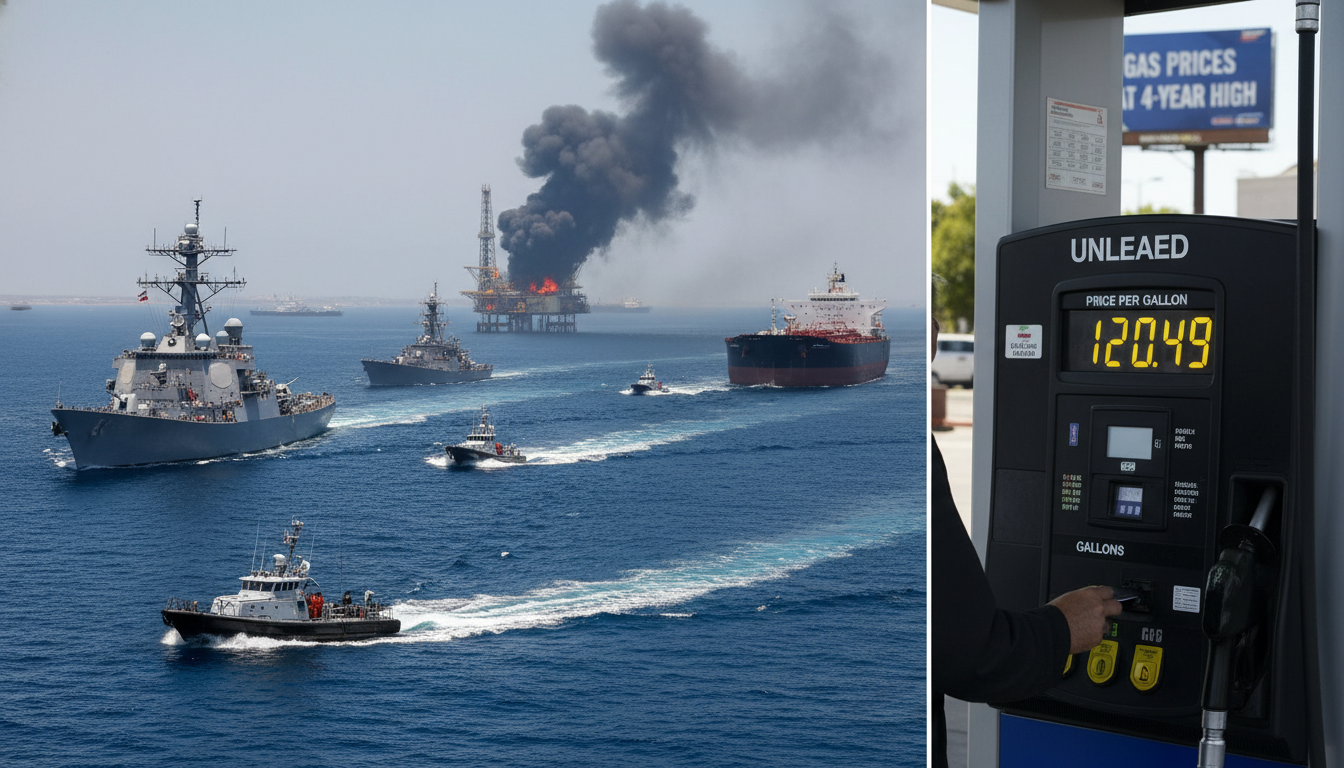
Standoff in the Strait of Hormuz Pushes Oil Above $120 as U.S. Gas Prices Hit Four-Year High
Standoff in the Strait of Hormuz drives oil prices above $120 per barrel and lifts U.S. average pump prices to a four-year high on April 30, 2026, as traders react to disrupted shipping risk and rising geopolitical tensions.
The risk premium attached to crude surged on Thursday after a renewed standoff in the Strait of Hormuz prompted buying across futures markets, sending benchmark oil prices above $120 per barrel. U.S. retail motorists felt the impact at the pumps, with national average gasoline prices reaching levels not seen in four years, tightening margins for both consumers and transport-dependent businesses. Market participants cited the prospect of shipping delays and insurance cost increases as immediate factors amplifying price moves.
Market reaction and futures trading
Oil futures experienced sharp gains as speculative and hedge-driven flows pushed prices higher, with traders citing the Strait of Hormuz standoff as the principal catalyst. Volatility spiked overnight as positions were adjusted to reflect a higher probability of supply interruptions through the key Persian Gulf chokepoint. Energy analysts noted that the price jump reflects both immediate supply concerns and a broader reassessment of geopolitical risk across the region.
Scale of the shipping and supply risk
The Strait of Hormuz remains one of the world’s most consequential maritime arteries for oil and liquefied natural gas exports, and any disruption there has an outsized effect on global energy flows. A substantial share of seaborne crude and refined product shipments passes through the strait, so even temporary impediments can force refiners and traders to seek alternative cargoes or routing. Such changes raise freight rates and insurance premiums, which in turn add to the cost of delivered fuel and refined products.
Reported security incidents and naval posturing
Maritime authorities and international shipping groups reported heightened naval activity and close-range maneuvers in and around the strait following the incidents that triggered the latest standoff. While official statements have emphasized restraint and calls for de-escalation, merchant operators warned of operational disruptions, convoy delays and increased caution in transit lanes. Shipping firms have begun reviewing voyage plans, and some carriers are consulting insurers about potential rerouting and associated cost implications.
Immediate impact on consumers and regional economies
U.S. consumers saw pump prices climb to their highest average in four years, a development that could feed into broader inflationary pressures if sustained. Import-dependent economies in Asia and Europe face higher import bills for crude and refined fuels, which can slow growth by squeezing household budgets and increasing costs for manufacturers. Freight-dependent sectors such as aviation, shipping and road haulage also face immediate cost pressures, which may be passed on to end users through higher prices for goods and services.
Government and industry responses
Several governments and energy industry groups urged calm and called for diplomatic engagement to defuse tensions, while oil companies and refiners monitored supply chains closely. Market regulators and strategic petroleum reserve authorities have signaled readiness to coordinate if the situation deteriorates, though officials stressed that any release of emergency stockpiles would depend on a clear assessment of sustained supply shortfalls. Industry associations also recommended that shippers follow updated guidance on transits and that insurers provide clarity on coverage conditions amid elevated risks.
Outlook for markets, shipping and prices
Traders said that markets will watch three indicators closely in the coming days: actual physical delays or seizures affecting cargoes, any escalation or widening of naval confrontations, and responses from major oil producers or consuming nations. If disruptions persist, the current price spike could be reinforced by tighter physical availability and higher logistics costs, prompting sustained pressure on refined fuel prices. Conversely, rapid de-escalation or assurances of safe passage could see risk premia recede and prices ease, though analysts warned that even short-lived interruptions can leave a lasting effect on market sentiment.
Global supply chains and consumers are likely to feel continued strain while the standoff remains unresolved, and energy markets will remain sensitive to both on-the-ground developments and diplomatic signals in the days ahead.

