
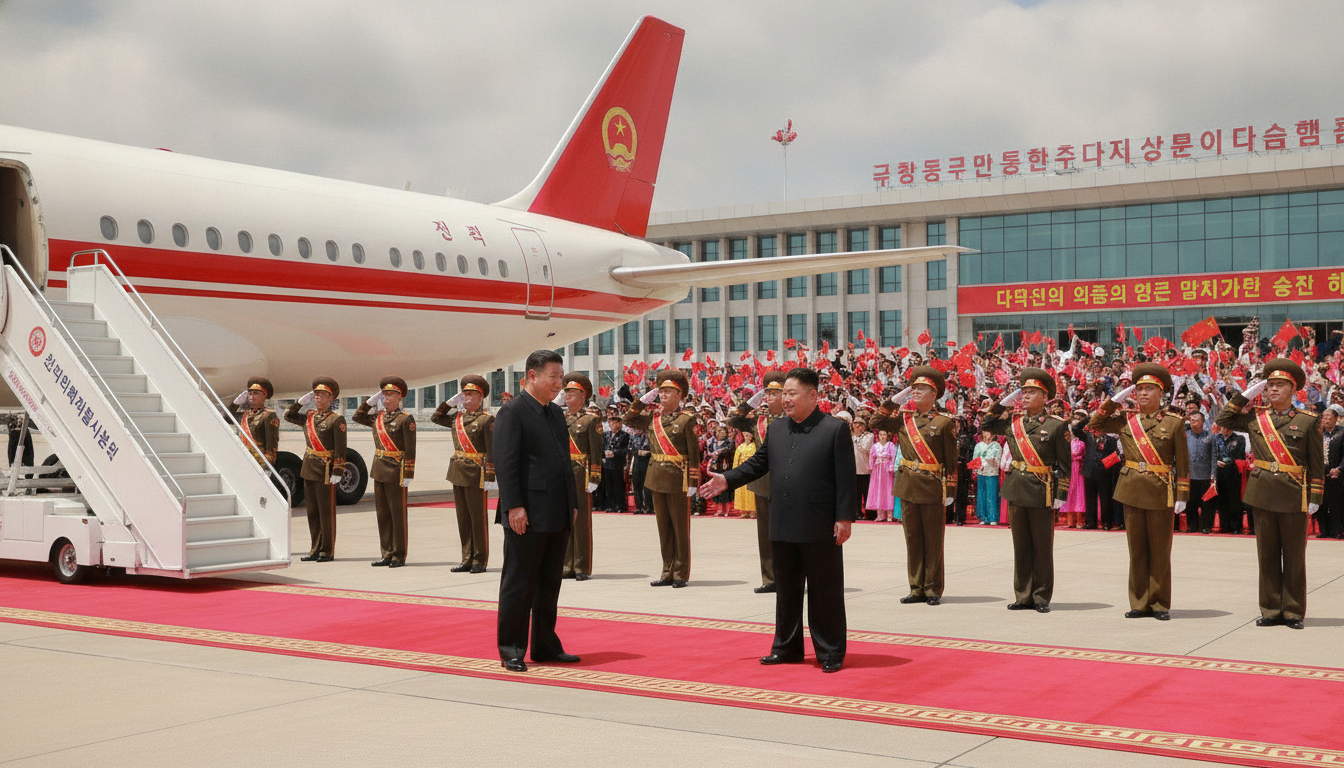
Xi Jinping visit to North Korea signals Beijing’s bid to deepen ties with Pyongyang
Xi Jinping’s visit to North Korea on June 8–9, 2026, marks Beijing’s effort to strengthen relations with Pyongyang amid growing regional security and nuclear tensions.
Chinese President Xi Jinping arrived in Pyongyang on Monday for a two-day summit with North Korean leader Kim Jong Un, in what state and international media described as a carefully staged diplomatic reset. The Xi Jinping visit to North Korea is the Chinese leader’s first trip to Pyongyang since 2019 and comes as Beijing seeks to reassert influence over its isolated neighbor. (apnews.com)
Xi arrives in Pyongyang for summit talks
Xi’s delegation landed in the North Korean capital on June 8 for formal talks scheduled to run through June 9. State media and international reporting indicate the visit is being treated as a state-level summit with ceremonial receptions and bilateral meetings planned. (reutersconnect.com)
Officials accompanying Xi were reported to include senior Chinese Communist Party and diplomatic figures, underscoring the visit’s political weight. Pyongyang’s leadership has coordinated a tightly managed program of events designed to display the two countries’ diplomatic closeness.
Summit agenda focuses on security, economic and political ties
While both sides are expected to emphasize longstanding themes of friendship and mutual support, analysts say the meetings will focus on strategic coordination in the face of rising U.S. engagement in the region. Beijing’s stated priority is to safeguard its interests in Northeast Asia while maintaining influence over Pyongyang’s foreign policy choices.
Economic cooperation and sanctions relief are likely to form part of the discussions alongside security issues, with China seeking practical concessions that would reinforce bilateral trade and political leverage without provoking strong international backlash.
Pyongyang showcases military advances ahead of the visit
In the days before Xi’s arrival, North Korean state media highlighted recent military achievements, including sea trials of a repaired warship and statements about accelerating naval and weapons programs. The displays are widely interpreted as Pyongyang projecting strength and bargaining leverage ahead of high-level diplomacy. (apnews.com)
State-controlled outlets also reiterated the North’s commitment to its nuclear deterrent and framed denuclearization demands from outside powers as unrealistic. Those assertions are part of a broader posture that signals Pyongyang’s intent to seek security guarantees and international recognition of its arsenal. (apnews.com)
Seoul urges constructive role from Beijing, watches closely
South Korea’s government said it was monitoring developments and expressed the expectation that China would play a “constructive role” on issues affecting the Korean Peninsula. Seoul’s response emphasized diplomacy and stability, calling on Beijing to contribute to de‑escalation and dialogue. (en.yna.co.kr)
Seoul has repeatedly urged transparency and has signalled concern that any strengthening of Beijing–Pyongyang ties could complicate denuclearization efforts and regional security arrangements. South Korean officials are pursuing close coordination with allied partners while maintaining channels for crisis management.
Broader strategic context and recent shifts in Pyongyang’s alliances
The summit comes against a backdrop of shifting alignments in which North Korea has expanded ties with Moscow while also testing and expanding its weapons capabilities. Observers say Beijing’s engagement is prompted in part by concern that Pyongyang’s drift toward other patrons could reduce China’s influence over nuclear and security dynamics in Northeast Asia.
For Xi, the trip offers a chance to reassert a unique role in managing the Korean Peninsula and to recalibrate Beijing’s bilateral relationship with Pyongyang after years of limited leader-level contact. The visit follows a series of high-profile international meetings in which China has been an active interlocutor.
Potential outcomes and what to watch after the summit
Possible outcomes include agreements on expanded economic cooperation, pledges of mutual political support, and diplomatic language about stability on the peninsula. Observers will be watching for any measures that ease economic pressures on North Korea or create new channels for trade and investment that fall short of full sanctions relief.
How the summit addresses nuclear issues will be closely scrutinized by regional capitals and Washington, particularly any language that hints at cooperative security arrangements or commitments to restrain provocative actions. The tone and substance of joint statements, if released, will be analyzed for signals about future coordination between Beijing and Pyongyang.
Xi’s two-day presence in Pyongyang underscores Beijing’s determination to shape the trajectory of Korean Peninsula diplomacy while balancing its own strategic concerns. The immediate diplomatic choreography may offer short-term reassurance of Chinese influence, but the summit’s longer-term impact will depend on whether it produces concrete agreements that alter economic ties, military postures, or the regional balance of power.

