
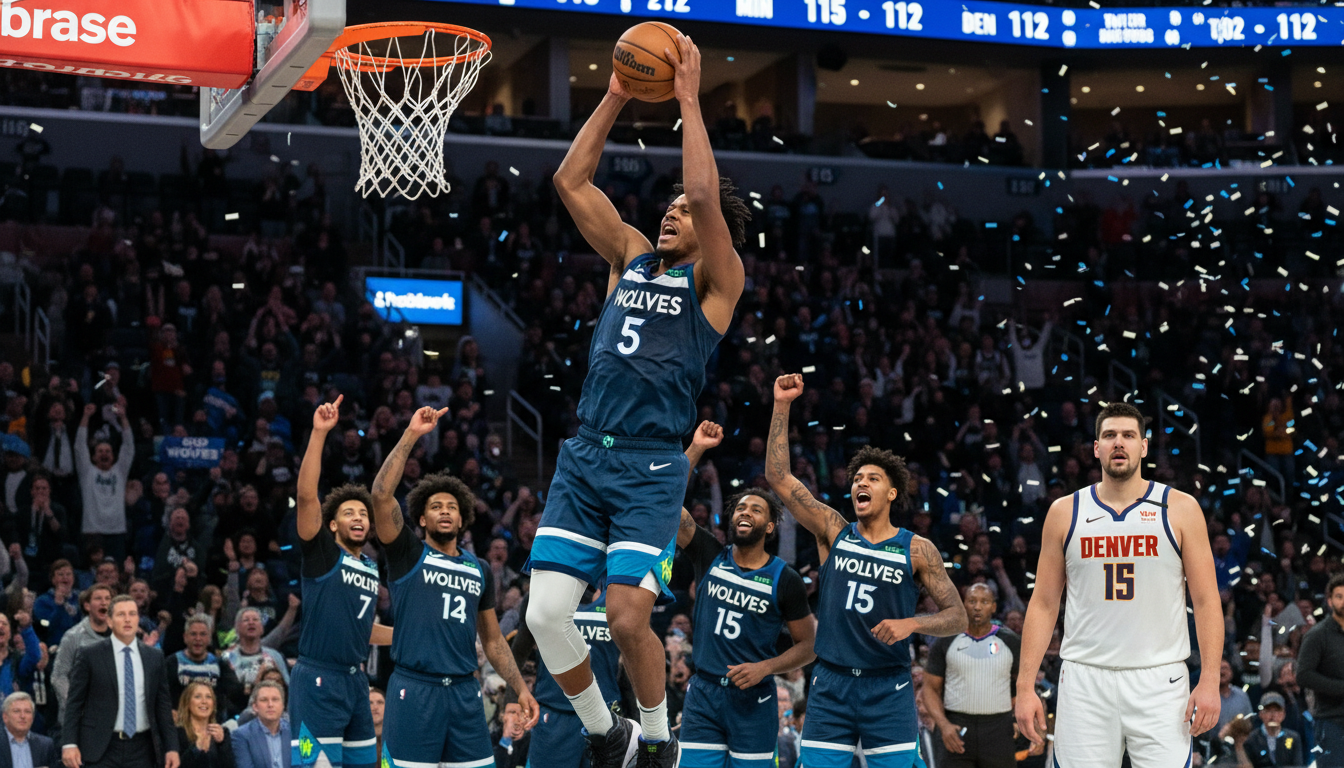
Timberwolves Rally from 19-Point Deficit to Beat Nuggets 119-114; Series Tied 1-1
Timberwolves rally from 19-point deficit to beat Nuggets 119-114 in Game 2; Anthony Edwards scores 30, series tied and Game 3 in Minneapolis on April 23.
The Minnesota Timberwolves staged a dramatic comeback Monday, erasing a 19-point hole to defeat the Denver Nuggets 119-114 in Game 2 and level the Western Conference quarterfinal at 1-1. Anthony Edwards led the charge with a 30-point, 10-rebound performance while Donte DiVincenzo drilled a go-ahead 3-pointer with 1:05 remaining. Julius Randle added 24 points and nine rebounds, including two late free throws that helped close out the victory. With momentum shifted, the series now moves to Minneapolis for Game 3 on Thursday, April 23, 2026.
Edwards Delivers 30-Point, 10-Rebound Performance
Anthony Edwards was the catalyst throughout Minnesota’s comeback, combining scoring and physical play on the glass to keep the Timberwolves within striking distance. He frequently attacked the rim and drew defensive attention, opening looks for teammates at key moments. Edwards’ double-double anchored the offensive surge and set the tone for a resilient second-half performance by the visitors.
Edwards’ presence also forced Denver to adjust its rotation and defensive assignments, allowing Minnesota to exploit mismatches late in the game. His ability to score in isolation and finish through contact energized the bench and the coaching staff. The night reinforced Edwards’ role as the Timberwolves’ primary playmaker in high-leverage situations.
DiVincenzo’s Clutch 3 Ignites Closing Run
Donte DiVincenzo supplied the sequence that ultimately decided the game, sinking a critical 3-pointer with 1:05 left to give Minnesota the lead. The shot came after a series of possessions in which the Timberwolves tightened their defense and increased shot pressure. DiVincenzo’s long-range connection punctuated a multi-player effort that reversed Denver’s earlier advantage.
That basket also shifted the psychological momentum, forcing the Nuggets into urgency and quick decisions in the final minute. Minnesota’s backcourt defenders then executed on the other end, contesting attempts and limiting easy looks. DiVincenzo’s timing highlighted the depth and composure available to the Timberwolves in the postseason.
Randle’s Late Free Throws and Closing Sequence
Julius Randle played a defining role in the closing sequence, finishing with 24 points and nine rebounds and sinking two free throws with 18.8 seconds to play. Those foul-line conversions extended Minnesota’s margin at a pivotal juncture and left Denver with a narrow window to respond. Randle’s free throws under pressure exemplified the team’s steadiness in the final minute.
His overall game balanced interior scoring and second-chance opportunities, contributing materially to the comeback. Randle’s toughness in the paint and ability to draw contact helped tilt the possession count in Minnesota’s favor. The late-game execution from the frontcourt complemented the backcourt’s clutch shooting.
From 19 Down: How Minnesota Reversed Momentum
Minnesota’s 19-point deficit in the first half appeared significant, but a combination of tightened defense and improved shot selection fueled the turnaround. The Timberwolves trimmed errors, increased intensity on the offensive glass, and found better rhythm in transition. As the contest progressed, Minnesota converted stretches of sustained offense that erased the earlier separation.
Denver’s lead faltered as the Timberwolves mounted successive scoring runs, and the visitors capitalized on a few pivotal possessions to reclaim control. The comeback underscored Minnesota’s capacity to adjust schematically and to execute under playoff pressure. The result will likely be studied by both teams as the series shifts venues.
Bench Impact and Coaching Adjustments
Contributions off the bench provided important minutes during the rally, giving starters needed respite while maintaining offensive balance. Role players stepped into shots and defensive assignments that disrupted Denver’s flow for extended stretches. Those supplementary efforts allowed Minnesota to sustain pressure late in the game without a significant drop-off.
Coaching adjustments also played a part, as timeouts and substitutions were used to alter matchups and protect leads during momentum swings. The Wolves’ staff emphasized defensive discipline in the second half, which translated into fewer uncontested shots for Denver. Those choices had a tangible impact on the contest’s closing stages.
Series Now Shifts to Minneapolis for Game 3
With the series tied 1-1, home-court returns to Minnesota for Game 3 on Thursday, April 23, 2026, where the Timberwolves will seek to leverage the victory’s momentum. The upcoming matchup presents an opportunity for Minnesota to consolidate confidence in front of its home crowd. Denver, meanwhile, will aim to regroup and reclaim control as the teams prepare for a best-of-seven series that remains wide open.
Both clubs will have time to review tape, address matchup concerns and make personnel adjustments ahead of the next meeting. How each team responds to this swing in momentum could define the early arc of the series. The immediate focus for Minnesota will be maintaining the resilience it displayed in Game 2, while Denver must find answers to blunt the comeback threat.
The Game 2 win provided Minnesota with a blueprint for overcoming adversity and showcased Edwards’ capacity to carry the offense when called upon. As the series moves to Minneapolis, attention will turn to whether the Timberwolves can sustain that level of play and whether Denver can counter the adjustments that produced Monday’s turnaround.

