
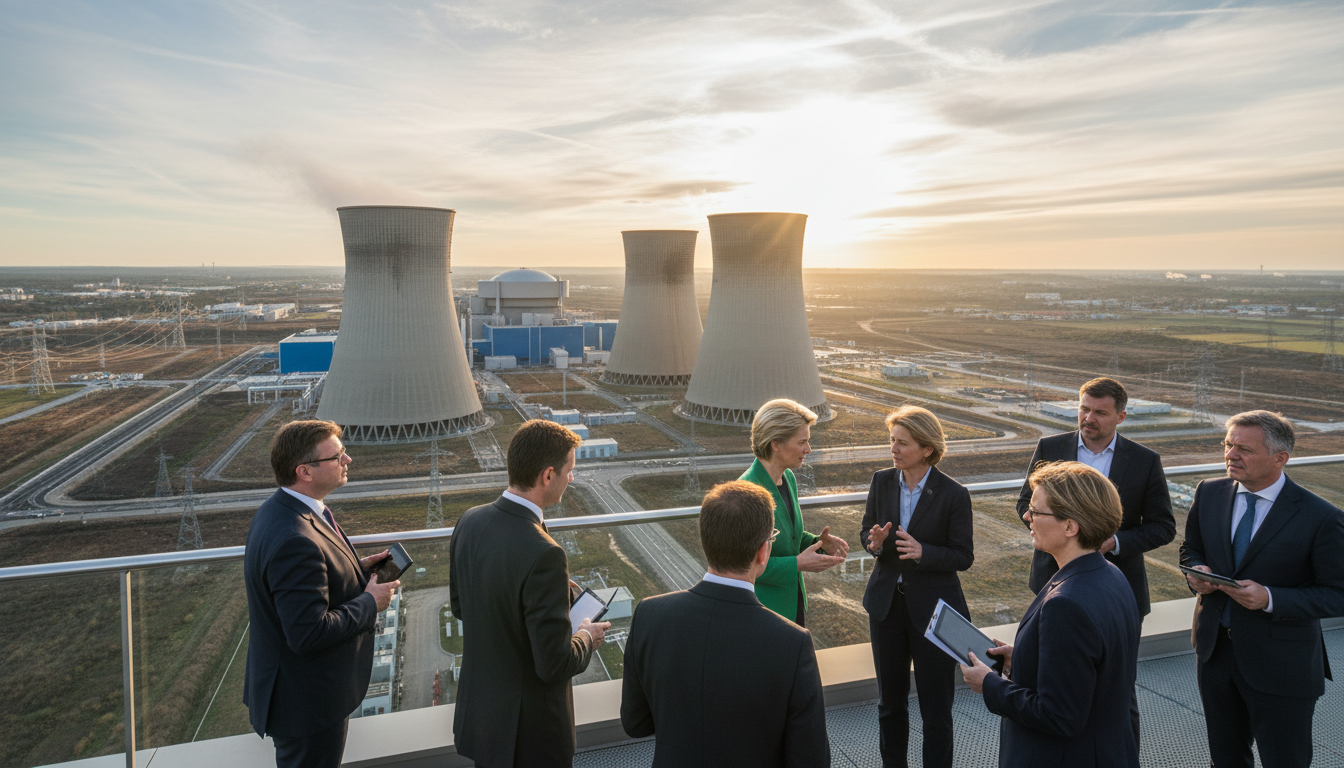
EU Draft Urges Delay of Nuclear Plant Closures to Stabilize Energy Supply
EU draft urges member states to avoid premature nuclear plant closures while easing surging energy prices and accelerating clean technology deployment.
The European Commission is preparing guidance urging governments to avoid premature nuclear plant closures as part of a wider package to tackle soaring energy costs and secure supplies. The draft calls for measures that would both provide immediate consumer relief and preserve existing low-carbon generation to reduce reliance on fossil fuels. Officials say keeping operable nuclear capacity online can help stabilize grids and support the rollout of renewable technologies. The document frames short-term interventions alongside longer-term decarbonisation goals.
Commission Proposes Immediate Relief Measures
A revised draft outlines steps for member states to provide "immediate relief" to households and industry facing higher bills. Measures flagged include cuts to electricity taxes and temporary targeted support for vulnerable consumers and sectors. The package also recommends accelerating investment in energy efficiency and clean technologies to blunt the impact of price spikes. Policymakers view these actions as necessary to prevent economic disruption while broader market reforms proceed.
Advice to Preserve Existing Nuclear Capacity
The draft explicitly advises governments to avoid the premature retirement of generating assets, citing existing nuclear facilities as a key example. It argues that operational nuclear plants can deliver reliable, low-cost and low-emission electricity during periods of market stress. The guidance emphasizes that shuttering such plants could increase short-term fossil fuel consumption and undermine emissions targets. Member states are encouraged to assess life-extension options where safety and regulatory reviews permit.
Nuclear Role in Grid Stability and Flexibility
EU officials in the draft highlight nuclear power’s ability to provide continuous baseload while supporting system flexibility. The paper notes that stable low-carbon output from nuclear units can facilitate greater integration of intermittent renewables like wind and solar. By reducing the need for fossil-fuel backup, preserved nuclear generation can lower emissions from heating and industry. The document frames nuclear alongside storage, demand response, and grid upgrades as part of a balanced stability strategy.
Linking Short-Term Policy to Clean Technology Roll-Out
The package pairs immediate relief with measures to scale up clean technologies, signalling a dual approach to energy security and decarbonisation. Proposed steps include faster permitting for renewables, incentives for heat pumps and industrial electrification, and support for grid infrastructure. The Commission suggests that keeping dispatchable low-carbon assets helps smooth the transition to higher shares of variable renewables. Officials present this as a pragmatic sequencing of policies rather than a reversal of green commitments.
Implications for Member State Decision-Making
The draft leaves implementation largely to national governments, reflecting differing energy mixes and regulatory contexts across the EU. Countries with significant nuclear fleets may be asked to reassess planned decommissionings, while states without nuclear power are urged to bolster other flexible capacity. The guidance is advisory rather than binding, but it signals EU-level priorities that could influence funding and market measures. Policymakers will need to balance public safety, regulatory requirements and political considerations in any extensions.
Market and Industry Reactions to the Draft
Energy market participants have reacted cautiously to the guidance, noting it addresses immediate supply concerns without prescribing uniform solutions. Industry groups welcomed recognition of nuclear’s role in lowering system costs but stressed that any life-extension must meet strict safety standards. Renewable advocates said the focus should remain on accelerating clean technologies and grid upgrades. Trade associations representing households and manufacturers called for swift measures to relieve bills while ensuring long-term affordability.
The draft arrives amid heightened concerns over European energy security and price volatility, driven by geopolitical tensions and supply disruptions. By recommending that member states avoid early nuclear plant closures where feasible, the Commission aims to maintain durable low-carbon capacity that can ease reliance on fossil fuels. The guidance is intended as a temporary calibration of policy to bridge current pressures while preserving momentum toward a cleaner energy system.

