
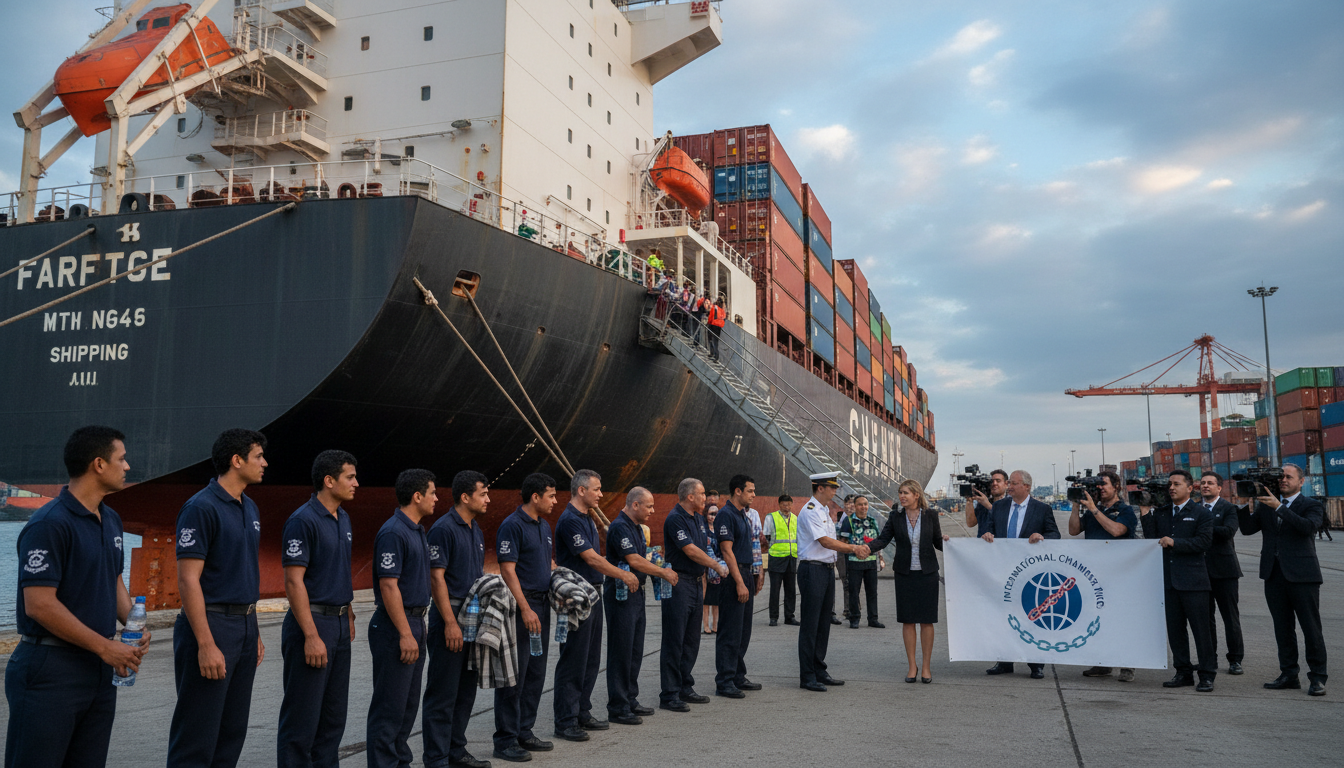
International Chamber of Shipping Condemns Strait of Hormuz Seizures, Demands Release of Crews
Shipping body condemns Strait of Hormuz seizures by US and Iran and demands immediate release of crews, urging swift restoration of freedom of navigation.
The International Chamber of Shipping has strongly condemned the recent Strait of Hormuz seizures by both the United States and Iran and demanded the immediate release of detained crews. The organisation said the detentions represent a direct threat to freedom of navigation and to the safety of merchant mariners operating in the Gulf region. John Stawpert, the chamber’s marine director, urged that seafarers be allowed to work “freely and without persecution,” stressing the non-political nature of commercial shipping.
Shipping Body’s Statement
The chamber, which represents roughly 80 percent of the world’s merchant fleet, described the captures as unacceptable and urged both states to resolve the matter swiftly. It framed the incidents as an affront to established international maritime law and the long-standing principle of innocent passage. The organisation called for transparency from the parties involved and for immediate steps to secure the release of all seafarers now in custody.
Details of Recent Seizures
Over the past week, the United States and Iran each announced they had seized commercial vessels as tensions in the Gulf escalated. The U.S. Department of Defense reported the capture of the Iran-linked Majestic X in the Indian Ocean, which it said was transporting sanctioned oil, following a prior interception of a vessel named Tifani. U.S. officials have not publicly released detailed updates on the condition or location of crews taken in those actions.
Iran’s Islamic Revolutionary Guard Corps said it boarded and seized the Panamanian-flagged MSC Francesca and the Greek-owned Epaminondas in the Strait of Hormuz. Tehran alleged the ships were operating without proper permits and had tampered with navigation equipment, assertions that have not been independently verified by international observers. Photographs circulated by regional outlets show the Epaminondas under IRGC control on April 24, 2026.
Crew Welfare and Stranded Seafarers
Authorities in the Philippines confirmed that 15 Filipino seafarers were on the two vessels seized by Iran and reported that Tehran had assured Manila that the crew members were safe and unharmed. Montenegro’s maritime minister said four Montenegrin crew aboard the MSC Francesca were reported “fine” by officials who have been allowed contact. There remain unanswered questions about the status of crews detained by U.S. forces, and shipping groups say those gaps are a source of mounting concern.
Beyond these individual cases, industry representatives warn of a broader humanitarian toll as an estimated 20,000 seafarers have been effectively confined in the Gulf since the waterway’s closure tightened. The chamber highlighted the psychological strain on crews who face prolonged periods at anchor or in port, describing the situation for many as tantamount to house arrest. Companies and unions have called for clearer assurances on welfare, medical access and crew changes.
Legal and Navigation Concerns
Stawpert and other legal experts stressed that unilateral attempts to impose tolls or new controls in international straits would lack a firm basis in established maritime law. He warned that if such measures were accepted in the Strait of Hormuz, similar claims could be attempted in other critical chokepoints, from the Strait of Gibraltar to the Straits of Malacca. The chamber also criticised the impact of parallel actions, including what it described as a U.S. naval blockade of Iranian ports, which together create operational ambiguity for shipowners and masters.
The organisation urged both capitals to clarify rules of engagement and to refrain from using merchant vessels as leverage in wider political disputes. Shipping companies need consistent, predictable guidance to make safe navigation decisions; without it, masters may be forced to reroute or delay voyages, with knock-on legal and commercial consequences. International bodies and flag states, the chamber said, must work urgently to reaffirm navigational norms.
Impact on Global Energy and Trade
The Strait of Hormuz is a vital artery for international energy markets and normally carries around one-fifth of the world’s oil and natural gas shipments. The recent disruptions have contributed to immediate increases in fuel prices and have prompted several governments to announce emergency energy-saving measures. Market analysts and trade groups warn that prolonged restrictions could deepen supply volatility and impede broader economic recovery efforts.
Maritime traffic in the waterway has plunged; reports indicate only five ships transited the strait in the most recent 24-hour period, a stark contrast with pre-conflict activity. According to United Nations Conference on Trade and Development figures cited by industry sources, the strait averaged 129 transits per day before hostilities that began on February 28, 2026. That sharp decline illustrates the scale of commercial dislocation and the mounting logistical challenges for global supply chains.
Calls for Immediate Release
Industry leaders, flag states and several governments have called on Washington and Tehran to release detained crews and vessels without delay and to restore safe, lawful passage through the strait. The International Chamber of Shipping reiterated its appeal for respect of innocent passage and for both parties to prioritise the safety and welfare of seafarers. It urged international mediation and the involvement of maritime organisations to de-escalate maritime tensions.
The chamber said that resuming normal navigation is essential not only for the welfare of individual mariners but also for stabilising global energy markets and restoring confidence in commercial shipping. It argued that adherence to international maritime law and open communication among navies, coast guards and shipping companies are the quickest routes back to unimpeded trade. With crews and commerce caught between geopolitical rivalries, industry representatives said diplomacy and legal clarity must take precedence to prevent further harm to seafarers and to global trade.

