
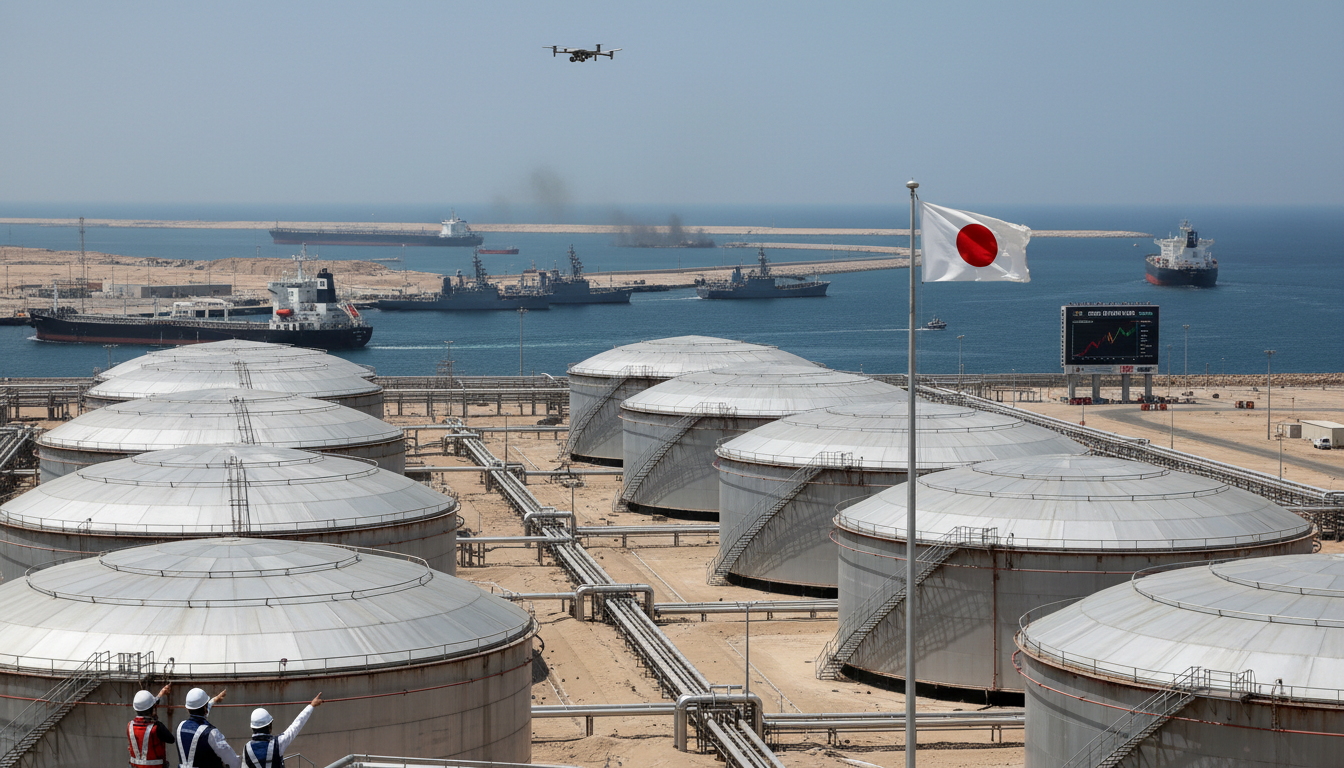
Japan to Release Additional 36 Million Barrels from National Oil Reserves After Strait of Hormuz Disruption
Japan will release 36 million barrels from its national oil reserves from May 1 to ease supply pressure after disruptions near the Strait of Hormuz, the Economy, Trade and Industry Ministry said. The decision adds to an earlier emergency sale and the oil reserves release is aimed at cushioning domestic fuel markets amid rising crude prices. The ministry said the move responds to a de facto blockade that has disrupted shipments through the vital Gulf shipping lane.
Government Announces Second Release of Strategic Oil Reserves
The Economy, Trade and Industry Ministry announced the second emergency release on Friday, with sales scheduled to begin May 1. The ministry said the additional release follows an earlier disposal that began March 26 and reflects continuing concern over supply routes through the Middle East. Officials framed the action as temporary relief while alternative procurement channels are expanded.
Volume and Storage: 36 Million Barrels and Ten Facilities
The 36 million barrels slated for release are roughly equivalent to 20 days of Japan’s domestic oil consumption, the ministry said. Crude will be drawn from ten national stockpiling sites, including the Shibushi National Petroleum Stockpiling Base in Kagoshima and the Kikuma base in Imabari, Ehime Prefecture. Authorities designed the distribution to tap multiple storage points to accelerate deliveries to refiners and wholesalers.
Major Wholesalers to Buy Released Oil
The government will sell the oil to four principal domestic wholesalers: Eneos Corp., Idemitsu Kosan Co., Cosmo Oil Co. and Taiyo Oil Co. The ministry expects proceeds from the sale to total about ¥540 billion, with contracts structured to move crude quickly into refining and distribution channels. Officials said the selection of established wholesalers was intended to maintain orderly market functioning and rapid downstream supply.
Price Trends and Lessons from the First Release
The earlier release, about 53 million barrels offered from March 26, yielded roughly the same total proceeds despite the larger volume, underscoring a sharp rise in global crude prices. The ministry cited a price increase of more than 40 percent since that first sale, driven by geopolitical tensions and market risk premia tied to the Strait of Hormuz disruptions. Analysts say the gap between supply needs and available shipping routes has pushed buyers to secure cargoes at higher costs.
Alternative Sourcing and a U.S. Shipment Scheduled
As part of efforts to diversify supply away from routes transiting the Gulf, the ministry said it had secured alternative crude sources that bypass the Strait of Hormuz. A tanker carrying U.S. crude that was procured after the outbreak of the Iran war is scheduled to arrive at Cosmo Oil’s Chiba Refinery in Ichihara as early as Sunday, the ministry added. The ship transited the Panama Canal, a route that cut voyage time to about 35 days compared with the longer passage around the Cape of Good Hope.
The ministry highlighted the transit-time improvement as a tactical benefit in the current crisis, enabling faster turnaround for shipments from the Americas. Officials noted that using the Panama Canal comes with its own logistical constraints and capacity limits, but it offers a viable short-term alternative to shipments through the Middle East. Buyers and refiners are weighing cost and scheduling trade-offs as they reroute purchases.
Planned Procurement Increase from the United States
Government projections indicate crude volumes from the United States will rise sharply in May, with expected cargoes roughly four times greater than the previous year’s level. The ministry referenced last year’s U.S. supply baseline of about 90,000 barrels per day as the comparator for the anticipated jump. Officials said expanding U.S. procurement is part of a broader strategy to secure stable supplies while reducing reliance on chokepoints.
Ministry Strategy to Limit Reserve Releases and Secure Year-End Supply
A ministry official said progress in securing alternative sources has allowed planners to map out a supply strategy extending beyond the end of the year. The ministry aims to minimize the total amount of strategic reserves released while ensuring continuity of fuel availability for industry and households. Officials are balancing near-term emergency sales with long-term replenishment and storage management to preserve national energy resilience.
Market participants will watch whether the government needs to tap reserves again or whether newly arranged cargoes can fully offset disruptions. Refiners and distributors must also manage inventories and retail supply to avoid localized shortages or price spikes at the pump. The ministry said it would continue consultations with private sector stakeholders and monitor international developments closely.
Japan’s second release of oil reserves underscores the immediate impact that disruptions in the Strait of Hormuz can have on energy security and domestic markets. The ministry framed the May 1 sale as part of a limited, controlled response designed to stabilize supply while alternative procurement routes and overseas shipments are ramped up.

