
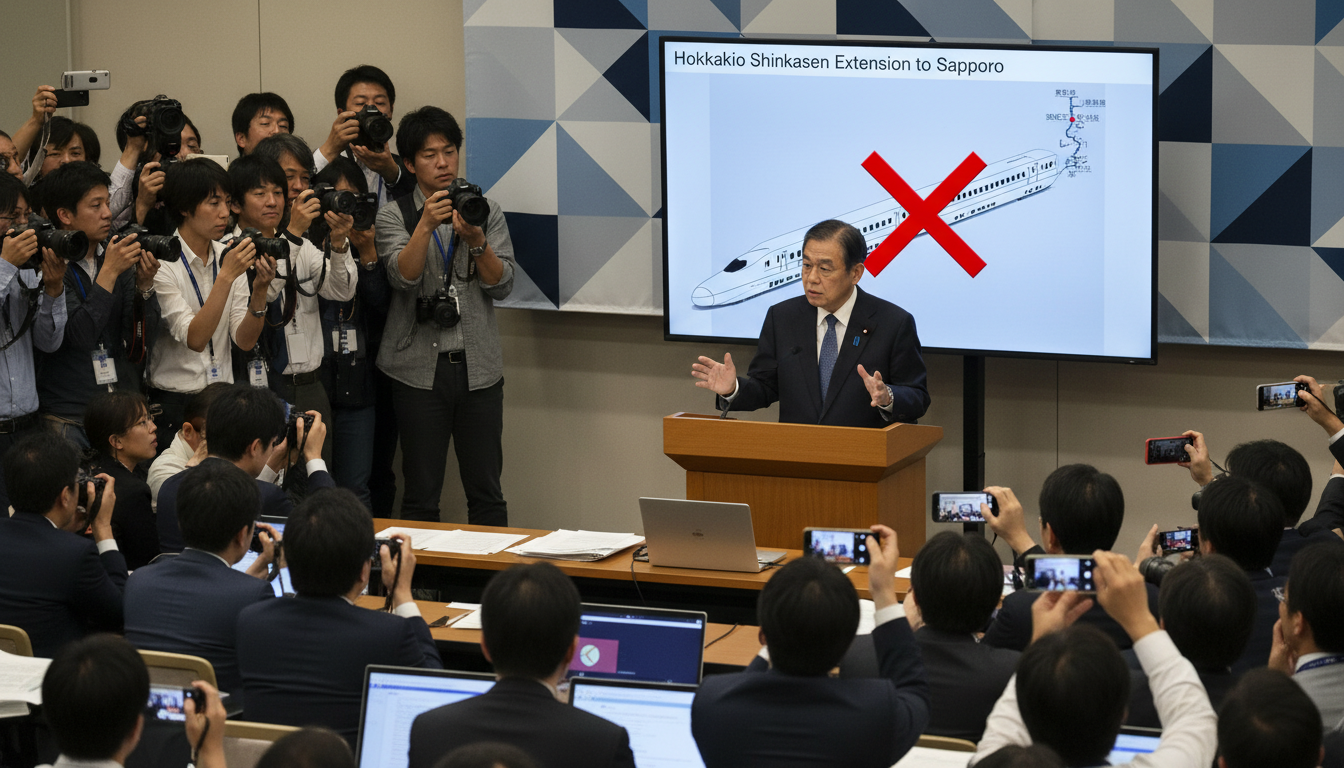
Finance Ministry Says Hokkaido Shinkansen Extension to Sapporo Could Be Suspended After ¥1.2 Trillion Cost Rise
Finance Ministry warns Hokkaido Shinkansen extension to Sapporo may be suspended after estimate of a ¥1.2 trillion cost overrun reduces project profitability.
The Finance Ministry has released an estimate indicating the Hokkaido Shinkansen extension to Sapporo could fall below viable profitability and may need to be suspended. The estimate covers the section between Shin-Hakodate-Hokuto Station and Sapporo Station and assumes project costs would rise by roughly ¥1.2 trillion. Officials urged careful review of projected revenues and the leasing fees charged to the line operator for railroads and related infrastructure.
Finance Ministry Presents Profitability Estimate
At a Fiscal System Council subcommittee meeting on Thursday, April 23, 2026, ministry officials detailed revised projections showing a significant deterioration in returns for the Sapporo extension. The ministry based its analysis on additional construction delays and higher engineering costs that push up the overall budget. The presentation concluded that under the revised cost scenario, the extension’s internal rate of return could drop to a level warranting suspension of the project.
Cost Overrun Attributed Mainly to Prolonged Tunnel Work
Officials attributed the bulk of the ¥1.2 trillion uplift to prolonged tunnel construction in Hokkaido’s mountainous terrain, citing complex geology and slower-than-expected progress. Other factors cited included higher materials and labor costs and additional safety and mitigation measures required by ground conditions. The ministry said these elements combined to materially raise baseline project expenditures beyond earlier estimates.
Leasing Fees and Operator Burden Under Scrutiny
The Finance Ministry stressed the need to set appropriate leasing fees for existing railroads and new infrastructure that the Shinkansen operator will be charged. Higher leasing or access fees would further squeeze the operator’s margins and complicate efforts to achieve profitability. The ministry recommended a careful reappraisal of fee structures to avoid imposing unsustainable costs on whoever will run the extended service.
Fiscal System Council Weighs Suspension and Alternatives
Members of the Fiscal System Council were presented with a range of policy options, including temporary suspension, renegotiation of contracts, phased construction, and additional public funding. The ministry’s materials indicated suspension should be considered if profitability cannot be restored without substantially greater taxpayer support. Council advisers pressed for transparent criteria to determine when delays or cost changes would trigger a halt to the project.
Local Governments and Businesses Face Uncertain Timelines
Hokkaido prefectural and municipal authorities, along with local businesses that have planned around earlier schedules, may face setbacks if the extension is delayed or suspended. Sapporo’s anticipated gains in tourism, business travel and broader economic activity hinge on timely rail connectivity to Honshu. Industry groups have warned that prolonged uncertainty will complicate investment decisions and could dampen near-term regional recovery efforts.
Possible Financial and Operational Responses
Transport and finance officials discussed several measures to limit further slippage, including tighter contractor oversight, reallocation of budgets, and staged openings of completed segments. Adjusting fare structures or increasing public subsidies were identified as politically sensitive but technically feasible ways to shore up revenues. The ministry emphasized that any move to shift greater cost burdens to passengers or taxpayers would require clear legal and budgetary justification.
The updated estimate has refocused debate on how to balance national infrastructure ambitions with fiscal prudence, particularly for large, complex projects in challenging environments. While proponents underline long-term regional benefits and strategic connectivity, the Finance Ministry’s analysis highlights immediate financial risks that could outweigh near-term gains. The Fiscal System Council is expected to continue deliberations and ask for further data before recommending formal changes to the project timetable or financing arrangements.

