
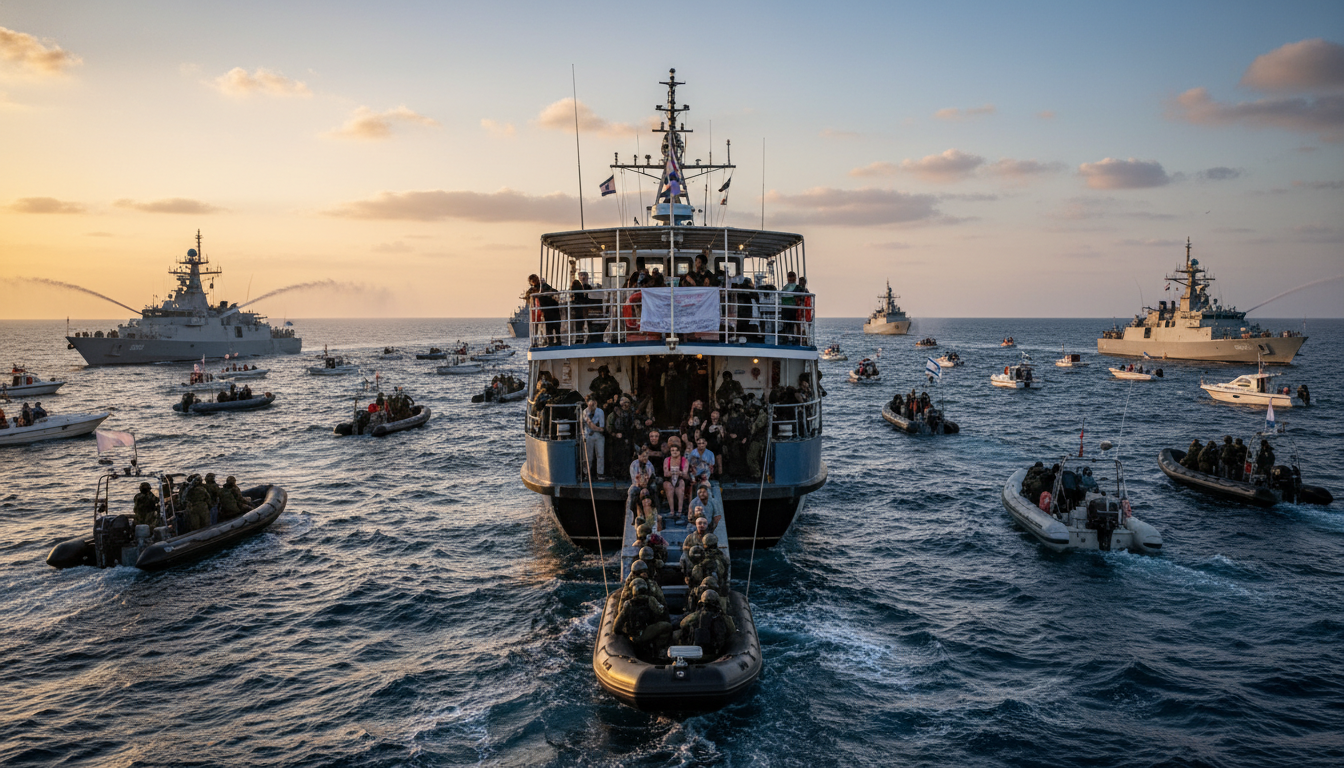
Approximately 175 Activists Arrested on Ships Bound for Gaza, Israeli Foreign Ministry Says
Israel says about 175 activists from more than 20 vessels were detained and are being taken to Israel; footage released shows them aboard Israeli ships.
Israel’s foreign ministry said on X that troops intercepted and arrested roughly 175 activists who were aboard more than 20 boats sailing toward Gaza, and that those detained are being transported to Israeli territory. The statement included a short video with a caption noting the activists were “enjoying themselves aboard Israeli vessels,” and described the transfer as peaceful. The incident marks the latest interception of maritime attempts to reach Gaza and has already drawn attention from rights groups and diplomatic observers.
Israeli foreign ministry account
The foreign ministry’s post on X provided the primary official account of the operation, saying security forces boarded the vessels and placed the activists under arrest. The ministry emphasized that the detainees were being brought to Israel and characterized the transfer as non-violent. The statement did not provide detailed information on the time, location of the boarding, or the specific units involved.
Numbers and vessels involved
According to the ministry, approximately 175 people were taken into custody from more than 20 boats that were bound for Gaza. The description suggests multiple small vessels rather than a single larger flotilla, but the ministry did not release a full manifest or identify the nationalities of those detained. Officials also did not specify whether any equipment, protest materials, or supplies were seized during the operation.
Footage released by authorities
The short video attached to the ministry’s post showed people aboard Israeli vessels and carried a caption indicating the activists were reportedly “enjoying themselves aboard Israeli vessels.” The clip, as described in the statement, appeared intended to demonstrate that the transfer was orderly and that no injuries occurred during the boarding. Independent verification of the footage’s context, timing, and full contents was not provided in the official note.
Legal framework and maritime operations
Sea voyages aimed at reaching Gaza typically confront a complex legal framework involving naval interdiction, blockades, and port jurisdiction, all of which can shape how such operations are conducted. States that enforce maritime restrictions often cite security and humanitarian concerns when intercepting vessels, while organizers of sea missions argue for the right to deliver aid or break blockades. The ministry’s brief account did not elaborate on the legal rationale it used for the interdiction or on any specific charges that might be brought against those detained.
Possible responses from organizers and third parties
Groups that organize sea voyages to Gaza have in past incidents issued statements protesting interceptions and calling for the immediate release of activists, while some governments and international organizations have urged restraint and legal transparency. In similar cases, organizers have released independent footage, named detained activists, and appealed to foreign embassies for consular assistance. At the time of the ministry statement, no parallel account from the activists or their organizers was included, leaving open questions about their identities and stated objectives.
Next steps for detainees and diplomatic implications
Standard procedure following maritime interdictions usually includes bringing detainees to shore for processing, questioning, and potential legal proceedings, and it can involve coordination with consular officials where foreign nationals are involved. The ministry’s description that the detainees were “making their way peacefully to Israel” indicates an ongoing transfer rather than concluded detention procedures. How Israel and external governments handle documentation, access for legal representatives, and any subsequent charges will shape the diplomatic fallout.
The detention of activists aboard vessels bound for Gaza adds another chapter to recurring maritime confrontations linked to the humanitarian and security situation in the region. Observers will be watching for fuller official reports, statements from the activists or their organizers, and responses from foreign ministries or rights groups that may influence the incident’s wider political and legal consequences.

