
Trump Signals Iran Deal Possible After ‘Very Good’ Talks as U.S. Forces Strike Iranian‑Flagged Tanker
Trump says a deal with Iran is possible after "very good" talks; U.S. forces struck an Iranian‑flagged tanker the same day, leaving a fragile détente uncertain.
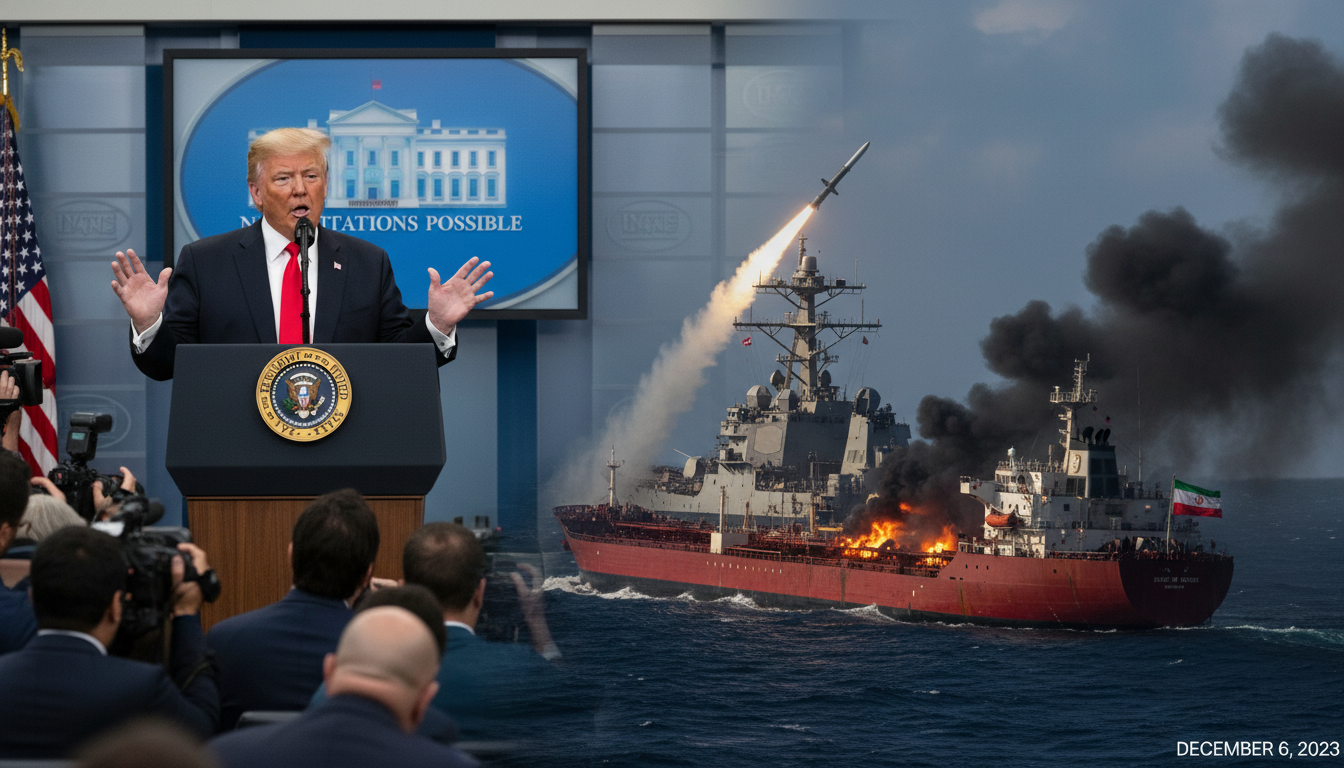
President Trump said on May 6 that a “deal” with Iran was possible after “very good dialogue” in the previous 24 hours, raising hopes for a negotiated end to recent hostilities. The comments came as U.S. military officials reported an attack on a tanker flying an Iranian flag, underscoring the fragile nature of the talks and the risks that tactical strikes could derail diplomacy. The prospect of a Trump Iran deal is now entwined with fast-moving operational decisions and competing signals from military and diplomatic channels.
Trump’s Public Remarks and Tone
Trump posted on social media that if Iran follows through on agreed actions, the campaign of military measures he has referred to as “great anger” would come to an end. His remarks were framed optimistically, suggesting the White House sees a real opening for an agreement in the short term. The president’s statement aimed to signal a willingness to trade sanctions relief for verifiable Iranian steps, while also trying to reassure regional partners and markets.
U.S. Military Strike on Iranian‑Flagged Tanker
U.S. military officials announced on the same day that forces had struck a tanker flying an Iranian flag, an action that officials characterized as a tactical response to an immediate threat. The strike highlights a disconnect between diplomatic outreach and operational imperatives, with military leaders describing actions taken to protect vessels and personnel in contested waters. Such incidents risk escalating tensions even as negotiators seek a diplomatic path forward, complicating efforts to solidify any emerging agreement.
One‑Page Memorandum Reported in Talks
Media reports citing U.S. officials said negotiators were discussing a concise, one‑page memorandum intended to set a framework for a cessation of hostilities and a return to nuclear negotiations. The reported terms would include a temporary suspension of Iranian uranium enrichment in exchange for phased U.S. sanctions relief, along with mutual commitments to allow safe transit through the Strait of Hormuz. U.S. sources indicated Washington expected a formal Iranian response within roughly 48 hours, though diplomats cautioned that the timeline could slip.
Strait of Hormuz Transit and Regional Security
Control and safety of shipping through the Strait of Hormuz lie at the center of both the diplomatic talks and the recent maritime incidents. The narrow waterway handles a significant proportion of global oil shipments, making uninterrupted passage a priority for producers and consumers alike. Any agreement that secures transit would ease a major strategic pressure point, but persistent attacks or counter‑strikes could rapidly reverse gains and renew broader regional confrontation.
Markets React to Prospect of De‑Escalation
Financial and energy markets responded quickly to the twin signals of possible progress in negotiations and continuing military actions. Investors priced in a reduced risk premium for oil and regional instability when news of productive talks surfaced, while the attack on the tanker injected fresh volatility and prompted caution among energy traders. In global equity markets, optimism about a potential end to hostilities helped lift share prices, reflecting how tightly geopolitical developments remain linked to market sentiment.
Diplomatic Calculus and Remaining Uncertainties
Diplomats on both sides face a narrow window to translate preliminary understandings into a durable arrangement that survives scrutiny from hardliners and military commanders. The reported memorandum would require verification mechanisms and sequencing of concessions that can be implemented without undermining domestic political positions in Tehran and Washington. Observers warn that even small missteps — accidental or deliberate — could unravel nascent agreements and produce rapid escalation.
International partners are pressing for clarity on verification steps and for safeguards that would prevent localized incidents from triggering broader conflict. Allies in the region and beyond will likely seek more detailed assurances before committing political capital to any deal, and contingency planning by militaries will continue even as diplomats pursue a settlement.
The coming days will be decisive: negotiators are racing to secure a written understanding while military and commercial actors operate in the same contested spaces, and the ultimate success of any Trump Iran deal will depend on tight coordination between diplomacy, intelligence, and force posture to preserve de‑escalation and restore stable maritime transit.

