
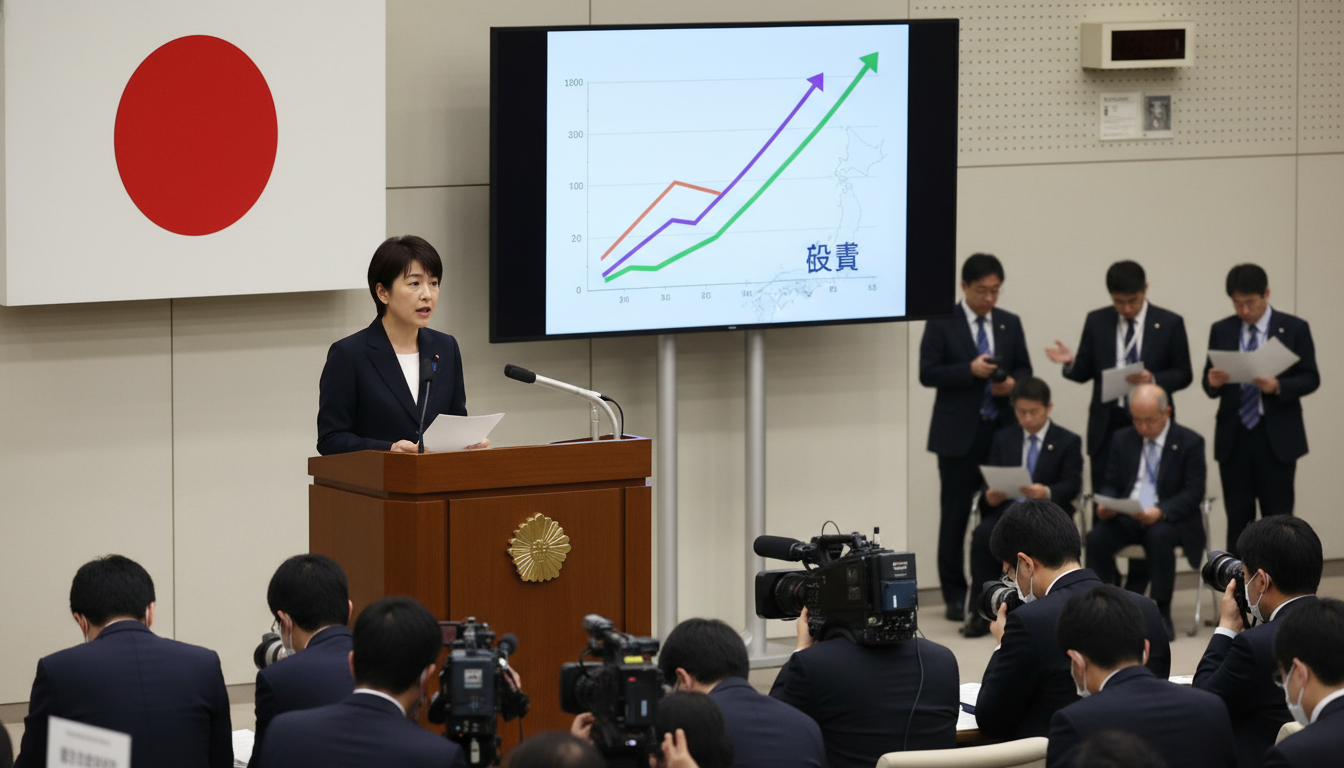
Takaichi Constitutional Revision Deepens Opposition Rift as Article 9 Protests Mobilize
Prime Minister Takaichi’s constitutional revision drive deepens opposition rifts as nationwide Article 9 protests surge and centrists grapple with public and party divisions.
The debate over Prime Minister Sanae Takaichi’s constitutional revision campaign, focused on changes to Article 9, has reignited street protests and exposed fractures within the parliamentary opposition. On April 19, 2026, tens of thousands gathered near the National Diet to oppose any amendment to the pacifist clause, while centrist opposition leaders remained conspicuously absent from high-profile demonstrations. The standoff underscores a growing strategic and ideological vacuum among opposition parties as the government presses ahead with its revision agenda.
Large Demonstrations Oppose Article 9 Amendment
On April 19, 2026, demonstrators carrying placards reading “No to Article 9 Revision” converged outside the Diet, with organizers estimating about 36,000 participants. Representatives from parties on the left, including the Communist and Social Democratic parties, addressed the crowd and reiterated calls to preserve the postwar pacifist clause.
The turnout and vocal messaging signal sustained public resistance to constitutional change, particularly amendments perceived to normalize collective security or expand the Self-Defense Forces’ role. Protesters cited fears that revision would erode Japan’s pacifist identity and increase the risk of military engagement.
Centrist Reform Alliance Avoids Public Alignment
Notably absent from the April 19 demonstrations were senior figures from the Centrist Reform Alliance, the country’s largest opposition party by some measures. Reporters seeking comment were told by a party official that overt participation in mass protests risks alienating moderate voters and that the party is “weighing positions carefully.”
That public reticence reflects a tactical calculation inside the party: to preserve appeal to swing voters while avoiding the polarizing rhetoric that characterized earlier mobilizations against security legislation. The stance, however, has provoked criticism from activists and left-leaning parties that expected a unified parliamentary front.
Echoes of 2015 Security Law Protests and Party Realignment
Observers point to the large-scale demonstrations against the 2015 security legislation as a recent precedent in which street mobilization and opposition coordination had a lasting political effect. At that time, mass protests helped crystallize opposition identities and contributed to the formation of a coherent party platform among several opposition factions.
The current moment, by contrast, shows a weaker link between civic protests and parliamentary opposition. While the 2015 protests fed into the emergence of new party alignments, the centrist bloc today appears more concerned with electoral calculus than with mass-action politics.
Internal Debate Over Self-Defense Forces and Constitutional Wording
Within centrist ranks, internal debate has intensified over whether to explicitly recognize the Self-Defense Forces in any revised constitutional text. Some lawmakers argue a pragmatic amendment could clarify the legal status of current defense forces, while others caution that endorsing such language undermines broader public concerns about remilitarization.
Party strategists say these discussions are fraught because any public position risks alienating a significant segment of the party’s base or provoking defections to more vocal parties on the left or right. The result has been an apparent policy paralysis that leaves the centrist leadership struggling to articulate a clear alternative to the government’s plan.
Government Strategy and Parliamentary Timetable
Prime Minister Takaichi’s administration has signaled that constitutional revision is a policy priority, framing changes as necessary to adapt Japan to contemporary security challenges. The government’s approach combines high-level speeches, parliamentary debate scheduling, and outreach to conservative constituencies to build momentum for a formal amendment process.
With the Diet calendar moving forward, opposition parties face pressure to coordinate procedural tactics and public messaging to influence any committee votes or referenda timelines. Analysts say the stumbling block is not procedural capability but the lack of a unified political narrative that resonates with voters across the spectrum.
Public Opinion and the Road to a Referendum
Polls and public forums since the renewed debate began indicate a divided electorate, with sizable groups both opposed to and in favor of limited constitutional adjustments. Protest organizers have sought to amplify the anti-revision message by linking Article 9 protections to everyday concerns about peace and civic life.
At the same time, proponents of amendment emphasize legal clarity and deterrence in a region where security dynamics are shifting. That competing framing creates a difficult environment for opposition parties that must balance principled stands with the practicalities of appealing to undecided voters.
The current stalemate highlights a broader political challenge: how opposition parties, especially the Centrist Reform Alliance, can reconcile internal divisions and craft a coherent response to Prime Minister Takaichi’s constitutional revision push before key parliamentary decisions are taken.

