
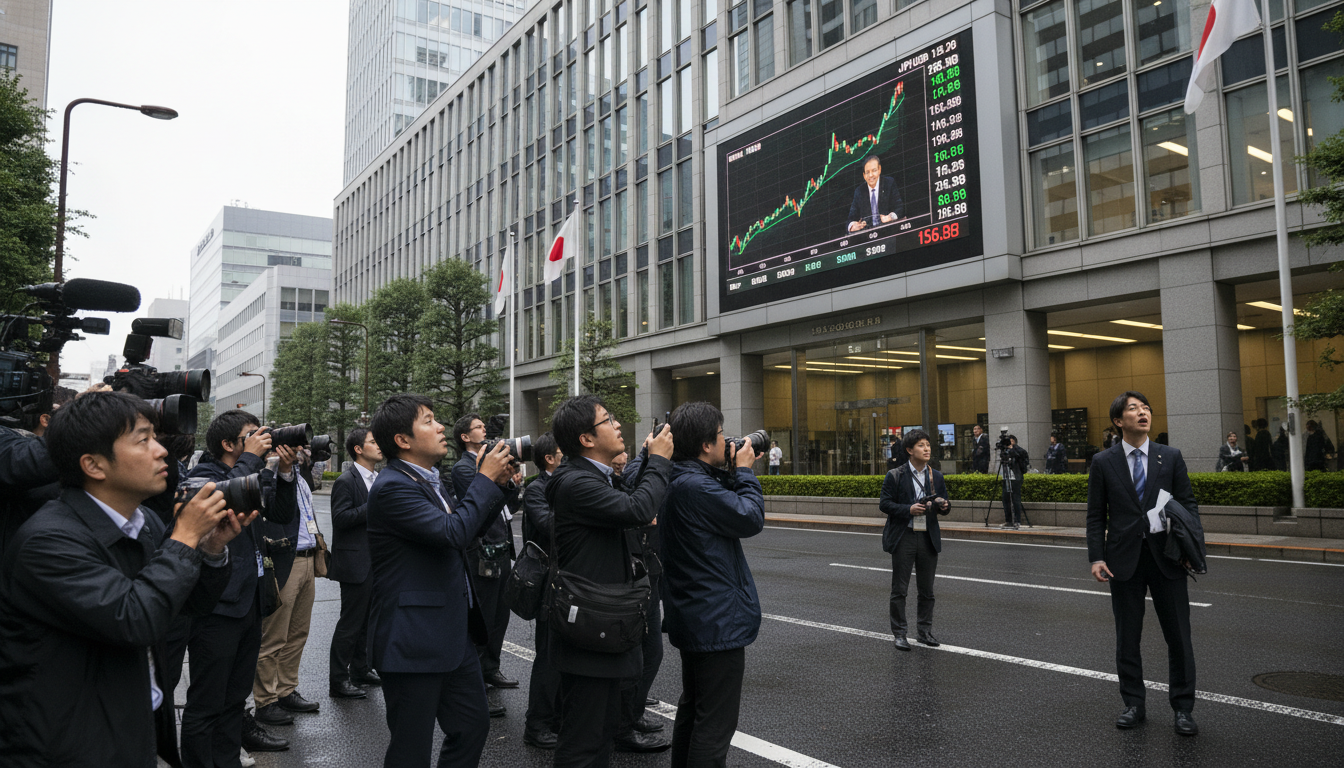
Yen intervention speculation rises as authorities buy the currency, threshold seen near 157
Authorities bought yen as dollar-yen swung on May 6, 2026; traders say repeated interventions may have lowered the intervention threshold from 160 to about 157.
The yen came under renewed pressure on May 6, 2026, prompting Japanese authorities to step into foreign exchange markets by purchasing the currency, traders said, in an episode that has reignited talk of active yen intervention. Market participants described successive moves by authorities since last week, and several dealers suggested the level at which officials are prepared to act has effectively moved from 160 yen to the dollar down to roughly 157. The reports have left traders and corporate treasurers reassessing risk and hedging strategies as volatility persisted.
Authorities’ purchases cited by traders
Market participants reported that government buying of yen took place when the dollar-yen rate showed sharp directional swings, absorbing selling pressure and briefly stabilizing the exchange rate. Those who track central-government activity said the operations appeared deliberate and sizable enough to influence spot trading in Tokyo. No formal public announcement was issued at the time, consistent with past practice of intervening without prior official confirmation.
Traders point to multiple interventions since last week
Several currency dealers and market analysts said the recent pattern suggested more than one intervention episode over the prior week, rather than a single, isolated action on May 6. They pointed to atypical order flow and sudden denting of momentum in electronic markets as indicators that authorities were repeatedly stepping in. These observations have fed into a broader narrative that authorities are more active in smoothing disorderly moves in the dollar-yen market.
Intervention threshold appears to have shifted to the 157 range
Traders long regarded 160 yen to the dollar as a symbolic line at which Japanese authorities would consider intervention, but the latest activity led many in the market to infer a lower, more conservative trigger. Dealers said the new implicit threshold now appears to be in the 157 area, a range that would prompt intervention earlier than the previously cited psychological level. If this interpretation proves accurate, it would reflect a recalibration of market expectations and could compress the range within which currency positions are taken.
Market response and heightened volatility
The prospect of repeated intervention kept volatility elevated as participants weighed the risk of further government action against underlying economic and interest-rate differentials. Spot dealers reported wider bid-ask spreads at times and a faster pace of stop-loss executions among leveraged positions, which amplified intraday swings. Corporate treasuries and importers said they were monitoring developments closely and adjusting hedges to limit exposure to sudden moves.
Policy coordination and official silence
While past yen interventions have involved coordination between the Ministry of Finance and the Bank of Japan, officials did not immediately confirm any transactions on the record, and no formal policy pronouncement accompanied the market operations. Analysts noted that authorities often prefer quiet intervention to avoid stoking speculative behavior, but the lack of a public statement has left markets reliant on trade-voice evidence and order-flow analysis. Observers will watch for any official comment in coming days to clarify intent and scope.
Concerns about competitiveness and inflation dynamics remain part of the backdrop to intervention decisions, with markets parsing currency moves alongside domestic economic data and global interest-rate trends. Any sustained change in the perceived intervention threshold will influence how portfolio managers and exporters position themselves in the weeks ahead.
The immediate outlook is uncertain: traders expect episodic yen-buying could recur if downward pressure accelerates, but they also caution that intervention effectiveness varies with market liquidity and broader cross-asset flows. For now, participants say the clear message is that Japanese authorities are prepared to act, and that market behaviour should be adjusted accordingly as the situation develops on and after May 6, 2026.

