
Constitutional amendment ranks last as voters prioritize pensions and healthcare, poll finds
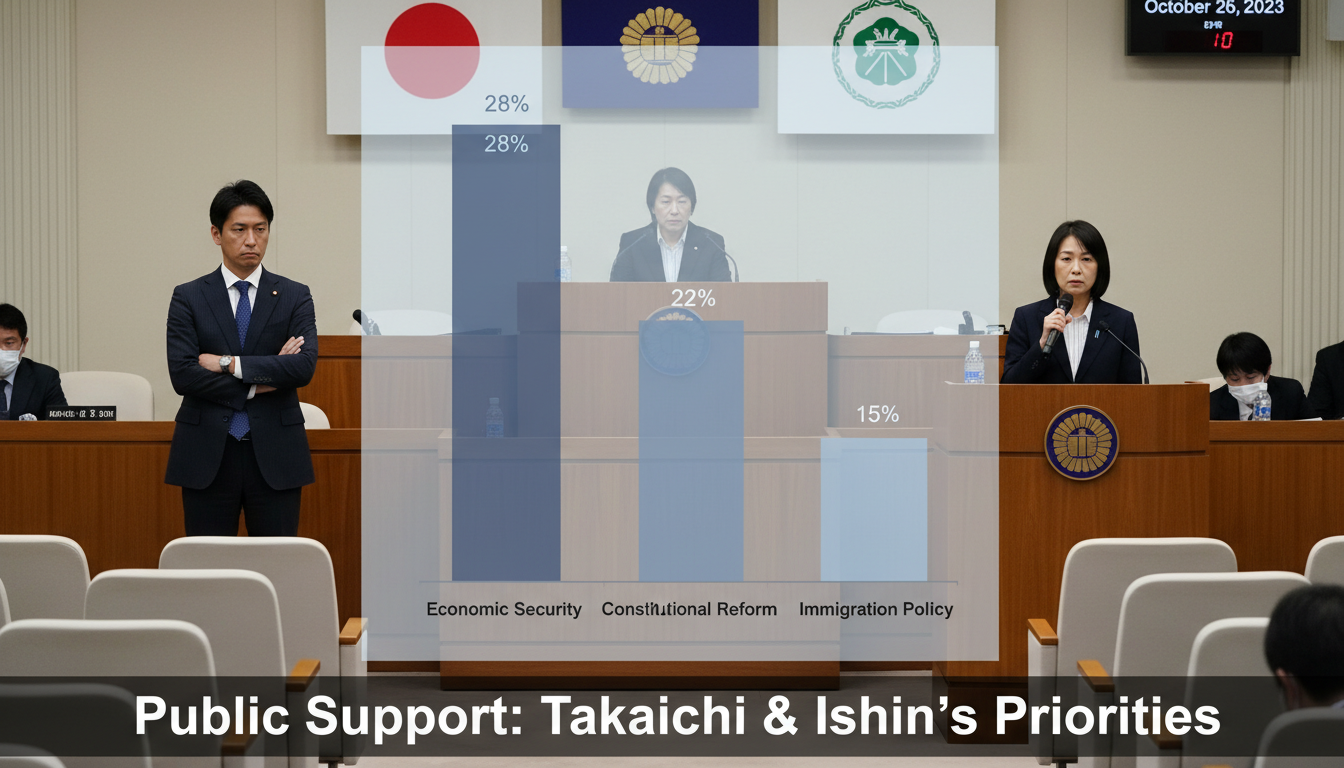
A March–April 2026 joint voter survey found constitutional amendment was the top priority for just 1% of respondents, while pensions, healthcare and Osaka’s deputy-capital plan drew stronger support.
Japan’s new prime minister has made constitutional amendment a central pledge, aligning with the reform agenda of a key coalition partner, but a recent joint voter survey conducted in March–April 2026 shows public appetite for constitutional amendment remains minimal. Respondents were asked to choose a single most important political issue from 12 options, and only 1% selected “constitutional (amendment or protection),” while social security topics topped the list. The findings highlight a significant gap between political elites’ priorities and the concerns of ordinary voters, raising questions about the feasibility of moving constitutional change up the national agenda.
Poll methodology and headline findings
A joint voter survey by a University of Tokyo research laboratory and a major national newspaper asked eligible voters to name the one issue they most wanted the government to address. The period for the survey was March–April 2026, following the lower house election earlier in February. The most-cited priority was pensions, medical care and long-term nursing care, while the plan to create a “deputy capital” in Osaka was chosen by about one in five respondents. A proposed reduction in the number of lower house seats failed to reach majority backing, registering support below the 50% threshold.
Constitutional amendment’s weak standing among voters
Despite concerted efforts by senior politicians to place constitutional amendment at the forefront, the survey indicates it remains a low public priority. Only 1% of respondents listed constitutional matters as the single most urgent issue, a proportion that underlines the difficulty of building broad-based momentum. Political elites may regard constitutional revision as a strategic or ideological objective, but the public appears more concerned with day-to-day economic security and social services. This discrepancy suggests that pushing major legal change without wider public engagement could prove politically costly.
Support for Osaka’s deputy-capital proposal and electoral reform
The survey showed moderate support for Osaka’s “deputy capital” concept, with roughly 20% of respondents naming it as their top priority. That backing is meaningful but far from overwhelming, indicating regional interest and recognition of local administrative reform without national consensus. Proposals to reduce the number of seats in the lower house attracted considerable attention, yet did not secure a majority in the poll. The mixed results point to nuanced public attitudes: voters may endorse elements of administrative streamlining or electoral reform in principle, but are hesitant to make them the single most important national priority.
Ruling coalition dynamics and policy alignment
Since the February general election, the prime minister has conferred with the leader of a prominent reformist party that champions both the deputy-capital plan and seat reduction. Public statements at party gatherings in April reinforced a mutual push for these structural reforms and for constitutional revision as a shared goal. However, the survey reveals differences in emphasis between the parties’ agendas and what the electorate wants addressed first. Those intra-coalition divergences could complicate legislative strategy and force trade-offs as the government seeks to balance partner demands with voter sentiment.
Political implications and strategic choices ahead
The striking gap between elite-driven priorities and the public’s top concerns carries immediate political implications. Lawmakers who press for constitutional amendment before securing clearer public support risk alienating voters focused on pensions, healthcare and cost-of-living pressures. Similarly, pursuing seat reduction or the deputy-capital plan without extensive public explanation and consensus-building could generate pushback. For the prime minister and coalition partners, the survey suggests that political capital may be better spent addressing social security and everyday economic anxieties to build trust before tackling far-reaching constitutional change.
The survey’s results underscore a central challenge for policymakers: translating party platforms into policies that resonate with a public prioritizing social safety nets over institutional reforms. With constitutional amendment presently low on voters’ lists of urgent issues, successful advancement of that goal will likely require sustained public outreach, clear explanations of proposed changes and demonstrable links to voters’ immediate concerns in pensions and healthcare.

