
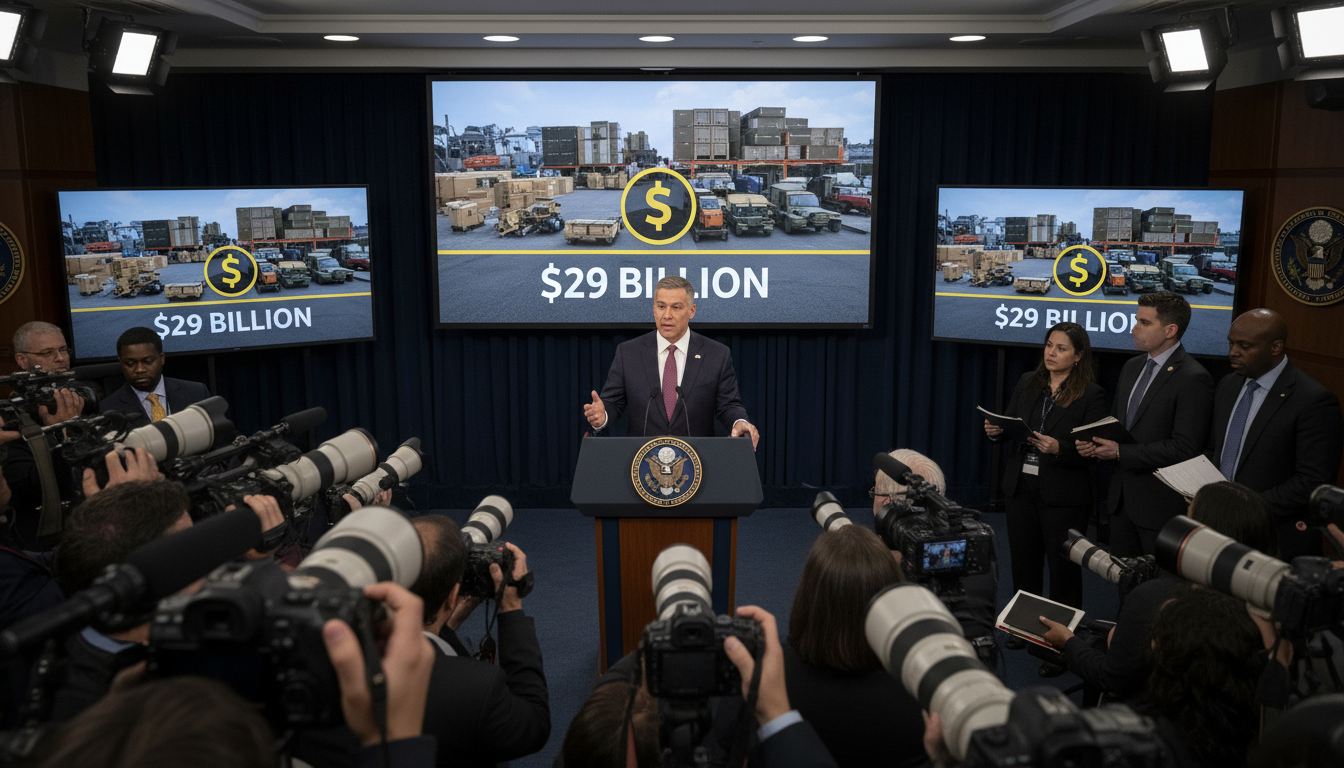
Pentagon Chief Defends Munitions as Iran War Cost Rises to $29 Billion
Hegseth told Congress the U.S. has munitions for the Iran war as lawmakers pressed on rising costs, $29B estimate, stockpile concerns and allied strain.
The defense secretary appeared before House and Senate appropriations panels Tuesday to defend the Pentagon’s handling of the Iran war, insisting American forces retain the munitions and capabilities needed while acknowledging stepped-up production.
Lawmakers from both parties challenged the Trump administration about an updated Pentagon estimate that the conflict has cost roughly $29 billion, most of it tied to replenishing weapons, repairing equipment and keeping forces deployed.
The hearings exposed widening concerns over depleted inventories, the industrial base’s capacity to rebuild stockpiles and growing political friction with U.S. allies amid continuing operations in the Gulf.
Hegseth Defends Stockpiles and Orders for More Weapons
Pete Hegseth told appropriators that public claims of depleted munitions were exaggerated and that the military retains essential missile-defense systems and other ordnance.
He said officials have instructed the defense industry to expand output and accelerate deliveries, blaming past procurement shortfalls and demand from other theaters for current strain.
Hegseth declined to outline operational plans publicly but said the Pentagon has contingencies to escalate, withdraw or shift assets as required.
Congressional Republicans Warn About Strained Alliances
Several Republican lawmakers pressed the secretary over President Donald Trump’s public criticism of NATO and other traditional partners for not contributing more to regional operations.
Senate Appropriations subcommittee chair Mitch McConnell stressed that alliance cohesion remains central to U.S. power and questioned whether European partners see Washington as reducing its influence.
House Appropriations chair Tom Cole echoed that “America First” does not mean acting alone and urged coordinated action with like-minded nations.
Lawmakers Press on Munitions, Readiness and the $29 Billion Tab
Appropriators spent hours probing how much the Iran war has drained U.S. inventories and whether the 2027 budget request adequately restores readiness for high-end conflict.
Pentagon comptroller Jay Hurst told Congress the updated estimate — roughly $29 billion — reflects mostly the costs of replacing munitions and equipment and sustaining deployed forces, and does not yet include rebuilding damaged U.S. bases.
Members from both parties, including Rep. Ken Calvert and Rep. Betty McCollum, asked whether the department is rebuilding depth sufficient to deter or fight a near-peer adversary while continuing operations in the Middle East.
Think-Tank Warnings and Industry Capacity Concerns
Analysts have flagged the scale of expenditures needed to restore pre-conflict inventories, pointing to significant draws on interceptors and other key systems during recent operations.
Officials testified that expanding industrial capacity will take time and require sustained investment, citing prior support for allies such as Ukraine as a factor in supply chain pressures.
Pentagon witnesses said they are coordinating with manufacturers to speed production but acknowledged that replenishment to preferred levels will not be immediate.
Economic and Strategic Consequences of the Strait of Hormuz Closure
Lawmakers pressed the administration on how it plans to reopen the Strait of Hormuz and mitigate economic fallout after Iran’s moves disrupted a corridor that normally carries about one-fifth of global oil.
Sen. Susan Collins and other members linked the regional standoff to rising fuel prices at home and demanded clearer plans for restoring commercial shipping lanes.
Defense leaders argued tactical successes have been achieved at sea and in denying attacks, but senators countered that tactical gains risk becoming strategic setbacks without a coherent endgame.
Bipartisan Frustration Over Transparency and Endgame Planning
Democrats repeatedly asked for clearer accounting of war costs and a plan to draw down U.S. forces if congressional efforts to end the conflict succeed, pressing that families and taxpayers deserve detailed breakdowns.
Sen. Patty Murray criticized the administration for asking the public to shoulder war costs without transparent justification, while Sen. Chris Coons warned that tactical battlefield wins could translate into strategic losses absent a comprehensive strategy.
Hegseth replied that military and political options are under continuous review, but he refused to publicly disclose next steps, saying operational security prevents a fuller public accounting.
The hearings underscored a rare alignment of concern across party lines about the fiscal, strategic and industrial consequences of extended combat operations in the Gulf.
As appropriators continue to examine the Pentagon’s 2027 budget proposal and the evolving price tag of the Iran war, Congress faces pressure to reconcile immediate replenishment needs with longer-term modernization and alliance priorities.
Lawmakers signaled they will press the administration for more detailed figures and clearer plans in coming weeks as they consider supplemental funding and broader defense allocations.

