
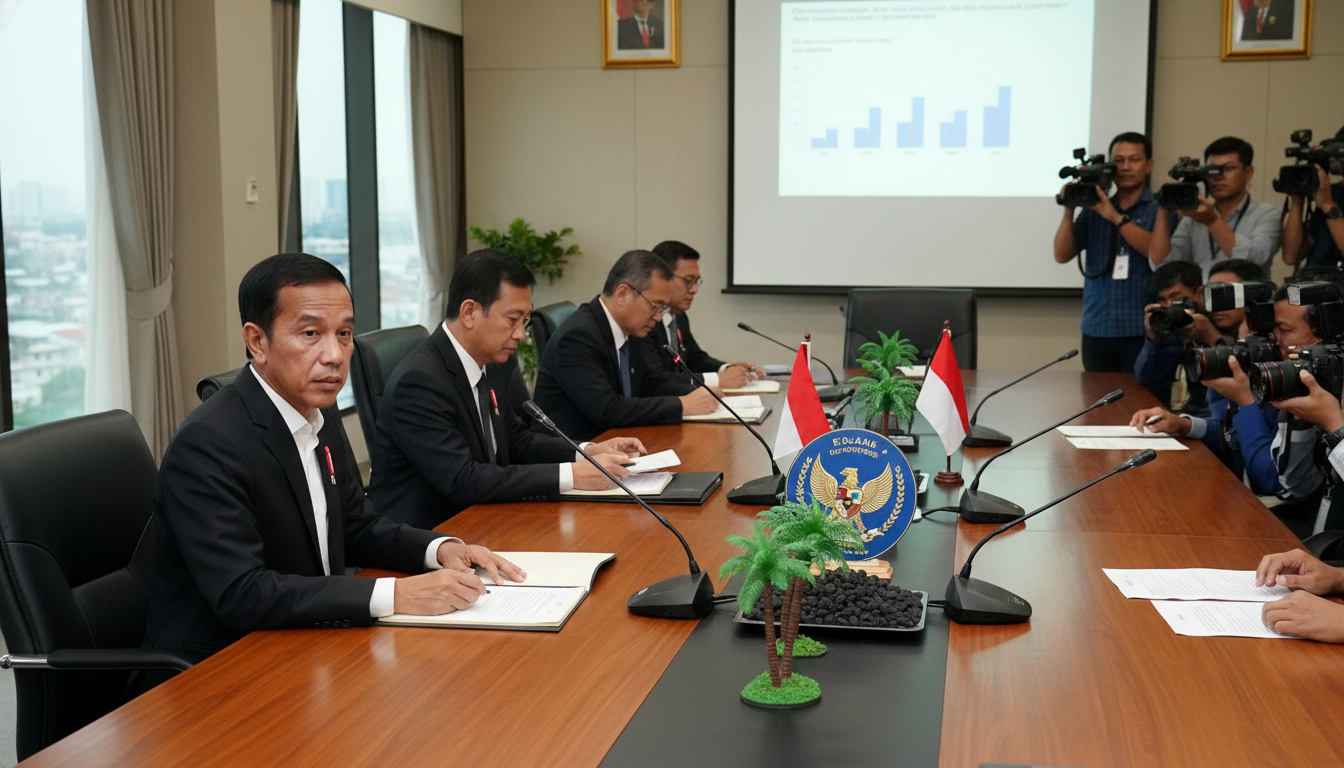
Indonesia export controls: Prabowo creates state-owned commodities exporter for palm oil, coal and minerals
On May 20, 2026, President Prabowo Subianto announced the creation of a state-owned enterprise that will centralize control of export shipments, marking a major shift in Indonesia export controls and trade policy. The move targets palm oil, coal and strategic minerals and prompted immediate backlash from industry groups and investors. Commodity producer shares fell on the same day as markets digested the implications of tighter government oversight.
Presidential directive and new entity formation
President Prabowo said the new state-owned company will manage exports of key commodities, signaling a centralised approach to overseas shipments. Officials framed the measure as a mechanism to secure national interests and assert greater oversight over resources that underpin the economy. The announcement, delivered on May 20, sparked swift debate in Jakarta and among business stakeholders about how the new entity will operate in practice.
Commodities named in the policy
The government identified palm oil, coal and certain minerals as the first products to fall under the new export regime. These sectors account for a large share of Indonesia’s export revenues and are closely linked to employment in rural provinces. The listing of these commodities highlights the state’s focus on resources viewed as strategically important for domestic supply chains and fiscal stability.
Market reaction and investor concerns
Financial markets reacted quickly, with commodity producer shares dropping on May 20 as investors reassessed profit outlooks and policy risk. Traders cited uncertainty over export licensing, pricing control and the potential for longer bureaucratic processes that could slow shipments. Analysts warned that unclear implementation timelines could deepen volatility in equities and in overseas buyer relationships.
Industry groups warn of supply disruptions
Producers and exporters voiced strong concerns about the centralisation plan, saying abrupt changes could disrupt contracts and logistics chains. Trade associations argued that sudden shifts in export control can complicate supply agreements, especially for buyers relying on predictable delivery schedules. Companies also warned that additional administrative layers could increase costs and reduce competitiveness at a time when global demand is sensitive to price and timeliness.
Government rationale and stated objectives
Officials defending the move pointed to objectives including food and energy security, revenue protection and tighter enforcement against illegal exports. The administration said a consolidated exporter would allow the state to better monitor flows, collect dues and prevent smuggling that has previously eroded state revenues. Supporters argue the structure could stabilise domestic markets by coordinating sales and reserves in times of price swings.
Logistics and contractual questions remain
Practical details such as licensing procedures, governance structure, pricing formulas and treatment of existing contracts were left vague in the initial announcement. Industry representatives emphasized the need for clear transitional rules to avoid legal disputes and cargo bottlenecks at ports. Observers also noted that the new enterprise’s relationship with private companies, both as supplier and purchaser, will be a critical factor for operational feasibility.
Regional implications for buyers and supply chains
Global buyers of Indonesian palm oil, coal and minerals are likely to reassess sourcing strategies if export channels are altered or become less transparent. Importers in Asia and beyond depend on steady volumes and may seek alternative suppliers if they face higher costs or delivery uncertainty. Any sustained disruption could ripple through manufacturing and energy markets where Indonesian commodities are a core input.
Fiscal and political implications domestically
Domestically, the plan could bolster state control over resource rents and create a mechanism for directing revenues to government priorities. However, greater state involvement also raises questions about efficiency, potential politicisation of sales and the impact on private-sector investment. Lawmakers and provincial officials may press for guarantees that the arrangement protects local economies that rely on commodity production.
The swift announcement on May 20 has left businesses, markets and foreign buyers seeking clarity on implementation details that will determine whether the policy stabilises domestic interests or injects fresh uncertainty into global commodity flows.

