
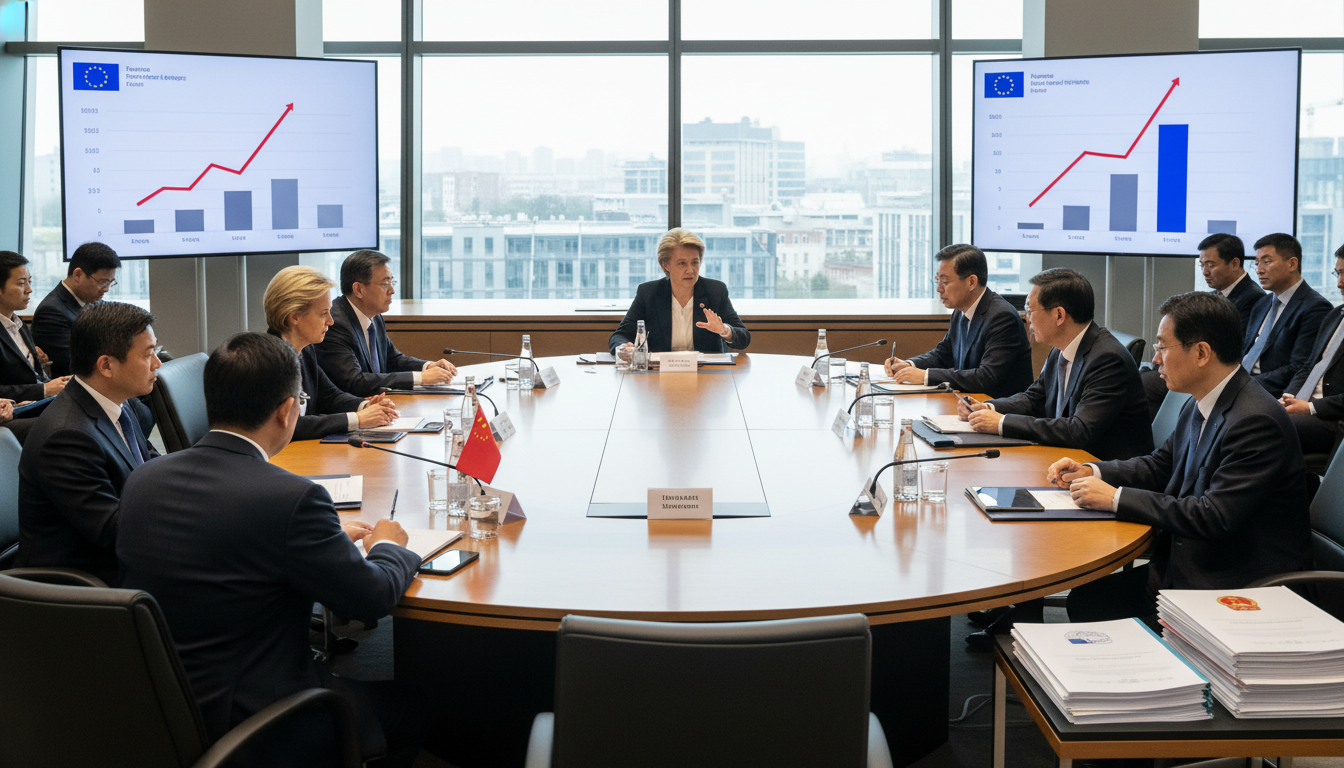
Chinese investment in Europe reaches highest level since 2018 despite geopolitical headwinds
Chinese investment in Europe hit its highest level since 2018, overtaking peers, but geopolitics, currency swings and overcapacity limit further growth.
China’s investment in Europe reached a seven‑year high, the report said, even as exports remained the preferred route for many companies. The analysis, released on May 20, 2026, found that capital flows from Chinese firms have outpaced those from other high‑income economies for the first time in recent years, while also warning of constraints on a broader uptrend.
Record inflows since 2018, report finds
The report documents a surge in announced projects and transactions that brought Chinese investment in Europe to its highest point since 2018. It notes that activity in 2025 and early 2026 pushed aggregate flows above those from other high‑income countries, a shift analysts said reflects a renewed appetite for overseas manufacturing and green‑tech assets.
Researchers who compiled the data highlighted a mix of new greenfield factories, expanded manufacturing capacity and targeted acquisitions. The study stops short of claiming a full recovery to pre‑trade‑tension levels, instead describing a selective but visible rebound concentrated in strategic sectors.
Sectors attracting capital: batteries, autos and green technology
A large share of the new investment targeted battery manufacturing, electric vehicle supply chains and renewable energy projects. One prominent example cited was CATL’s battery factory in Debrecen, Hungary, which topped a list of ongoing Chinese projects in Europe in 2025 and symbolised the focus on electrification supply chains.
Automotive suppliers, industrial machinery and some consumer electronics assembly facilities also featured among recent announcements. Investors and officials said Europe’s sizable market for clean‑energy technologies and its central location for supply chains remain major draws for Chinese capital.
Exports remain the dominant business model for Chinese firms
Despite rising direct investment, the report makes clear that exports continue to be Chinese firms’ preferred way of serving European markets. Many companies still opt to sell goods abroad from domestic production, citing faster market access and leveraging existing scale at home.
This preference reflects the cost advantages and established logistics networks that many Chinese manufacturers retain. For lower‑value or standardized goods, exporting remains more efficient than building local capacity, analysts noted.
Geopolitical and regulatory headwinds slow broader gains
The report identifies geopolitics and heightened regulatory scrutiny in Europe as key brakes on a fuller investment surge. Several member states have strengthened investment screening mechanisms and tightened rules around sensitive technologies, creating an environment of greater uncertainty for cross‑border deals.
Officials in Brussels and national capitals have signalled a desire to balance openness to foreign capital with concerns about critical infrastructure and technology transfer. That policy shift, coupled with public sensitivity to strategic acquisitions, has prompted more cautious dealmaking by both buyers and sellers.
Currency swings and domestic overcapacity complicate decisions
Currency considerations and domestic overcapacity in certain Chinese industries also played a restraining role, according to the authors. Movements in the renminbi and wider currency volatility can affect valuations and the cost calculus for overseas projects, tempering the pace of new commitments.
At the same time, excess production capacity in sectors such as basic manufacturing and some heavy industries reduces the pressure to invest abroad quickly. Companies sitting on spare capacity at home have been more selective, choosing targeted overseas investments rather than broad international expansion.
Policy and business implications for Europe and China
For European policymakers, the trend presents a policy challenge: how to attract high‑quality investment while protecting strategic assets. The report suggests clearer screening criteria, greater transparency in subsidy regimes and stronger cooperation with investors to ensure projects meet local regulatory and competition standards.
European businesses see opportunities for technology transfers and supply‑chain upgrades but also expect tougher competition in core industries. Investors and trade associations have urged both sides to pursue dialogue that reduces uncertainty while addressing security and industrial policy goals.
Looking ahead, the report projects that Chinese investment in Europe will continue to be shaped by a triangular mix of market opportunity, regulatory response and macroeconomic conditions. If geopolitical tensions ease and both sides develop predictable rules of engagement, capital flows may broaden beyond the current concentration in batteries and green technology.
The coming months will be a litmus test for whether the recent uptick represents a durable reorientation of Chinese capital toward Europe or a temporary response to specific market incentives.

